
Faced with shelves of colorful pottery in an Okinawa shop, you may want to choose a piece that feels distinctly Okinawan but still wonder what to look for. If you are visiting from overseas, you may also be thinking about whether you can use it back home, whether it will fit in your suitcase, and how to ask the shop staff the right questions.
In short, when buying your first piece of yachimun, it is best to start with what you will serve in it after returning home, rather than how famous its pattern is. Decide on its purpose, check its actual size and weight, ask who made it and how to care for it, and finally confirm how it will be packed. Following this order will help you find something you love looking at and can keep using at home.
If you are still deciding where to shop, start with our published guide comparing Tsuboya Yachimun Street and Yachimun no Sato in Yomitan. Rather than repeating that destination comparison, this article focuses on how to choose once you are in the shop.
TL;DR
- A practical order for choosing a piece you can use back home, starting with purpose, size, and weight
- How to assess patterns, glazes, traditional craft labels, and individual variation without misconceptions
- Useful questions in romanized Japanese and English for checking care, the maker, and packing in the shop
The Bottom Line: Choose Your First Piece Using Five Checkpoints
In the shop, work through these five checkpoints in order.
| Checkpoint | What to Examine in the Shop | Why It Helps After Purchase |
|---|---|---|
| Purpose | Whether it is for a main dish, side plate, bowl, cup, drinking vessel, or decoration | Makes it less likely to sit unused in storage |
| Size and weight | Diameter, height, capacity, and how heavy it feels in your hand | Helps you judge whether it will fit your cupboard, table, and luggage |
| Shape and surface | Rim, foot, handle, glaze, and any lines or spots that catch your attention | Lets you assess usability and individual variation before buying |
| Provenance | Maker, kiln, place of production, and product description | Preserves the story of the piece alongside your travel memories |
| Care | Medome preparation, microwave, dishwasher, oven, and direct-heat compatibility | Helps prevent damage or deterioration from improper use |
Before paying, check once more that you will receive a receipt, a card about the maker or product, care instructions, and suitable packing. You do not need to remember everything perfectly. It is enough to ask the staff about anything you do not understand regarding that particular piece.
First, Understand the Difference Between Yachimun and Tsuboya Ware
Yachimun is the Okinawan word for pottery. Tsuboya ware is an important form of yachimun, but Okinawa also has regional pottery traditions beyond Tsuboya. Therefore, not every product labeled yachimun can be considered Tsuboya ware (Source: Okinawa Story).
Tsuboya ware is broadly divided into joyachi and arayachi. Joyachi commonly includes glazed tableware, drinking vessels, and flower vases, while arayachi is represented by unglazed jars and pots. When searching for information in English, international travelers will find the official English terms Tsuboya ware / Tsuboya-yaki, joyachi, and arayachi useful (Source: VISIT OKINAWA JAPAN).
That said, you do not need to memorize every technique before buying your first piece. It is more useful after purchase to confirm whether it is suitable as tableware, who made it and where, and how to care for it.
Step 1: Decide What You Will Serve in It Back Home
The first thing to consider is not the piece’s status or fame, but its purpose. Picture the meals you normally eat at home.
For Everyday Use, Start with the Food You Eat Most Often
- For daily breakfast use, choose a small plate, bowl, mug, or another piece with a clear role
- For a main dish, look for enough width and depth to hold both the food and its sauce
- For shared dishes, choose something suited to your table size and easy to lift
- For drinks, check not only the capacity but also the feel of the rim, the handle, and whether it is suitable for hot beverages
Tsuboya ware serves a wide range of purposes, including tableware, drinking vessels, and flower vases. It also includes distinctively Okinawan sake vessels such as the karakara and dachibin (Source: Traditional Crafts Aoyama Square). Even if a shape appeals to you, ask the shop staff whether it is tableware, a drinking vessel, or a vase if you are unsure how to use it in your country.
For Gifts, Consider Whether the Recipient Can Use It
When choosing a gift for family or friends, their everyday habits matter as much as their taste. A piece can become a burden if you do not check its care requirements or weight for someone who uses a dishwasher daily, has limited storage, or finds heavy tableware difficult to handle.
Also confirm whether it is intended for food or decoration. Do not assume that a shisa figure or ornament is safe to use as tableware based on appearance alone. Conversely, if the piece was made as everyday tableware, including a card with its care instructions is a thoughtful touch.
Step 2: Look Beyond the Listed Size to Weight and Storage
It is easy to misjudge a piece’s size in an online photo or on a shelf. Check the diameter, height, and capacity as numbers, then picture whether it will fit in your cupboard, microwave, and usual dining space at home.
Keeping the dimensions of a plate you often use or the inside of your cupboard on your phone makes comparisons easier. Units also require attention when traveling abroad. If a shop lists measurements in centimeters, you may want to convert them to the inches you use at home before deciding.
To assess the weight, ask the staff for permission to handle the piece and, if allowed, hold it with both hands. If the empty piece already feels heavy, it will be harder to handle once filled with food or a drink. If you plan to carry a stack for the whole family, ask the staff about the combined weight of the number you need, not just a single piece.
Even pieces with the same product name or mold may vary in size, shape, color, painted design, and glaze because of handwork and firing. Production and sales standards differ by kiln, so when buying several pieces, line up the actual items and decide how much variation you are comfortable enjoying. Ikutouen also explains individual variation in its own products, but this guidance should not be applied uniformly to every kiln; always check with the shop where you are buying (Source: Ikutouen, “What to Know Before You Buy”).
Step 3: Inspect the Rim, Foot, Handle, and Surface of Each Piece
Once you find a pattern you like, examine the piece by thinking through how you will use it.
Rim and Handle
For a plate or bowl, check not only for chips around the rim but also how it feels where your mouth or fingers may touch it. For a cup, consider whether your fingers fit through the handle and whether it will remain comfortable to hold once filled.
Foot and Stability
The ring-shaped base of a vessel is called the koudai, or foot. With the staff’s permission, place the piece on a flat surface and check its stability. If the base feels rough, ask how to handle it without scratching a table or shelf. It is safer to follow the maker’s guidance before sanding or altering it yourself.
Glaze, Iron Spots, Crazing, and Other Lines
You may see flowing glaze, variations in color, small spots, or fine lines. A traveler may not be able to tell from appearance alone whether these are part of the piece’s character or damage that could affect its use.
Avoid assuming either that everything is fine because it is handmade or that every line makes a piece defective. Point out the area that concerns you and ask the staff. If the answer does not satisfy you, choosing not to buy is also important.
Step 4: View Patterns and Glazes as Preferences and Techniques, Not Rankings
Tsuboya ware uses a wide range of techniques, including slip coating, line carving, scraping, inlay, stamping, comb decoration, and painting. Examples of glazes include clear, amber, green, black, and indigo tones (Source: Traditional Crafts Aoyama Square).
Even when you see designs featuring fish, birds, flowers, or plants, a particular pattern does not necessarily have one shared meaning across all of Okinawa. The reason a maker chose the same motif and the story behind a series can differ. If you want to understand its meaning, check the product description or the maker’s own words.
Do not create a hierarchy in which darker colors are automatically more luxurious, traditional patterns are necessarily more authentic, or kiln-direct sales are always cheaper. What matters for a traveler is finding something you genuinely like and making an informed choice about its purpose, provenance, and care.
Step 5: Check the Maker and Provenance
If you want to bring the story of the piece home with you, check the following:
- Name of the maker or kiln
- Place of production
- Purpose and technique of the piece
- Product or series name
- Information card about the maker or product
- Receipt showing the shop and purchase date
Do not judge the maker or authenticity from a stamp or signature on the foot alone. Some pieces have no mark, some marks are difficult to read, and some items come from shared workshops. Keeping the staff’s explanation together with the product information is more reliable.
Traditional crafts designated by Japan’s Minister of Economy, Trade and Industry use a traditional craft label for products that pass inspection standards in their production area. The label can help confirm that an item was inspected as a designated traditional craft, but the absence of one does not by itself mean that a piece is fake, low quality, or made outside Okinawa (Source: Association for the Promotion of Traditional Craft Industries).
Rather than simply saying you want “authentic yachimun,” ask specifically whether it was made in Okinawa, who made it, and which workshop it came from. This communicates what you are looking for more clearly to the staff.
Step 6: Confirm the Care Instructions for Each Piece
The most important mistake to avoid when caring for yachimun is applying one kiln’s instructions to every piece. Guidance may differ depending on the clay, glaze, decoration, firing, and finish.
Ask about each of the following for the specific piece you plan to buy:
- Whether it needs medome, a sealing preparation, before first use
- Whether it is microwave-safe
- Whether it can go in a dishwasher or dish dryer
- Whether it is suitable for an oven or direct heat
- Whether prolonged soaking should be avoided
- How thoroughly it should be dried after washing
- Whether any foods may leave colors or odors behind
For example, Ikutouen describes medome as optional for its products, does not recommend using a microwave or dishwasher, and advises against ovens and direct heat. These are that kiln’s instructions, not universal rules for all yachimun (Source: Ikutouen, “Living with Yachimun”). Always prioritize the instructions for the piece you actually purchase.
Useful Questions in Romanized Japanese and English
If a long conversation is difficult, you can show this table on your phone. There is no need to ask everything at once; narrow down your choices first, then select the questions you need.
| What to Ask About | Japanese (Romanized) | English |
|---|---|---|
| Place of production | Kono utsuwa wa Okinawa de tsukurareta mono desu ka? | Was this piece made in Okinawa? |
| Maker | Tsukurite ya kamamoto no namae o oshiete kudasai. | Could you tell me the potter or kiln that made this? |
| Purpose | Tabemono ya nomimono ni tsukaemasu ka? | Can I use this for food and drinks? |
| Capacity | Yoryo wa nan miririttoru desu ka? | What is the capacity in milliliters? |
| Appliances and heat | Denshi renji, shokusenki, obun, jikabi wa tsukaemasu ka? | Can I use it in a microwave, dishwasher, oven, or over direct heat? |
| Before first use | Tsukai hajimeru mae ni medome wa hitsuyo desu ka? | Does it need preparation, such as medome, before first use? |
| Care | Oteire hoho o kaita kado wa arimasu ka? | Do you have written care instructions? |
| Individual variation | Onaji kurai no okisa to omosa no mono o misete moraemasu ka? | Could I see another piece of about the same size and weight? |
| Condition | Kono sen ya ten wa sakuhin no tokucho desu ka, soretomo kizu desu ka? | Is this line or spot part of the finish, or is it damage? |
| Packing | Hikoki de mochikaeru tame, waremono-yo ni tsutsunde moraemasu ka? | Could you wrap this as a fragile item for air travel? |
| Documentation | Tsukurite ya shohin no setsumei kado o irete moraemasu ka? | Could you include a card with the maker and product details? |
| Purchase terms | Henpin ya kokan no joken o oshiete kudasai. | What is your return or exchange policy? |
English-language assistance, payment methods, tax-free shopping, international shipping, and return policies vary by store and may change. Check official information before your visit and confirm it again before paying.
How to Choose by Traveler Type
For Yourself: Choose Something You Can Picture Using Within a Week of Returning Home
Instead of choosing something for “someday,” look for a piece you can imagine using for breakfast, dinner, coffee, or another specific occasion. You could also buy one piece first and look for the next after you have used it, rather than purchasing a large set immediately.
For a Gift: Prioritize Easy Care and an Information Card
The recipient may not be a pottery enthusiast. Consider weight, storage, and their dishwasher habits, and include a card explaining the maker and care instructions. Make it clear whether the piece is intended for food or decoration.
For Families and Groups: Agree on Acceptable Variation Rather Than Perfect Matching
When buying several pieces, decide with your companions whether you want the colors and shapes to match exactly or would rather enjoy the differences of handcraft. Line them up before paying and ask whether each can be wrapped separately.
For Strict Luggage Limits: Check the Packed Size, Not Just the Piece
Even a small plate becomes thicker once wrapped as a fragile item. Consider whether the packed piece, not just the product itself, will fit in your suitcase or carry-on. Airline baggage rules and the destination country’s import rules are separate matters, so do not assume that shop packing alone means you can take it home.
Who This Approach Suits and Who It May Not
This buying approach is a good fit for people who:
- Want Okinawan pottery they can use regularly after returning home
- Want to confirm the maker and place of production before choosing
- Are not confident speaking Japanese and want to prepare questions for the shop
- Value both appearance and practicality
- Want to share the story behind a piece with its recipient
On the other hand, handcrafted pottery may not suit someone seeking factory-made products with perfectly identical shapes, colors, and dimensions, or someone who wants to use a microwave or dishwasher without checking compatibility. If you are not comfortable with individual variation or the care requirements, deciding not to buy is a perfectly sound way to avoid disappointment.
How to Choose Accommodation That Supports Your Trip
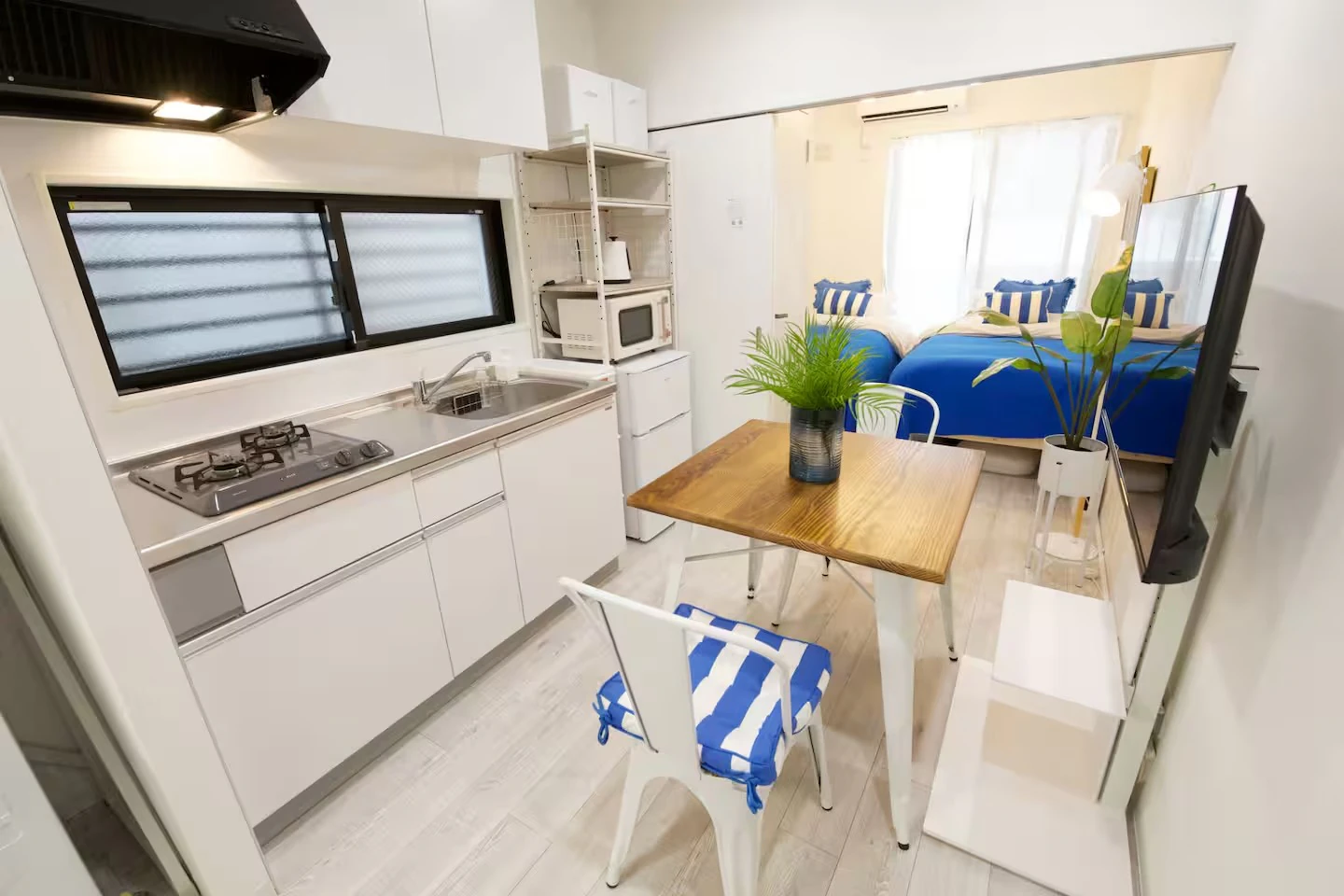
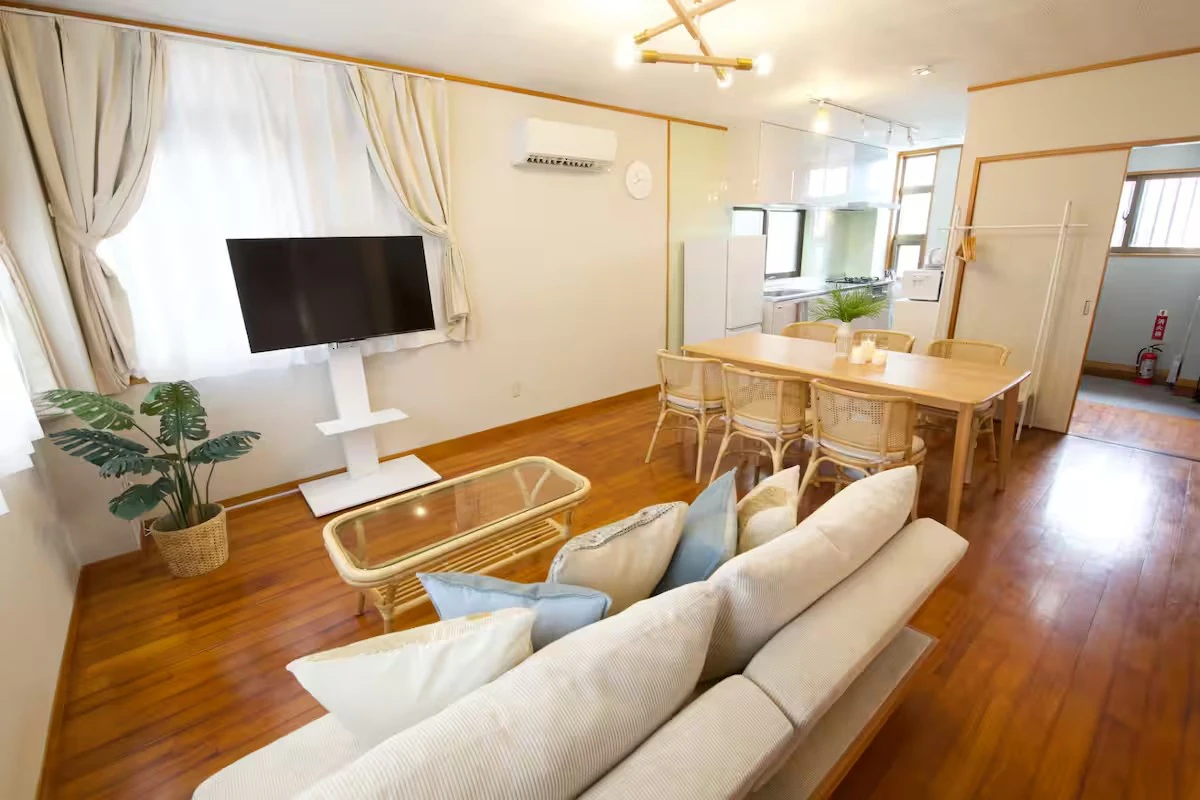
Choose your accommodation with your entire Okinawa stay in mind, not just the day you shop for pottery. If you plan to enjoy walking and shopping around Naha, a private unit with a kitchen, washing machine, and Wi-Fi offers a “live like a local” alternative to a hotel.
However, your accommodation does not guarantee the packing, storage, or shipping of your pottery. Keep each purchase in the shop’s packaging, store it separately from your companions’ belongings, and check that nothing has been left behind when you check out.
Final Checklist Before You Pay
- ☐ I know what food or occasion I will use it for after returning home
- ☐ I checked the diameter, height, capacity, and weight
- ☐ I examined the rim, foot, handle, and any areas of concern on the surface
- ☐ I confirmed the maker, kiln, and place of production
- ☐ I confirmed whether it is intended for food or decoration
- ☐ I checked medome preparation and compatibility with a microwave, dishwasher, oven, and direct heat
- ☐ I will receive a care card, product card, and receipt
- ☐ I checked the packed size and the available space in my luggage
- ☐ I confirmed the return and exchange policy before paying
Frequently Asked Questions
Is All Yachimun Tsuboya Ware?
No. Yachimun is the Okinawan word for pottery, and Tsuboya ware is one type of it. If you want to know where a piece was made or which techniques were used, check the product information and ask the shop staff (Source: Okinawa Story).
Are Uneven Color, Iron Spots, or Crazing Defects?
You cannot make a blanket judgment from appearance alone. Each kiln differs in what it considers part of a piece’s character and in its sales standards. Point out the area to the staff and confirm whether it is damage that affects use before buying.
Should I Avoid a Piece Without a Traditional Craft Label?
The label helps confirm that a piece passed local inspection standards as a designated traditional craft. Its absence alone, however, does not mean that a piece is fake or low quality. Check the maker, kiln, place of production, and product description as well.
Can I Use It in a Microwave or Dishwasher?
You need to check each piece. Even among items called yachimun, guidance may differ by maker and product. Follow the shop’s explanation and the care card provided with your purchase.
If I Buy Several Pieces with the Same Pattern, Will Their Shapes and Colors Match?
Handwork and firing can create differences. If you want a closely matched set, line up the actual pieces you plan to buy and compare their size, color, and weight.
What Should I Ask the Shop When Taking Pottery Overseas?
Ask about fragile-item packing, the packed size, a product card, a receipt, and the return and exchange policy. Then check carry-on and checked-baggage rules with your airline, separate shipping with the delivery company, and import conditions with customs in your destination country.
Conclusion: Add Practical Details to a Design You Love
When choosing your first piece of yachimun, trust your initial response to its appearance while checking its purpose, size, weight, shape, maker, and care requirements in order. There is no need to decide simply because it is famous or you have heard it is from the “authentic” source.
If you can picture using it at your table after returning home and have asked the staff about anything you do not understand, the piece can connect your travel memories with everyday life. These checks may seem like extra work, but they take only a few minutes before you pay. Pottery is fragile, so this is one step worth taking carefully.
Three Private Stays to Compare in Naha