

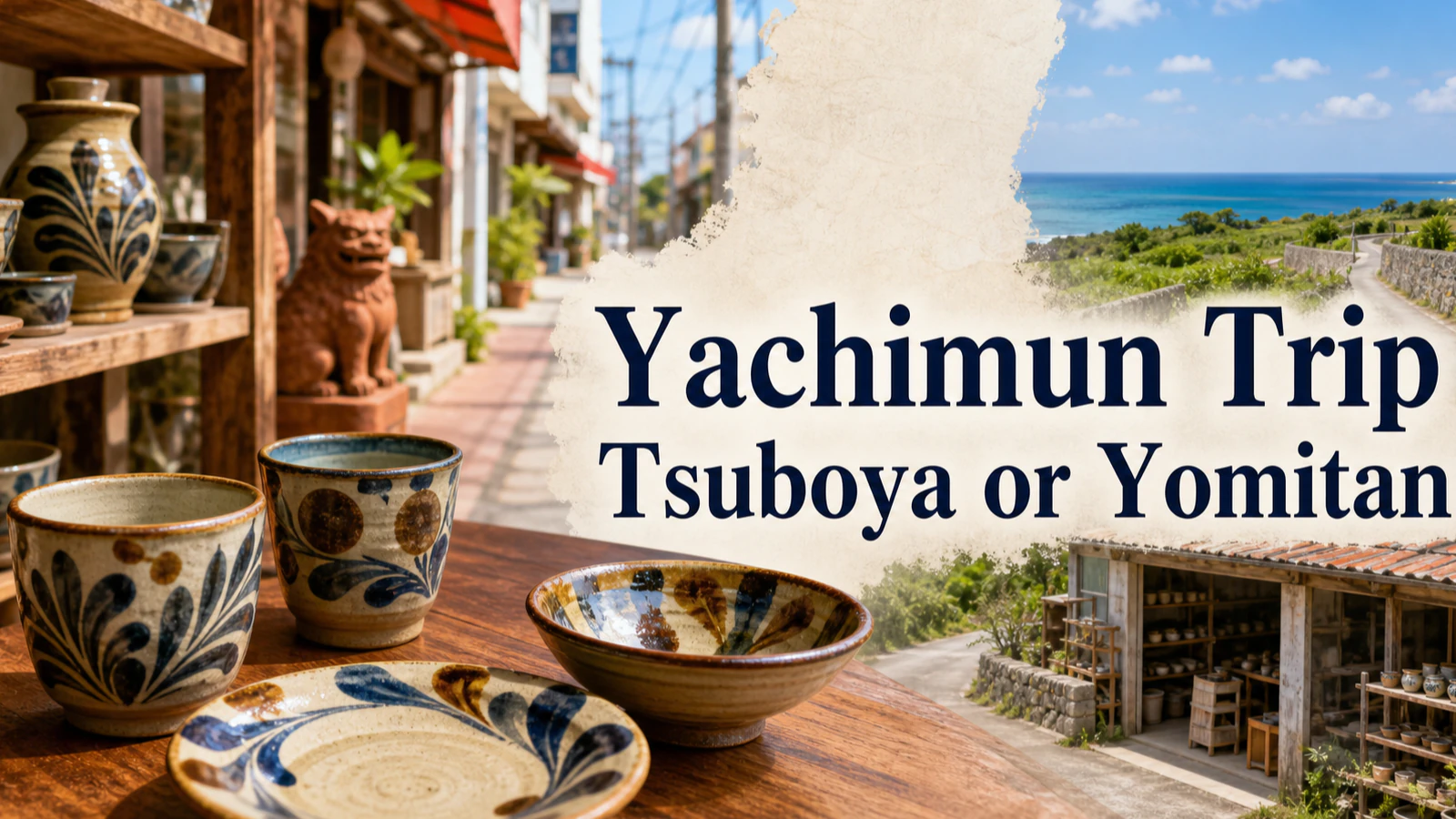
If you want to enjoy yachimun pottery in Okinawa, choose Tsuboya Yachimun Street in Naha for a walkable, no-car, rainy-day-friendly outing. Choose Yomitan Yachimun no Sato if you have a rental car and want to visit workshops at a slower pace. For pottery shopping, your accommodation matters too: you need somewhere to return to, rest, and organize fragile purchases.
TL;DR
- Choose Tsuboya Yachimun Street if you are staying in Naha, traveling without a car, or need a rainy-day craft plan.
- Choose Yomitan Yachimun no Sato if you have a rental car and want to spend part of a day visiting pottery workshops.
- Tsuboya is easier to combine with Kokusai Street, the market area, food, and short city walks.
- Yomitan Yachimun no Sato is an area of independent workshops, so opening hours, closing days, and hands-on experiences vary.
- After buying pottery, a private apartment or private house with space to sort luggage is more convenient than a stay that only works for sleeping.
Tsuboya vs. Yomitan: the quick comparison
Tsuboya Yachimun Street and Yomitan Yachimun no Sato both connect travelers with Okinawan pottery, but they are not the same kind of outing. The deciding factor is usually transport: are you exploring Naha on foot, or are you driving through central Okinawa?
| Point | Tsuboya Yachimun Street | Yomitan Yachimun no Sato |
|---|---|---|
| Best for | Naha walks, short pottery stops, rainy-day itinerary changes | Rental-car trips, workshop visits, half-day craft travel |
| Transport | Easy to combine with walking, taxis, and public transport in Naha | Much easier with a rental car |
| How you experience it | Walk the street and compare pottery shops | Move between workshops and compare makers, kilns, and styles |
| Weather notes | Still requires rain and heat protection, but plans are easier to shorten | Rain affects driving, parking, and walking between workshops |
| Best accommodation base | Naha | Central Okinawa, Yomitan, or a drive-based itinerary |
NAHANAVI lists Tsuboya Yachimun Street as a Naha sightseeing spot connected with crafts, shopping, walking, and rainy-day travel. For Yomitan, Yomitan Village Tourism Association explains that Yachimun no Sato is an area where 19 workshops operate independently. That matters because each workshop manages its own hours, closing days, and inquiries.
When Tsuboya Yachimun Street is the better choice
Tsuboya Yachimun Street is the practical choice if you are staying in Naha and do not want to depend on a car. It fits naturally with Kokusai Street, the market area, lunch, cafes, and short cultural stops.
You can combine walking, taxis, and public transport, then return to your room after shopping.
Shops, food, indoor stops, and accommodation are close enough to adjust the day without losing the whole plan.
It is easy to compare everyday pottery and learn what styles you like before committing a full day.
A short craft walk is easier to add to a Naha day than a longer drive to central Okinawa.
If you want more cultural context, check the latest information from the Naha Municipal Tsuboya Pottery Museum before visiting. Opening days, exhibitions, and visitor details can change, so use the official source rather than old travel notes.
When Yomitan Yachimun no Sato is the better choice
Yomitan Yachimun no Sato is better for travelers who want more than a quick shopping stop. It suits people who want to compare workshop styles, understand why pottery makers gathered in Yomitan, and spend part of a driving day in central Okinawa.
The Yomitan tourism association’s culture page introduces the background of Yomitan pottery, including the move of potters from Tsuboya to Yomitan and the role of communal climbing kilns in the formation of Yachimun no Sato. That makes Yomitan especially rewarding for travelers who care about the story behind the pottery.
Before you drive to Yomitan, check:
- Opening days and hours for the workshops you want to visit
- Whether hands-on activities are available and whether booking is required
- Parking, road conditions, and footwear for rainy days
- Enough space in your bag or suitcase for fragile pottery
Naha on foot or Yomitan by rental car
Even if you are searching for an Okinawa yachimun experience, the right answer depends on how you plan to move. On a no-car Naha day, choose Tsuboya. On a rental-car day toward central Okinawa, choose Yomitan.
| Trip condition | Better choice |
|---|---|
| You want a short stop on arrival or departure day | Tsuboya Yachimun Street |
| You are staying in Naha without a rental car | Tsuboya Yachimun Street |
| You want a rainy-day backup plan | Tsuboya Yachimun Street |
| You are driving through central Okinawa | Yomitan Yachimun no Sato |
| You want to compare workshop styles | Yomitan Yachimun no Sato |
| You are traveling with children | Choose the one closer to your accommodation |
For families and multi-generation trips, the easiest day is often the best day. Rest breaks, meals, bathrooms, and luggage space usually matter more than trying to cover every pottery stop.
Rainy and hot days
On rainy days, Tsuboya is usually easier if you are based in Naha. You can shorten the outing, add indoor stops, eat nearby, or return to your room. Yomitan can still work, but you need to think about driving, parking, workshop hours, and walking between stops.
Hot days need the same kind of planning. Walk Tsuboya in the morning and rest later, or visit Yomitan earlier in the day and leave room for a slower afternoon. A pottery day should not depend on perfect weather.
Accommodation tips after pottery shopping
Pottery shopping creates fragile, bulky luggage. A room with enough space to open bags, organize wrapping, and rest for a while makes the day easier.
- A table or open floor space for sorting purchases
- A kitchen or sink
- A microwave and refrigerator
- A washing machine
- Wi-Fi
- A living area where couples, families, or friends can rest
If Tsuboya is the main plan, staying in Naha is the natural choice. If Yomitan is the focus of a driving day, a central-Okinawa base such as Hana House 401 can also fit the route.
FAQ
Which is better for a first yachimun trip, Tsuboya or Yomitan?
If you are staying in Naha, start with Tsuboya Yachimun Street. If you have a rental car and half a day, Yomitan Yachimun no Sato is also a strong option.
Which place is better for hands-on pottery experiences?
Hands-on experiences vary by shop and workshop. Check official information for availability, booking requirements, age rules, and time needed before you go.
Which is easier on a rainy day?
For Naha-based travelers, Tsuboya is usually easier because you can adjust the outing within the city. Yomitan requires more attention to driving, parking, and workshop hours.
Which is better with children?
Choose the one closer to your accommodation. For families, rest breaks and easy meals usually matter more than trying to cover both areas.
Can I visit both on the same day?
It is possible with a car, but most first-time visitors will have a better day by separating them: Tsuboya on a Naha day and Yomitan on a driving day.
Bottom line
Choose Tsuboya Yachimun Street for a walkable Naha craft day, rainy-day flexibility, and a short pottery outing. Choose Yomitan Yachimun no Sato for a rental-car day, workshop visits, and a deeper look at Okinawan pottery culture.
For pottery travel, accommodation is part of the plan. A private place in Naha makes it easier to return after shopping, sort fragile pieces, and keep the day flexible.
Staying in Naha for Tsuboya Yachimun Street
If your pottery day is centered on Naha, these Fujii Okinawa Stay properties are practical bases for walking, shopping, and returning to rest.
For travelers who want to walk around Tsuboya and Kokusai Street without relying on a car.
View propertyFor couples or small groups who also want easy access around Maejima and Tomari.
View propertyFor families or groups who need more room to organize pottery purchases and luggage.
View property