


For your last day in Okinawa, choose a target time to arrive at the airport, work back through luggage collection and car return, and plan activities in the time left over. The whole stretch between checking out and your flight's departure isn't sightseeing time.
An evening flight may leave room for a final bowl of Okinawa soba or a few souvenirs. But getting back to your bags and taking a shuttle from the rental office also belong in the itinerary. Connect those journeys first, and you can enjoy a relaxed final meal without squeezing in a distant stop.
This guide covers a last night in Naha, returning a rental car, and travelling to the airport from the north of Okinawa's main island. We checked official property and transport information on October 26, 2026. The timetable below is an editorial example with stated assumptions, not a schedule recommended by an airline or transport operator.
TL;DR
- Set your airport arrival target, then work back through luggage collection and car return.
- Compare storage options by the route back to your bags as well as the price.
- Check each airport counter's hours separately, and don't assume a locker will be available.
- Choose meal and shopping plans you can shorten if you fall behind.
Set separate times for airport arrival, bag collection and finishing sightseeing
Put the intermediate steps in your itinerary, not just the flight time. The departure time on your ticket isn't the time to finish shopping or reach the airport entrance.
| Decide first | What to allow for | What to note |
|---|---|---|
| Target arrival at the airport | Your airline's check-in, baggage, security and boarding requirements; walking inside the terminal; extra time for queues | Flight, check-in location and arrival target |
| Time to finish collecting your bags | Getting back to storage, waiting for collection and organising your bags | Storage location, opening hours and collection procedure |
| Car return time | Your rental agreement, refuelling, checking the car, payment and airport transfer | Return branch and its instructions |
| Time to finish sightseeing | Being ready to leave, including paying the bill and walking to the car park | Time to leave the shop or restaurant, and which stop to drop |
For example, JAL domestic flights require you to clear security at least 20 minutes before departure and pass through the boarding gate at least 10 minutes before departure. These aren't airport arrival times. Checked bags and queues mean there are things to do earlier. Don't confuse the baggage deadline stated for Haneda Airport with the conditions at Naha.JAL: domestic flight boarding guidance
For an international flight or another airline, use the guidance from the carrier operating your booked flight. Check when check-in opens and closes, when baggage is accepted and when to be at the gate. Don't reuse the domestic-flight figures. Even if you reach the airport early, your flight's baggage counter may not yet be accepting bags. Airline baggage check-in and temporary airport storage are separate services.
Pin the bag collection point before choosing your last stop
Save your accommodation, storage point, meal stop, rental return office or station, and airport on your map. A restaurant may look close to the airport, but collecting bags from accommodation in the opposite direction adds another journey.
Agree where everyone will meet again. If you split up to shop, set a time when everyone will have their bags and be ready to move on, rather than just reminding each other of the flight time. Decide who will keep in touch and which plan you'll drop if someone is late, so you don't have to renegotiate outside a shop.
Choose luggage storage around the area you plan to explore
Compare luggage storage by where you must return to collect it, as well as its fee. A cheaper option may not suit your final day if it adds travel costs and a journey away from the airport.
| Option | Plans it may suit | Check first | When it may not work |
|---|---|---|---|
| Ask your accommodation | Eating and shopping nearby, then leaving for the airport from the same area | Whether storage after checkout is available, collection hours, price and handover arrangements | Storage isn't confirmed, for example at an unstaffed property, or returning there would be a detour |
| Look for a storage service in town | Exploring one area of Naha, then collecting your bags on the way to a station | The actual storage location, that day's opening hours, size and quantity limits, booking and collection conditions | Opening hours don't fit, or availability is uncertain with no backup |
| Leave your bags at the airport first | Reaching the airport early and considering a short outing afterwards | The storage counter, collection deadline and transport back to the airport | The round trip takes up nearly all the time available for going out |
| Take your bags straight to the airport | A morning flight, rain, tiredness or lots of luggage | Your flight's check-in, somewhere to eat or rest, and moving around with bags | A long walk around town; shorten the plan itself instead |
Even if your accommodation agrees to keep your bags, that doesn't necessarily include access to the room after checkout. Permission to store bags doesn't automatically mean you can use a toilet, change clothes or take a shower there. Ask about luggage handover and room access separately.
Be specific: “Can we leave [number] suitcases after checkout until [time]? Where do we collect them, during which hours, and what is the fee?” Don't plan to leave bags at an entrance or in a shared area without an answer.
Keep what you'll need in a small day bag
Take out anything you'll need before collecting your luggage: the device you use for tickets and bookings, travel documents, wallet, necessary medication and a change of clothes for children. Leave a little room in your day bag if you expect to buy more things.
Tell your companions the storage location, locker number and where the collection slip is kept. If collection details are only on your phone, check the provider's instructions for what to do if your battery dies or you lose connectivity. Follow the provider's rules on valuables and items it won't store.
At Naha Airport, identify the storage counter and floor
Naha Airport's official site lists both staffed luggage storage and lockers. Lockers are on floors 1, 2 and 3. Having lockers on site doesn't guarantee that an empty one will fit your suitcase. Allow time to try a counter if the lockers don't work for you.Naha Airport: lockers
One option is Okinawa Yamato Transport's temporary storage, listed in the domestic area at the arrivals lobby on floor 1 and near Security Checkpoint C on floor 2. Hours are 7:30–20:00 on floor 1 and 9:00–19:00 on floor 2. The same operator has different closing times, so note exactly where you leave and collect your bags.Naha Airport: luggage storage
Fees depend on the counter and the size of your bags. Note their dimensions or take photos before travelling, then check the posted conditions and prices on the day. Check storage charges and airline checked-baggage charges separately.
Only return to town if the round trip leaves enough time
Leaving bags at the airport lets you travel light afterwards, but it creates a journey from your accommodation to the airport, back to town, and then to the airport again. If you only want a nearby meal after leaving your Naha accommodation, checking storage in town first may save a journey.
Once you reach the airport, reassess the time left, including any queue at the counter. If the planned outing no longer fits, consider eating and shopping at the airport. Money already spent on transport, or the wish for one last stop, isn't a reason to add another round trip.
Before using hotel-to-airport luggage delivery, check that both your accommodation and the service support the arrangement. Okinawa Yamato Transport also lists a service for sending bags from participating hotels to your home or elsewhere, and explains that it is separate from its luggage delivery service between the airport and hotels. Don't assume the vacation rentals introduced here offer either arrangement.Okinawa Yamato Transport: hands-free travel services
Allow time to get from the rental office to the airport
Save the branch name and address from your booking, rather than simply writing “Naha Airport” as your return point. Toyota Rent a Car Okinawa, for example, lists airport transfers for its Naha Airport, Naha Airport Seaside and Naha Airport Business branches. Plan for returning the vehicle to the branch and then travelling to the airport. For other companies or branches, follow their own return instructions.Toyota Rent a Car Okinawa: FAQ
Your rental agreement's return time isn't the only time that matters. Tell the branch when you want to reach the airport and check its return and transfer arrangements. A map's driving time doesn't include waiting to refuel, checking for forgotten belongings, settling the bill or waiting for a shuttle. Don't calculate your departure time from that figure alone.
| Before returning the car | At the branch | On the way to the airport |
|---|---|---|
| Check fuel and return conditions in your booking, and choose an open petrol station if needed | Check the cabin, storage spaces, seats and charging cables | Allow for the shuttle wait, boarding and loading or unloading luggage |
| Set a sightseeing finish time and recheck the route to the return branch | Count everyone's bags and organise the keys and return paperwork | Make sure everyone knows the check-in or departures area you need |
Families and groups can divide the tasks: one person handles payment while another checks the luggage and seats. Going back for a charger after returning the car can disrupt the shuttle plan. Leaving time for a final check is more useful than fitting in another shop.
Coming from the north? Plan the full journey back first
If you check out in the north and fly from Naha that day, a long journey and car return share the same schedule. Before adding stops, work through road conditions, breaks, arrival at the rental branch and the onward journey to the airport as a continuous plan.
If you want substantial sightseeing time in the north on your final day, compare flight options when booking the trip. A morning flight that requires an early start may make a final night in Naha worth considering. Moving accommodation adds packing and another check-in, though, so weigh it as an additional move in your itinerary.
Without a car, connect your bag collection point to a station
Yui Rail's official route map includes Naha Airport, Kencho-mae, Miebashi and Makishi stations. Choose the station that fits the end of your walk, then check that day's timetable and service updates.Yui Rail: official route map
Include the walk from storage to the station, reaching the ticket gates, waiting for a train and getting from Naha Airport Station to your check-in counter, as well as the train ride itself. With large bags, don't calculate walking time at your usual sightseeing pace.
Keep your final stops in the same area
If you're eating and shopping around Kokusai-dori, for example, plan to collect your bags and head to a station afterwards rather than adding a distant attraction. Have your preferred restaurant in mind, plus a quicker meal option if the queue is long.
Decide whether to wait by asking, “Can we finish eating by the time we need to leave?” rather than “How long until the flight?” Buy the souvenirs you most want first instead of planning to browse every shop, so you can stop when needed.
If rain gets heavy or walking becomes tiring, collecting your bags and heading to the airport is another option. Before switching to a taxi, consider the number of passengers, whether the suitcases will fit, the pickup wait and road conditions. Changing transport doesn't automatically make the trip faster.
An evening-flight example with room to adjust
This hypothetical plan assumes a domestic flight at 18:00. After checking the airline's guidance and other conditions, the traveller has chosen 16:00 as their own airport arrival target.The table does not recommend arriving at 16:00 for every flight. It assumes the storage service is available and the time allowed for travel fits the actual route that day.
| Time | Without a car, using luggage storage in Naha | Returning a rental car |
|---|---|---|
| 11:00 | Check out and go to the storage location you confirmed in advance | Check out, load the bags and leave |
| Around lunchtime | Lunch and a short shopping stop near the bag collection point | Lunch along the route towards the return branch, without another distant stop |
| 14:00 | Finish shopping and collect your bags by 14:30 | Finish any refuelling and other tasks in time to reach the branch at 14:30 |
| 14:30–16:00 | Use this period for the walk to the station, train wait, train ride and terminal walk after collecting your bags | Use this period for return procedures, checking the car, payment, shuttle wait, transfer and terminal walk |
| 16:00 | Reach the airport at your target time and begin the procedures for your flight | Same as the car-free plan |
| 18:00 | Flight departure | Same as the car-free plan |
The period from 14:30 to 16:00 is 90 minutes. It is a time allowance in this example, not a measured driving or shuttle time. If the branch's guidance or your actual route needs longer, move the 14:00 activities earlier. Don't use the table to make the plan fit by pushing airport arrival later.
If lunch runs long, shorten shopping. If bag collection is delayed, drop another stop. Choose your priority instead of treating a meal, shopping and the seaside as fixed commitments, and the end of the trip is less likely to become a rush between places.
What to finish the night before, and what to leave for the morning
Leaving packing, laundry, shopping and breakfast preparation until departure morning makes it harder to check out on time. Pack everything you won't need in the morning the night before, and keep the final essentials together.
| The night before | In the morning |
|---|---|
| Recheck the flight, check-in requirements, return branch and storage arrangement | Check transport, roads and weather, and cut stops if necessary |
| Pack dry clothes and souvenirs, and prepare the bag you'll use for the journey home | Collect toiletries, chargers and anything left in the fridge |
| Read the property's checkout, rubbish and key-return instructions | Check the room and storage spaces for belongings, then follow the checkout instructions |
| Agree who will eat breakfast and when | Wash up and tidy the areas you've used, then count everyone's bags |
A washing machine doesn't mean laundry washed just before departure will dry in time. Work out whether drying can finish the night before, and bring a separate bag if you must carry wet items home. A breakfast that avoids leftover ingredients and lots of washing up also reduces checkout tasks.
Don't leave the checkout instructions with just the person who made the booking. Divide responsibility for keys, bags and forgotten belongings. Leave time for someone to walk through the room at the end so you won't need to retrieve something after checking out.
Weigh a final night in Naha against the extra move
A final night in Naha can make it easier to combine a short city walk with the airport journey on departure day. It also means leaving northern accommodation earlier and checking in somewhere else. Consider whether saving travel the next morning would make the previous day too rushed.
| A final night in Naha may suit you if... | Also compare staying in the same place if... |
|---|---|
| You want more room in your morning schedule and a city walk on the final day | Staying in the north through the final evening is a priority and you can allow for the journey back |
| You want to return the car the day before and use public transport afterwards | You have lots of luggage and want to avoid another move or change in car-return arrangements |
| You want unhurried time for packing and laundry before leaving | Your current accommodation lets you do the same things, so moving wouldn't reduce the work |
If you return the car the day before, plan how to get from the branch to your accommodation and handle luggage the next day. A large shopping trip or a journey to distant accommodation after giving up the car can mean more bags to carry.
Frequently asked questions
Can I leave luggage at a vacation rental after checkout?
Ask the property first. Confirm whether it can store bags, the collection time and the handover location before building this into your plan. Don't expect an unstaffed rental to work like a hotel reception. Have another storage option or a direct-to-airport plan if it can't help.
Will an airport locker always be available?
The official site lists lockers on floors 1, 2 and 3, but neither availability nor a suitable size is guaranteed. If you can't use one, check a staffed storage counter or shorten the outing and keep your bags with you.Naha Airport: lockers
Once I've chosen a car return time, is my airport arrival time settled?
Return procedures and the journey to the airport still come afterwards. Follow your branch's instructions and work back through refuelling, checking the car and waiting for a transfer. Put branch arrival and airport arrival in separate entries to avoid mixing them up.
Can I visit a distant attraction on my last day if my flight is in the evening?
The flight time alone doesn't answer that. Connect your accommodation, attraction, bag collection, rental branch and airport, and see whether too many steps are impossible to shorten. A place well away from the return route is easier to fit on a day with more travel time available.
Can I use the domestic-flight example for an international flight?
No. Reset your airport arrival target using the operating airline's check-in, baggage and boarding requirements. Allow for the necessary procedures, including document checks, before adding meals or shopping.
What can I do if rain puts an end to the city walk?
You could collect your bags and head to the airport early. For temporary storage, check the counter's hours; for airline baggage check-in, check when your flight's counter accepts bags. Keeping the plan to a meal and some rest is an option, instead of travelling to another attraction.
Choose the one thing you most want from your last day
If a final meal matters most, make shopping easy to shorten. If shopping is the priority, avoid a lengthy lunch queue. Build the day around keeping that one activity without moving your airport arrival target or bag collection time.
Pack the night before, decide where your bags will be after checkout, and note car return and airport arrival separately. With those steps in place, you can use whatever time remains to enjoy the end of your Okinawa trip.
Choose your final night in Naha around your group and luggage
If you're spending the last night in Naha, compare these options by how you'll use the rooms. Their inclusion here doesn't promise luggage storage after checkout or an airport shuttle. Each property's page has details on availability, prices and stay conditions.
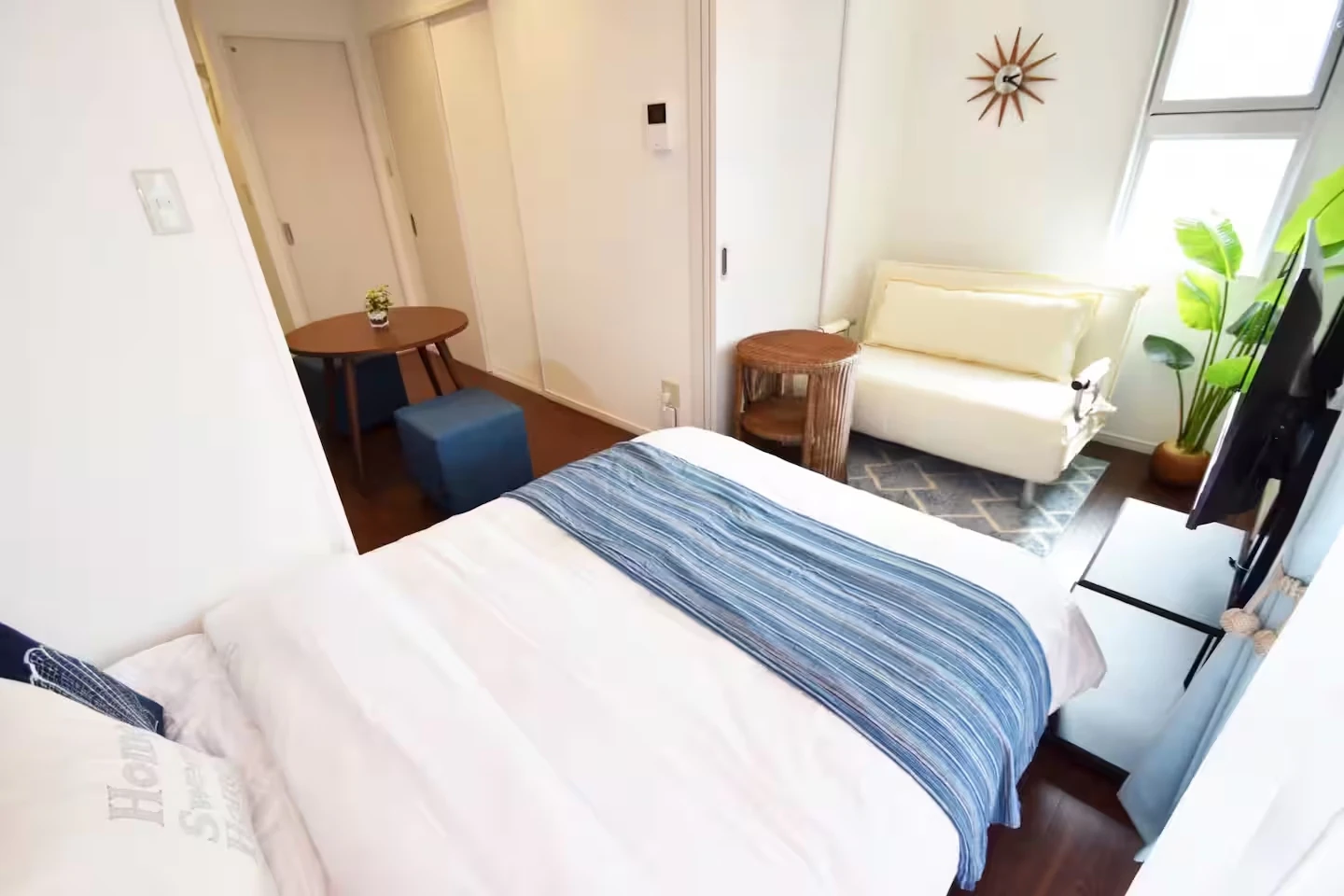
For families and groups sharing the same space
Enjoy Maru 402
- Up to 6 guests
- Studio
- Kitchen and washing machine
A studio for up to 6 guests, with a kitchen and washing machine. Consider it if you don't need separate bedrooms and want a Naha base. Alongside the guest limit, check that the listed sleeping arrangements suit everyone.
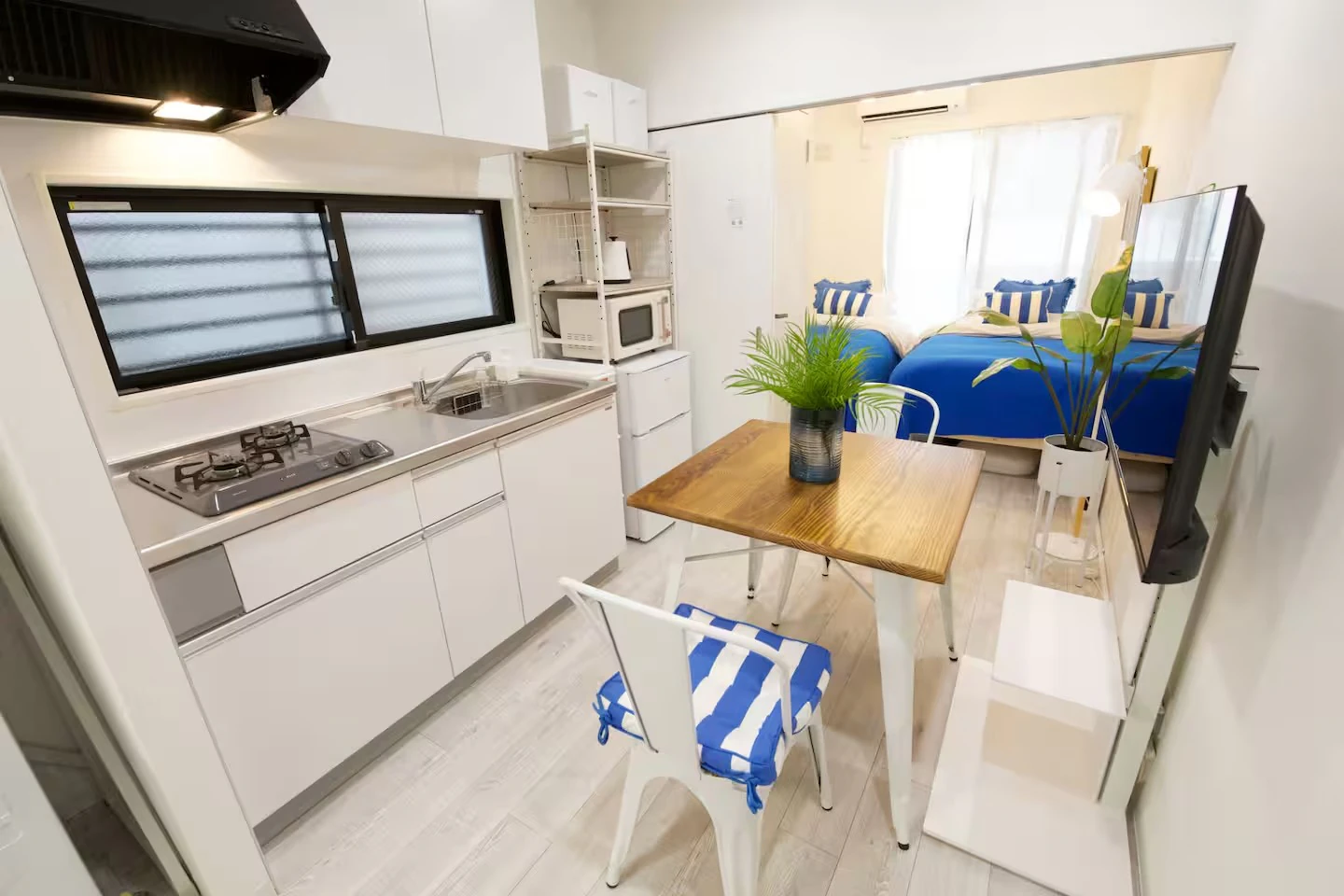
For 2 guests who want to pack and do laundry
GIRASOL 301
- Up to 2 guests
- 1DK: bedroom and dining kitchen; stairs to floor 3
- Washing machine and dryer
A 1DK apartment with a bedroom and dining kitchen, for up to 2 guests. It has a washing machine and dryer. The room is on floor 3, reached by stairs, with no lift. Consider whether carrying suitcases on departure day will suit both travellers.
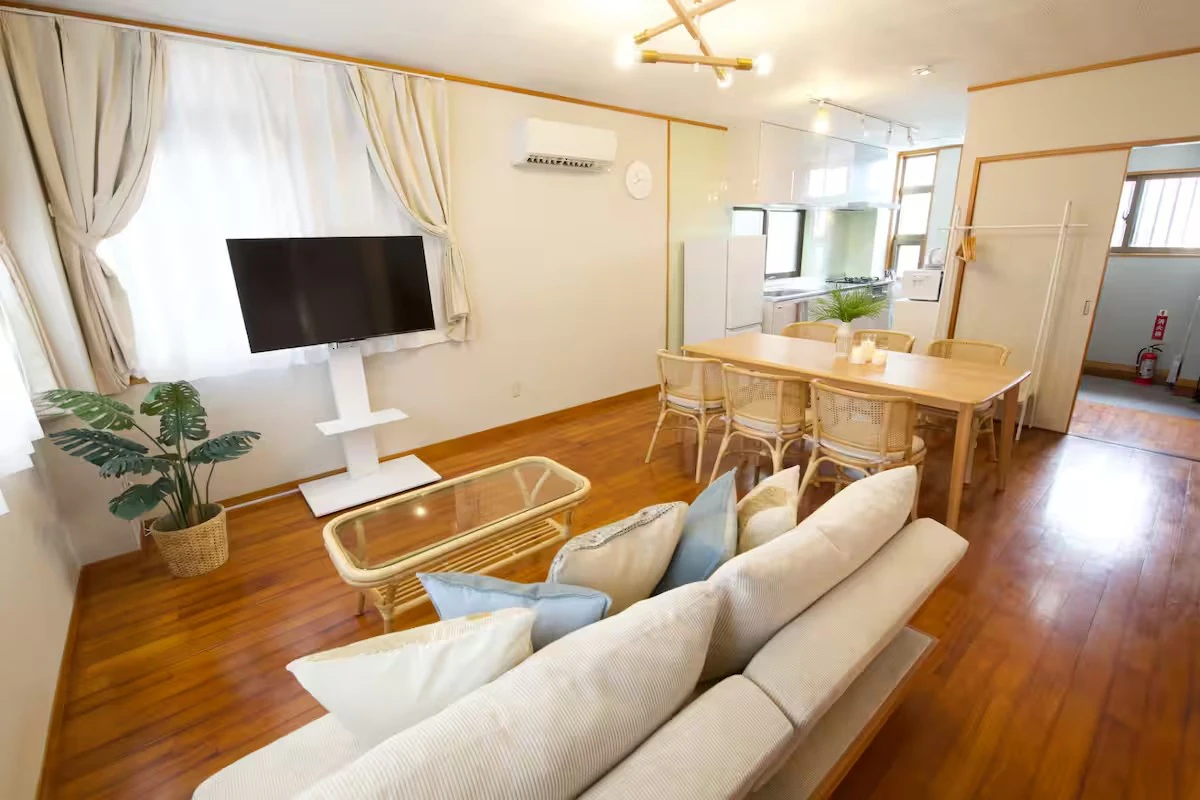
For groups who need separate bedrooms
AZUKI Heights 2F/3F
- Up to 9 guests
- 3LDK layout with 3 bedrooms
- Free parking for 1 car
The listing describes space for up to 9 guests, a 3LDK layout with 3 bedrooms, living and dining space, a kitchen, washing machine and free parking for 1 car. Consider it if you need several bedrooms or somewhere to park. Match the rental return date to your stay and check parking conditions for the number of cars you need.