

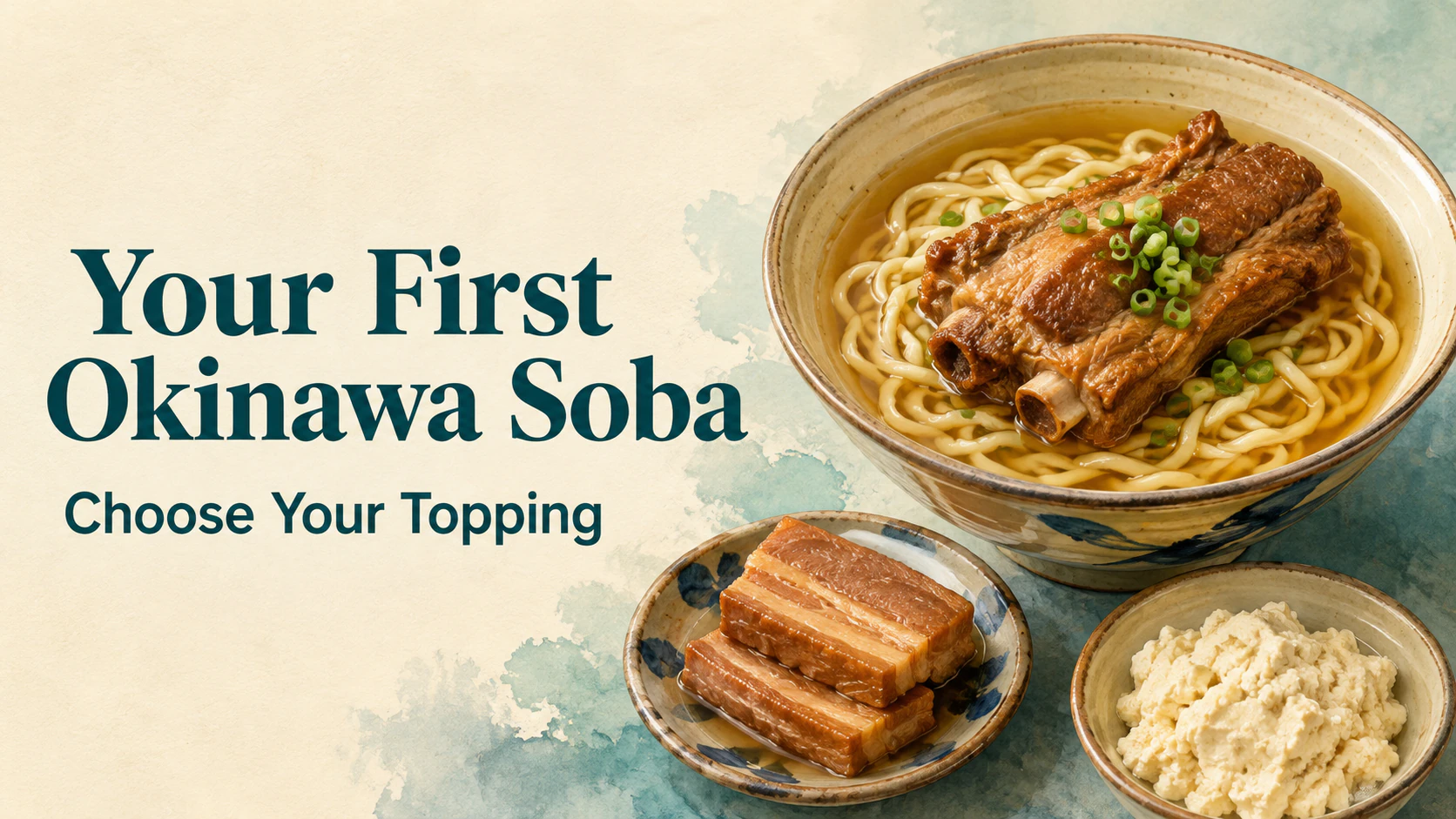
For your first bowl of Okinawa soba, choose your toppings, check the noodles and broth, then decide on the portion and any set meal. Pick soki or sanmai-niku if you want pork, or yushi tofu for soft tofu. You do not have to order the same thing as everyone else or start with a large portion.
A topping’s name alone does not tell you whether it has bones, what goes into the broth, or how much noodle you will get. If a Japanese menu feels confusing on a trip from Taiwan, work through what is in the bowl, how much you want to eat, and whether the restaurant fits today’s route.
This guide covers the toppings, budget examples based on published menus, ordering as a family, and restaurant choices in Naha, Chatan and northern Okinawa. Restaurant and accommodation information was checked on October 2, 2026. Prices and opening arrangements can change, so check official information for your visit date.
TL;DR
- Choose soki, pork belly or yushi tofu, then compare noodles and broth
- Work out portions, set meals and costs using an official menu
- Find a restaurant that fits your route in Naha, Chatan or the north
- Plan family orders, dietary checks and a place to stay in Naha
Start by understanding the menu names
Okinawa soba is a wheat noodle dish. Japan’s Ministry of Agriculture, Forestry and Fisheries describes noodles made with alkaline water, without buckwheat flour, served with toppings and broth made from ingredients such as pork bones and bonito. Despite the name soba, these are different from mainland Japan’s buckwheat noodles. (Source: MAFF: Okinawa soba)
Soki soba and sanmai-niku soba tell you which pork topping is used. Yushi tofu soba features soft tofu. If Okinawa soba and soki soba appear as separate menu items, they need not be entirely different kinds of noodles. Check which toppings the restaurant puts on the item it calls Okinawa soba.
| Name | What the name tells you | What to check |
|---|---|---|
| Soki soba | Uses pork spare ribs | Cartilage or hard bones; how the pork is seasoned |
| Sanmai-niku soba | Uses pork belly | Sweet and savory or salted; the amount of visible fat |
| Yushi tofu soba | Uses soft yushi tofu | Whether pork is included, broth ingredients and limited availability |
| Mixed soba | Combines different toppings | The exact combination and amounts of meat and noodles |
The Okinawa Convention & Visitors Bureau explains the cuts used for soki and sanmai-niku, and describes yushi tofu in its food guide. Mixed soba means the restaurant’s own combination, not a standard recipe shared by every shop. (Sources: Okinawa Story: rice dishes, noodles and steak, Okinawan food guide)
When looking at photos, separate the type of meat from the noodle portion. A large piece of pork does not necessarily mean a large noodle portion, and tofu does not necessarily mean a smaller bowl. Read the dish name, size options and set meal options separately.
Soki, pork belly or yushi tofu: choosing your first bowl
If you want pork, ask which kind of soki is served
Ask whether the soki has cartilage and whether any hard bones remain. Hamaya in Chatan describes a cartilage soki topping, while Nakijin Soba lists a simmered cartilage soki dish. Do not assume that every part is edible simply because it is called soki. (Sources: Hamaya Soba, Nakijin Soba: menu)
Bones matter when sharing food with children as well as when choosing a topping. Check the meat when the bowl arrives and have an adult divide it if needed. If ease of eating is your priority, asking about tenderness and whether the meat can be cut up is more useful than relying on the dish name alone.
For pork belly, check the seasoning
Sanmai-niku means pork belly. You may picture a sweet and savory braise, but restaurants such as Nakijin Soba also serve salted pork belly. The cut does not determine the seasoning. Decide whether you want sweet and savory pork or a salted version, then look at the menu. (Sources: Okinawa Story, Nakijin Soba: menu)
If fat content concerns you, do not assume that pork belly always makes a heavier meal or that soki always makes a lighter one. The meat’s size and preparation, broth and noodle portion all contribute to the meal. Choose a quantity you can finish and look at the meat photo and description.
For soft tofu, check what else is in the bowl
Yushi tofu is soft tofu before it is pressed into a mold. Remember the name if you want a bowl with tofu as the main topping. However, a tofu topping does not mean the dish contains no meat or fish. Check the broth and seasonings as well as any pork topping. (Source: Okinawa Story: Okinawan food)
If you are traveling specifically for yushi tofu, check whether it is a regular item or available in limited quantities. Nakijin Soba lists a limited-quantity version. Your response to a sellout will differ depending on whether another topping is fine or tofu is the purpose of the visit. In the latter case, it is worth asking about availability before setting off. (Source: Nakijin Soba: menu)
Interested in both meats? Check the mixed bowl
A mixed bowl can help you try different pork toppings on your first visit. Consider the portion and price too. Ask which toppings are combined and whether the noodle portion is the usual size. Choose it because you want to try both flavors, not because mixed necessarily means the best value or the largest serving.
Look at the noodles and broth together
Even with the same soki topping, noodle thickness, shape and broth ingredients can change your impression. Hamaya describes a pork, chicken and bonito broth with curly noodles. Reading about the noodles and broth as well as the pork gives you a clearer idea of what to try differently on another day. (Source: Hamaya Soba)
Read descriptions and menu photos in this order:
- Noodle shape: look for differences that interest you, such as flat, round or curly noodles.
- Broth ingredients: read the ingredients the restaurant identifies, such as bonito, pork or chicken.
- Topping seasoning: check whether it is sweet and savory, salted, or another flavor that accompanies the noodles and broth.
- Portion: distinguish noodle size from the amount of meat. Ask if the quantity is not shown.
Descriptions such as light and rich also involve personal impressions. A photograph’s broth color cannot tell you its fat or salt content. For your first bowl, narrow your choices using confirmed details, such as an interest in bonito broth or curly noodles.
You need not visit several restaurants for a single meal. Try meat and noodles on your first day, then yushi tofu or a different broth on another. A short note about toppings, noodles, broth and quantity can help you decide which bowl to enjoy again before the trip ends.
Single bowls, larger portions and jushi: planning quantity and cost
Choose the topping, then the size, then any set meal. When hungry, it is tempting to start with a large serving or a set, but a single bowl may suit a day with a cafe stop or dinner planned later. Small sizes are not universal, so check the choices if you want less.
Jushi is Okinawan seasoned rice. It lets you try a rice dish alongside your soba, but also means ordering both noodles and rice. Check whether a set includes rice, dessert or a drink rather than choosing by the set name alone. (Source: Okinawa Story: jushi)
Budget examples using Nakijin Soba’s published prices
These tax-inclusive prices were checked on October 2, 2026. They are ordering examples from a single restaurant’s menu, not an Okinawa-wide price range. Cartilage soki soba and limited-quantity yushi tofu soba are JPY 1,000 each, pork belly soba JPY 1,050, and mixed soba JPY 1,100. Adding the jushi and brown sugar pudding set costs JPY 450. Extra noodles cost JPY 200. (Source: Nakijin Soba: menu)
| Order example | Calculation | Total per person |
|---|---|---|
| Pork with the regular noodle portion | Cartilage soki soba alone | JPY 1,000 |
| Try both pork toppings | Mixed soba alone | JPY 1,100 |
| Add rice and dessert | Soki soba JPY 1,000 + set JPY 450 | JPY 1,450 |
| Add extra noodles and the set | Soki soba JPY 1,000 + extra noodles JPY 200 + set JPY 450 | JPY 1,650 |
For example, if adults order a soki soba alone and a mixed soba with the set, the total is JPY 1,000 + JPY 1,100 + JPY 450 = JPY 2,550. This excludes drinks, additional orders and transport. Consider each person’s appetite and next meal before ordering sets for the whole family; it makes both quantities and costs easier to plan.
With young children, check the children’s menu and sharing rules rather than assuming they will share an adult’s bowl. This restaurant lists a smaller children’s soba with brown sugar pudding at JPY 850, with an extra JPY 100 for the mixed version. Check whether the contents and portion suit your child. (Source: Nakijin Soba: menu)
Ordering what you actually want is more useful than deciding only that an add-on is cheaper or a larger portion is better value. To avoid leftovers, choose individually where sizes are available instead of giving everyone the same portion.
Choose a restaurant around today’s sightseeing area
When choosing your first restaurant, consider its place on your route as well as its reputation. Naha, Chatan and Nakijin are different areas. A restaurant that suits a day devoted to a food detour may not suit a quick meal between attractions.
The following restaurants are examples of how to choose using official information, rather than a ranking. Hours were checked on October 2, 2026; they do not guarantee opening, menu availability or crowd conditions on your visit date.
| Today’s area | Restaurant example | Published details and hours |
|---|---|---|
| Shurijo Castle Park and walks around Shuri | Restaurant Suimui | 1st floor of Suimui-kan. Miso Okinawa soba and other dishes. 11:00–17:00; last orders 16:30 |
| Chatan and Miyagi | Hamaya Soba | Miyagi 2-99. Cartilage soki and curly noodles. 10:00–17:30; last orders 17:00 |
| Churaumi Aquarium area and northern Okinawa | Nakijin Soba | Shoshi 181, Nakijin. 10:00–16:30; last orders 16:00. Closes when sold out; closed on the 3rd Tuesday |
Sources: Shurijo Castle Park: Restaurant Suimui, Hamaya Soba, Nakijin Soba: restaurant information.
A Shuri day: keep sightseeing and lunch in the park
Suimui is on the 1st floor of Suimui-kan in the park. Its official page lists miso Okinawa soba and a Shurijo set meal combining soba, jushi and other dishes. If you want sightseeing and lunch in the same area, look at the menu first and choose a single bowl or an Okinawan meal set. (Source: Shurijo Castle Park: Restaurant Suimui)
Distinguish the park’s visiting hours from the restaurant’s last-order time. If you arrive in the afternoon, finishing your walk before lunch may bring you close to last orders. Check the time on arrival and decide whether to eat or explore first. If you need a foreign-language menu or dietary arrangements, ask about the particular dish you want.
A Chatan day: combine a bowl with a seaside walk
Hamaya’s official website also sells products online. Do not assume the listed packaged set price is the dine-in price. Check the restaurant menu for the price, size and ordering method when you visit.
Plan soba within opening hours, separately from a sunset walk or dinner. Deciding to eat in the evening only after arriving may mean missing last orders. For parking, check where the restaurant directs customers; do not assume you can use the street or another property’s parking area.
A northern day: consider aquarium timing and sellouts
Nakijin Soba’s official information lists parking and daytime opening hours. It also announces a change to closure on the 3rd Tuesday from September 2026. Check the official restaurant page and temporary closure notices together, rather than relying only on an older travel article or map listing. (Source: Nakijin Soba: restaurant information)
If you want an unhurried aquarium visit, keep lunch before sightseeing as an option instead of fixing yushi tofu soba after the visit. The restaurant closes when sold out, and that topping is limited. Prioritize sightseeing if another topping is fine, or check availability and consider lunch first if tofu is the purpose of your visit.
Organize everyone’s order on a family trip
With a large group, deciding individually only after choosing a restaurant can make the order difficult to organize. While waiting or before leaving, note everyone’s topping, portion and set preferences so the person placing the order can check them.
| What a companion wants | How to plan the order | What to ask |
|---|---|---|
| Try different pork toppings | Mixed toppings → portion → price | Combination and size |
| Eat a smaller meal | Small size availability → single bowl | Whether sizes can be chosen |
| Eat tofu | Yushi tofu availability → stock that day | Limited quantity, pork toppings and broth ingredients |
| Eat with children | Children’s menu → sharing conditions | Bowls, meat preparation and ordering rules |
| Avoid particular ingredients | Ingredients and preparation conditions → restaurant choice | Broth, seasonings and shared equipment |
These are ways to plan family orders, not a judgment that a particular ingredient suits every child of a certain age. Use the person’s preferences and usual appetite. For a large group arriving together, ask about seating and reservations. A published seat count does not guarantee everyone can sit together.
Share food within the restaurant’s rules. A lack of small portions does not mean a single adult bowl is enough for the whole party or that orders for each person are unnecessary. Once you understand the rules, you can decide on children’s dishes or how to combine them with adult orders.
Check dietary requirements and table condiments before ordering
Okinawa soba normally uses wheat noodles. Broth, pork seasoning, tofu, fish cake, and any rice or dessert in a set each have their own ingredients. Do not decide solely from visible toppings that removing pork makes a dish suitable or that yushi tofu means a plant-based meal.
Nakijin Soba lists wheat, chicken, pork, soy and blue-backed fish for its soba dishes, and milk and gelatin for brown sugar pudding. It states that it cannot change cooking methods or ingredients for allergy requests, and that equipment, including noodle boilers, is shared. These are this restaurant’s conditions; other restaurants may use different ingredients or offer different arrangements. (Source: Nakijin Soba: allergen information)
If there is an ingredient you cannot eat, name it and check ingredients and preparation conditions before deciding to order. A note with the ingredient’s Japanese name can help if foreign-language support is unclear. Do not proceed without understanding the reply; choose a restaurant where the checks you need can be made.
Koregusu, sometimes found on the table, is a condiment made by soaking island chilies in awamori. Adding it to the whole bowl at the start makes it harder to taste the broth on its own. Taste first, then ask about it and add a little at a time if you want to use it. Those avoiding alcohol can check the ingredients and choose not to add it. (Source: MAFF: Okinawa soba)
Short questions to ask about a Japanese menu
Pointing to a dish and asking one question at a time can be easier than giving a long explanation. These are questions to use before ordering, not promises that a restaurant can meet a request.
- “Does this soki have cartilage? Are there any hard bones?”
- “Is the pork belly sweet and savory, or salted?”
- “Does the yushi tofu soba contain meat?”
- “Does the broth use pork, chicken or fish?”
- “Is there a smaller noodle portion?”
- “What comes with this set?”
- “Please explain the children’s menu and sharing rules.”
- “Is this dish available today?”
Even if you find the restaurant through a foreign-language article, save its name and your chosen dish in Japanese to compare with signs or a ticket machine. Keep the dish name and size in the screenshot, not just the price. After ordering, check the topping, size and whether a set is included.
Use Naha as a base for soba and city walks
Think about transport across the whole trip when choosing accommodation, rather than basing the choice only on a soba restaurant. Separate Naha walking days, Shuri visits and rental-car outings to the north, then fit meals into each route. You do not need to add return journeys just for food, such as going back to Naha solely for lunch during a northern day.
One option is soba in Shuri on a Naha day, different noodles on a Chatan outing, and yushi tofu as a candidate for a northern sightseeing day. Unless visiting all the restaurants is the goal, one place that interests you and a backup in the same area may be enough.
When comparing accommodation, check whether you need separate bedrooms, use a car, or can carry luggage upstairs, as well as the guest count. A private studio and a multi-bedroom apartment offer different arrangements even for the same group size. Look at actual bedding and who will share it, rather than maximum capacity alone.
A kitchen can help you plan drinks or a simple breakfast before going out for soba at lunch. It does not necessarily mean every utensil you want or ingredients are provided. Separate restaurant meals from food you will prepare and check the facilities listed on the property page.
Frequently asked questions
How do Okinawa soba and soki soba differ?
Okinawa soba names the dish as a whole; soki soba has a pork spare-rib topping. Check what the restaurant includes in its item called Okinawa soba. Looking separately at toppings, noodles and broth makes the differences clearer.
Should a first-time visitor always choose soki?
There is no fixed rule. Choose soki or pork belly for a pork-focused bowl, or yushi tofu if you want tofu. If unsure, check the mixed bowl’s contents. Use your preferences and appetite as well as popularity.
Is yushi tofu soba suitable for someone who avoids meat and fish?
The name alone cannot tell you. Check meat toppings, broth and seasoning ingredients, and preparation conditions. Order only after confirming that the restaurant can meet your requirements.
Is it better value for everyone to order a set or large portion?
Compare single bowls, size changes, set contents and additional charges for each person. Some may want rice or dessert while others want only soba. You can choose based on appetite and the next meal rather than giving everyone the same order.
Can we visit these restaurants after sightseeing at night?
The hours checked for this guide run from daytime to early evening. Do not rely on these places for a late meal. Use last-order times to decide whether lunch comes before or after sightseeing, and check opening on your visit date.
Choose your first bowl to suit your tastes and plans
Learn the pork cuts, read about the noodles and broth, then choose the amount you want to eat. That sequence helps narrow your preferences even when menu names are unfamiliar. You need not try everything at once; find a feature you enjoy early in the trip and explore something different on another day.
Save official restaurant information, opening days, last-order times, the name of your chosen dish and ingredient questions before visiting. For a family trip, note everyone’s toppings and portions too. A little ordering preparation makes meals easier to fit around sightseeing.
Compare places to stay in Naha by group size and travel needs
For a trip with Naha walks or a meal in Shuri, compare these properties by guest count, layout and car arrangements. They are not presented as equally close to every restaurant. Use each property page to check prices and availability for your dates, bedding and booking conditions.
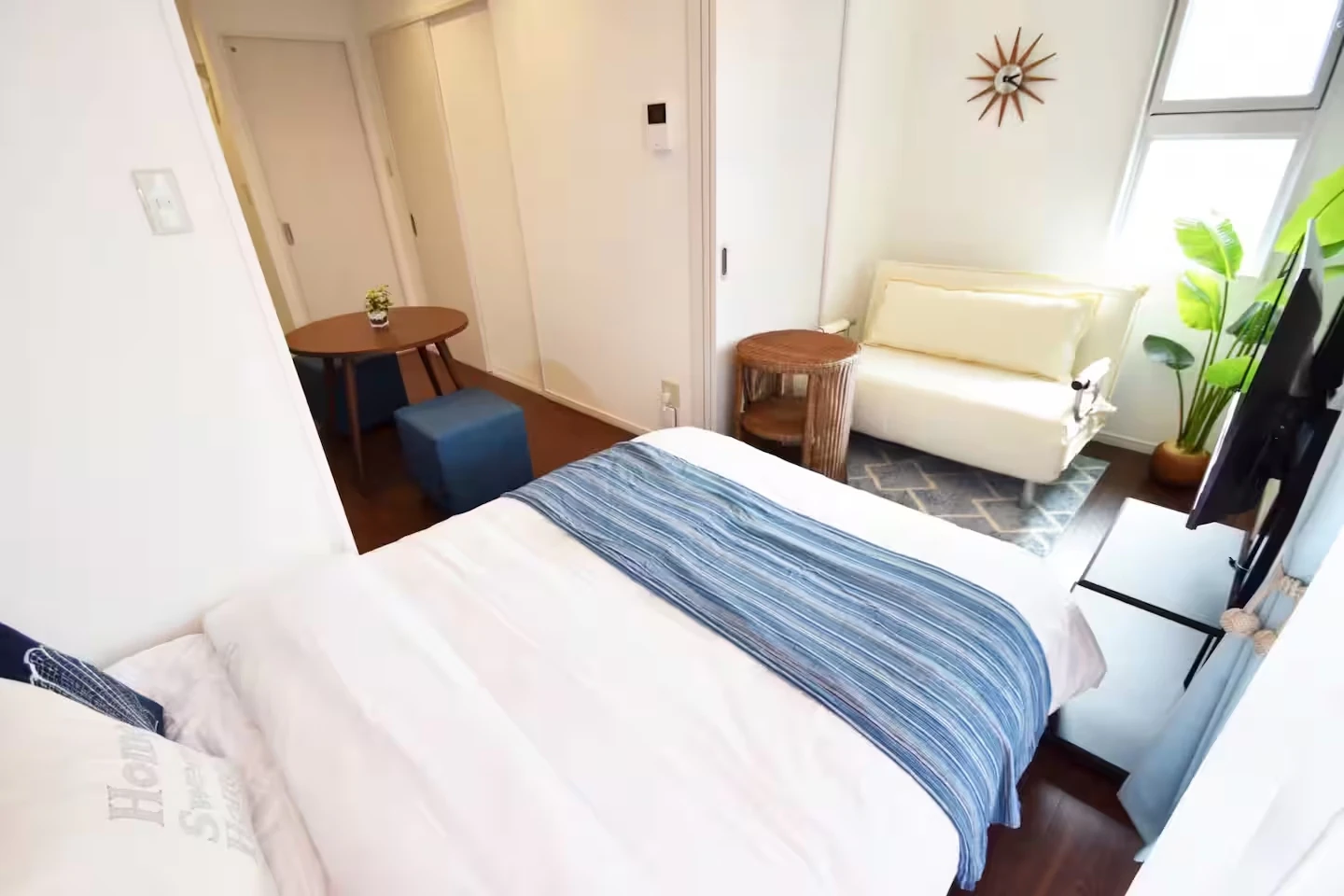
A base for walking around Naha
Enjoy Maru 402
- Up to 6 guests; studio layout
- Kitchen and washing machine
- Off-site paid parking
This private studio unit accommodates up to 6 guests and has a kitchen and washing machine. It does not have separate bedrooms, so check sleeping times and bedding arrangements. Parking is off-site and paid. If driving, consider parking charges alongside the accommodation cost.
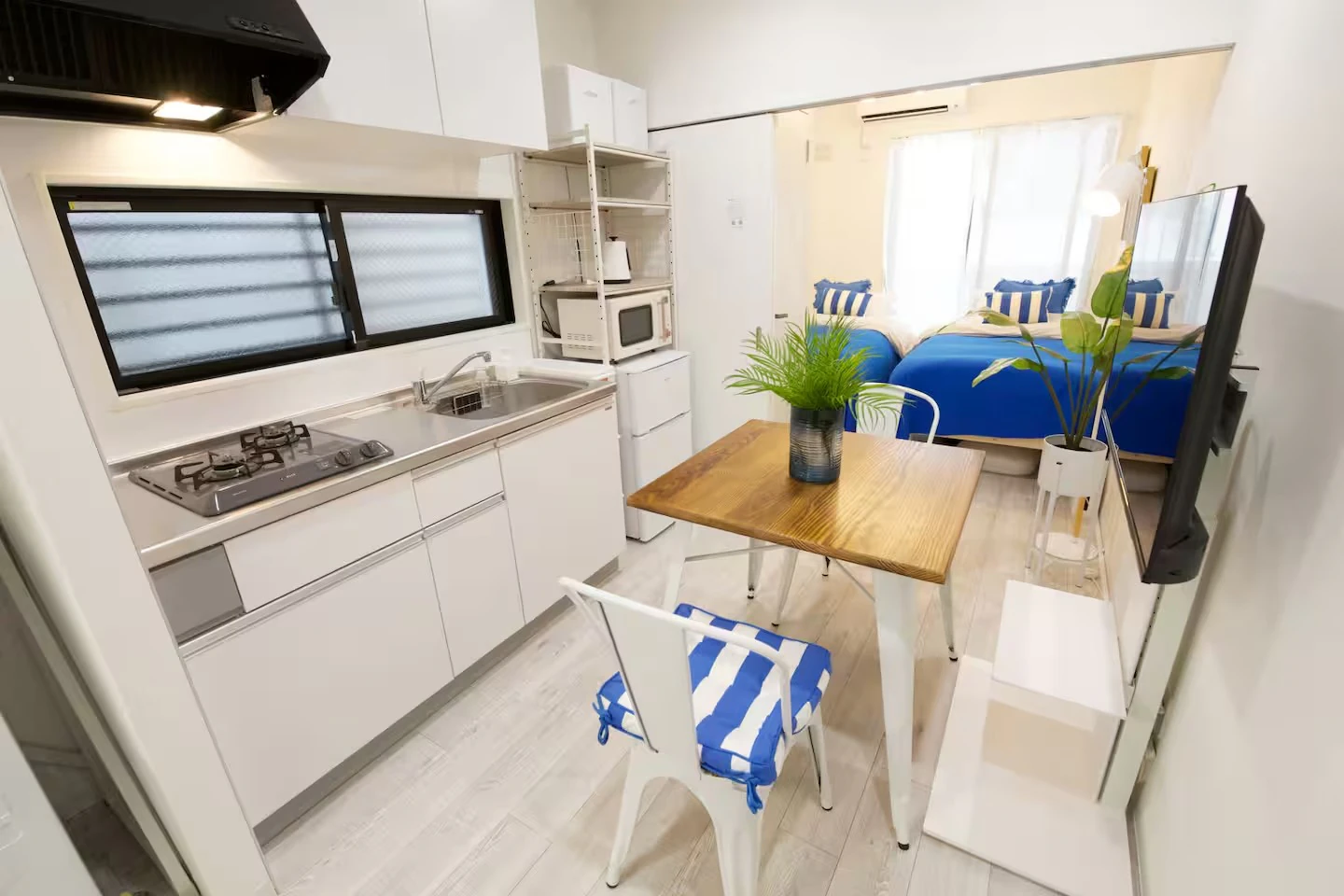
A Naha stay for a small party
GIRASOL 301
- Up to 2 guests; 1DK; about 22 m²
- Kitchen, washing machine and dryer
- 3rd floor; no elevator
This 1DK apartment has about 22 m², accommodates up to 2 guests, and includes 2 single beds, a kitchen, washing machine and dryer. It is an option for a small party comparing facilities in Naha. The room is on the 3rd floor with no elevator, so consider luggage and stairs before booking.
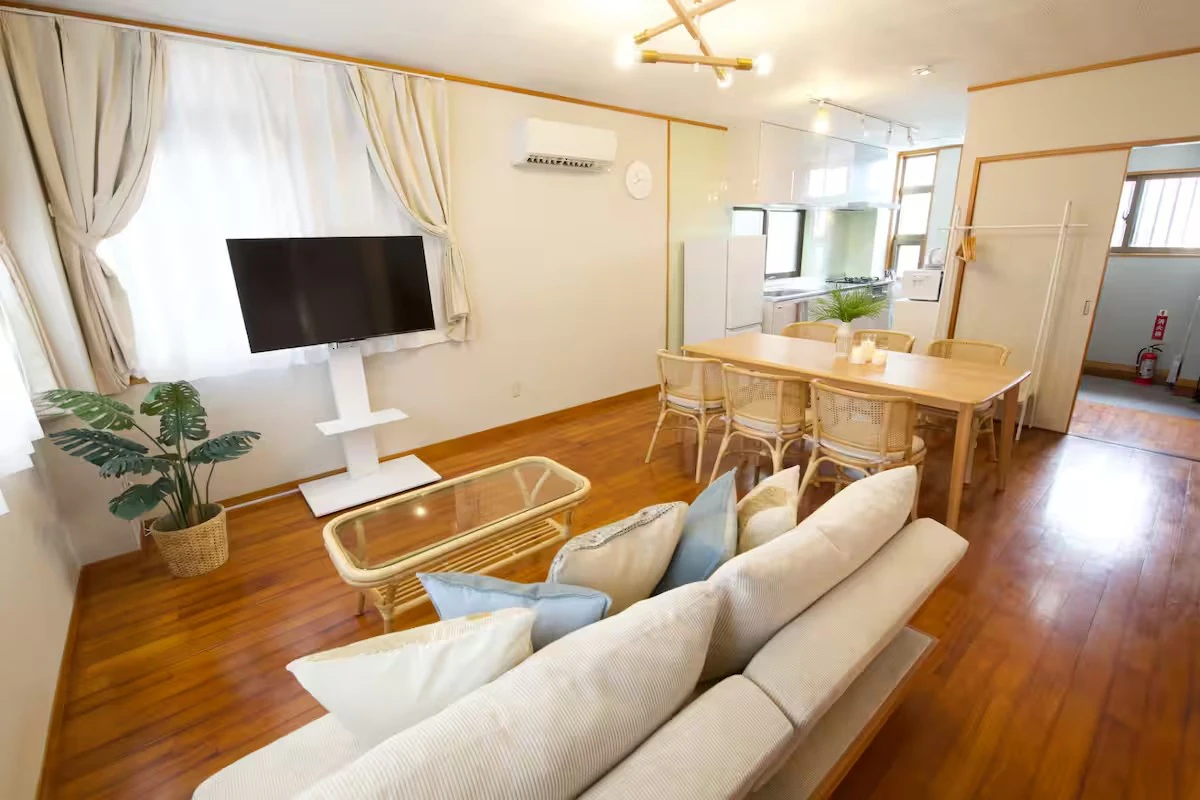
A Naha base for families and groups
AZUKI Heights 2F/3F
- Up to 9 guests; 3LDK; 91 m²
- Kitchen and washing machine
- Free parking for 1 car
This private 3LDK apartment has 91 m², accommodates up to 9 guests, and includes a kitchen, washing machine and free parking for 1 car. Families and groups needing separate bedrooms can compare the rooms and bedding. Maximum capacity does not ensure everyone’s preferred sleeping arrangement; check the number of cars and stair access too.