


When choosing breakfast in Naha, start with what you want to eat and when you need to leave afterward. An early start in the 7 o’clock hour, a hot meal at a table, and a relaxed café breakfast each call for a different place and amount of time.
The eateries in First Makishi Public Market and the cafés nearby have different opening times. The market’s overall hours are 8:00–22:00, but individual shops set their own hours. Distinguish the building’s opening time from the time you can order the meal you want. That makes the morning easier to plan. (Source: Naha City: First Makishi Public Market information)
This guide focuses on the Makishi Public Market area: choosing a place, ordering, budgeting, deciding whether to walk or drive, and planning breakfast with family. Opening hours, published menus, and accommodation details were checked on 2 October 2026. Prices and temporary closures may change. Use the listed amounts for planning and follow the menu displayed when you visit.
TL;DR
- Choose from 4 nearby eateries by day of the week and opening times of 7, 8, or 9
- Breakfast budgets and order examples based on official menus
- Market cooking service, walking or driving, family mornings, and alternatives for rain or closures
- Plan departures and walks, then compare 3 Naha stays
Choose breakfast around an early departure, a seated meal, or time at a café
For breakfast before an early departure, consider Potama Makishi Market, which opens at 7. Dotonbori on the market’s 2nd floor is an option for Okinawa soba or set meals from 8; Kiraku Shokudo offers a choice of home-style, Chinese, and seafood dishes from 9. C&C BREAKFAST OKINAWA opens at 9 on weekdays and 8 on weekends and public holidays, and closes on Tuesdays. (Sources: Potama Makishi Market, Dotonbori, Kiraku Shokudo, C&C BREAKFAST OKINAWA)
If your departure time is fixed, decide how long you can wait in line and have an alternative breakfast ready. Takeout still takes time to order, prepare, and collect. Before a ferry, tour, or flight, don’t assume you’ll finish eating quickly just because you arrive when the shop opens.
On a day devoted to food, you could combine breakfast with market shopping. A large breakfast may leave less room for the Okinawa soba or lunch you have planned. Separate mornings when breakfast is the main event from mornings when you eat lightly before leaving, so you can still enjoy the other meals on your itinerary.
4 breakfast options opening at 7, 8, or 9
| Eatery and location | Regular hours and closing days | How to choose for your morning |
|---|---|---|
| Potama Makishi Market | 7:00–20:00; open every day | A morning when you want to choose between eating rice sandwiches there and taking them away |
| Dotonbori, market 2nd floor | 8:00–21:00; last orders 20:00; closed on the 4th Sunday | A morning when you want Okinawa soba or a set meal from 8 |
| Kiraku Shokudo, market 2nd floor | 9:00–21:00; last orders 20:00; closed on the 4th Sunday | A morning when you want to choose from home-style, Chinese, or seafood dishes |
| C&C BREAKFAST OKINAWA | Weekdays 9:00–15:00; weekends and public holidays 8:00–15:00; last orders 14:00; closed Tuesdays | A morning when you want pancakes and time to enjoy breakfast itself |
The table summarizes the regular hours and types of food in the official listings. It does not mean every dish is available as soon as an eatery opens. (Sources: Potama shop information, Market listing: Dotonbori, Market listing: Kiraku Shokudo, C&C official website)
The market normally closes on the 4th Sunday of each month, except in December. There are also closures around New Year and the Obon holiday in the lunar calendar, with differences by shop. The market and independent nearby businesses do not share a single opening calendar, so check the eatery you plan to use. (Source: Naha City: market information)
The night before, settle 4 things: your first choice, its opening time, when you aim to finish, and a backup. Simply going to the market area and deciding there can mean searching for shops that haven’t opened yet. A backup needn’t be another popular restaurant; it can be breakfast at your accommodation or a meal after you’ve travelled to your next stop.
Potama: rice sandwiches and soup for an early start
Start with the basic flavor, then decide how much to order
Potama Makishi Market is at 2-8-35 Matsuo, Naha. Its official listing offers eat-in and takeout. The basic Potama sandwiches pork luncheon meat and egg in warm rice, with an official tax-inclusive price of ¥450. Eat-in and takeout have the same tax-inclusive price; delivery prices differ. (Sources: Makishi Market shop, Potama product information)
If you aren’t sure what to order, start with the basic item and decide whether to add soup. The official menu lists mozuku seaweed soup at ¥350 including tax and sanpin tea at ¥350 including tax. The soup uses a bonito stock. (Sources: Mozuku seaweed soup, Sanpin tea)
| Sample order | Calculation using official listed prices | When it may suit your plan |
|---|---|---|
| Potama only | ¥450 | A starting point for a morning before a substantial lunch |
| Potama + mozuku soup | ¥450 + ¥350 = ¥800 | Rice with a hot soup |
| Potama + mozuku soup + sanpin tea | ¥450 + ¥350 + ¥350 = ¥1,150 | A budget when you also buy a drink at the shop |
These are totals for buying the items separately, not discounted meal sets. If 2 adults each order the ¥800 combination, the total is ¥1,600; for 4, it is ¥3,200. Transport and parking are extra. Appetite varies, so don’t assume 1 sandwich will fill everyone up. Choose the quantity around your usual breakfast and the time of your next meal.
For takeout, plan what happens after collection
Before ordering takeout, agree on who will order, where you’ll eat, and whether you can return to your accommodation before departure. If you’ll eat there, one person could collect breakfast while the others get ready. That only works if you allow time for the return trip and collection. Adding it to the morning without checking the distance can delay your departure.
If there’s a queue, ask about the likely collection time before ordering. Switch to your backup if it won’t fit your deadline. Avoid planning a long outing with the food after buying it, and eat somewhere that doesn’t obstruct pedestrians or businesses. Don’t assume the market’s rest facilities allow food brought from other shops.
Market eateries: a hot breakfast or the market cooking service
Dotonbori from 8; Kiraku Shokudo also becomes an option from 9
Dotonbori’s official listing offers Okinawa soba and set meals, with 45 table seats. Kiraku Shokudo serves home-style, Chinese, and seafood dishes, with 36 table seats and 8 floor-seating places. Both listings accept credit cards, electronic money, and QR-code payments. (Sources: Dotonbori shop information, Kiraku Shokudo shop information)
Decide whether you’d like noodles, rice with side dishes, or dishes to share before discussing the menu at the counter. Ask that day about the morning menu, what a set meal includes, and sharing rules. A published seating capacity doesn’t mean a large group can immediately sit at the same table.
For families with children or grandparents, consider whether everyone can start eating together. Even where floor seating is listed, think about availability that day, taking shoes off, and how easily everyone can sit down and stand up. If you need separate tables when it’s busy, decide who will sit beside the children before you enter. That helps with ordering and payment.
For the market cooking service, budget beyond the ingredients
The market’s mochiage service lets you buy ingredients on the 1st floor and have an eatery on the 2nd floor cook them. Discuss eligible ingredients with the shop. Pay for the ingredients at the shop and the cooking separately at the eatery; the cooking charge varies with preparation. (Source: Market guide to the cooking service)
Before trying it, agree on the ingredients, eatery, cooking method, and total cost before buying the food. Buying a fish just because it catches your eye may not fit the preparation or mealtime you want. Ask in this order, including whether the service is available that morning.
- Explain your group size and the time you want to eat.
- Discuss ingredient prices, quantities, and your preferred cooking method.
- Confirm which eatery can cook it and the estimated total, including cooking and extra orders.
- Buy only after you understand the handover and payment arrangements.
The budget is the ingredient cost plus cooking charges plus extra food and drinks. Don’t apply a single cooking fee found online to every order; ask for an amount based on your group and dishes. It’s easier to fit this experience into a day with time for choosing ingredients and eating than into a morning before an early departure.
C&C BREAKFAST: plan a café morning around its hours and menu
8 on a weekday is different from 8 on a weekend or public holiday
C&C BREAKFAST OKINAWA is a breakfast café at 2-9-6 Matsuo, Naha. Its official website introduces açaí bowls, pancakes, omelettes, and other dishes. It opens at 9:00 on weekdays and 8:00 on weekends and public holidays, and closes on Tuesdays. If some people want a sweet breakfast and others something savory, look at the menu together the night before. (Source: C&C BREAKFAST OKINAWA)
If your family always eats breakfast at 8, have another option depending on the day of your visit. On a weekday café morning, you could get ready after waking and leave later, then move lunch back a little to allow for breakfast at 9. Don’t plan to wait for this café to open on a Tuesday.
Compare the food-and-drink combinations
The official published menu checked on 2 October 2026 lists blueberry or banana pancakes at ¥1,100 and the Fruit Special at ¥1,760. An eligible drink with a food order is listed as an extra ¥300. Coffee alone is ¥550. Eligible drinks include coffee, tea, herbal tea, apple juice, and guava juice. (Source: C&C official grand menu)
Using the displayed prices, pancakes with an eligible drink total ¥1,100 + ¥300 = ¥1,400; the Fruit Special with a drink totals ¥1,760 + ¥300 = ¥2,060. If 2 people each choose the ¥1,400 combination, the total is ¥2,800. Not every separately listed drink, such as a smoothie, qualifies for the ¥300 add-on.
The official menu asks for an order from each person. If you want to share a large plate, don’t assume sharing alone meets the ordering requirement for the group; discuss what each person will order. Check the shop’s guidance on orders for children and takeout. (Source: C&C official grand menu)
Follow the prices displayed on the day. Allow time for both waiting for a seat and preparation, and leave space before any appointment with a fixed meeting time. Include photographs in your breakfast time so your companions aren’t kept waiting hungry.
Getting there: walk or drive to the market area?
On foot or by monorail, check the route to the entrance
First Makishi Public Market is at 2-10-1 Matsuo. Official walking estimates are 9 minutes from Makishi Station and 10 minutes from Miebashi Station. These are station-to-market estimates, not walking times from each accommodation or estimates for families carrying luggage. (Source: Naha City: market access)
Save the shop’s name and address on your map, and check the route from your accommodation, including the return route if needed. The market, Potama, and C&C are in different buildings. Pin the actual eatery rather than a general market-area destination. Keep its name on your phone so you can share a meeting point with the rest of your group.
With children, include the walk after breakfast to your accommodation or the next destination, not just the outward journey. If you’ll shop afterward, consider the return trip with more bags. Leaving the car behind avoids searching for parking, but it doesn’t remove the effort of walking together in rain or heat.
If driving, include parking and the walk to the eatery
The market has no parking of its own; paid car parks are nearby. The official local map also warns about one-way traffic on Ukishima Street and traffic restrictions on Kokusai Street that depend on the day and time. Include the walk from the parking location to your eatery in your plan. (Sources: Naha City: market information, Market access and neighborhood map)
Consider whether you need to move a car from your accommodation’s parking area just for breakfast. If you’ll then drive north, using the car may fit your plan. If you’ll continue walking around Naha, consider walking or public transport from your accommodation. Use the next part of your day to decide how to get there.
For parking, check more than the hourly rate: maximum-charge conditions, entry and exit hours, and the signs on site. Add transport and parking to the meal cost to see whether a cheaper meal farther away really fits your budget. Don’t base an airport departure plan solely on a driving-time estimate without allowing for congestion around the market.
3 morning plans: an early departure, a city walk, or family time
The following are planning examples from the editorial team. They do not guarantee seats, waiting times, or serving times. Adapt them to your actual reservations and travel arrangements.
An early departure: avoid adding detours just for breakfast
Start with the time you need to reach your meeting point, then work back through travel from your accommodation, packing, and checkout. Breakfast fits into the time left. For example, if you want to leave your accommodation at 8:30, decide whether a visit during the 7 o’clock hour allows enough time for the return trip, queue, meal, and tidying up.
Prepare drinks and food for breakfast at your accommodation the night before so you can switch plans if queues or closures disrupt the morning. A place with a kitchen lets you consider breakfast without everyone going out. Don’t assume ingredients, seasonings, or breakfast service are included in the accommodation price; plan to prepare what you need yourselves.
A walk around Naha: choose an eatery first, then shop
You could eat at Dotonbori or C&C, then walk around the market area and browse the shops that are open. Shopping first can leave hungry people waiting or add bags before you’ve eaten. Start with breakfast, then stop at shops if there’s something you want.
If you’ll cook market ingredients at your accommodation, decide on a dish before discussing quantities, and ask the seller about taking them back and storing them. Avoid buying fresh food before a long afternoon out; place the shopping just before returning to your accommodation. On your departure day, separate food to eat locally from food affected by import rules. Being sold in a shop does not by itself mean it can be taken home.
A relaxed family morning: allow for different appetites and waking times
If family members wake and eat different amounts, agree on a morning to eat out together, and consider a small breakfast at your accommodation on other days. When eating out, separate the ordering role from looking after the children. Ask on arrival for sharing plates and any cutlery you need, rather than rushing once the food appears.
If some people want to browse the market and others want to return to the accommodation, agree on a meeting place and how to stay in touch before splitting up. Choose a main breakfast stop rather than taking the whole family around several eateries. Add drinks or shopping if you still have energy; that makes the morning easier to adjust to everyone’s tiredness.
Check dietary needs and facilities for children before you go
Appearance alone cannot tell you what’s in a dish. The official allergen information for the basic Potama lists egg, shrimp, soy, and pork as ingredients. The mozuku soup lists milk too, so don’t assume it contains only what you can see. The official guidance also notes possible contact with ingredients from other products during preparation. (Sources: Potama allergen information, Mozuku soup allergen information)
If you have dietary restrictions, prepare a note or phone screen listing exactly what you need to avoid, then discuss the product and its preparation. If you avoid meat, fish, or eggs, explain that this includes stock and sauces rather than judging by a name or photograph. This guide does not say the featured eateries can always accommodate dietary restrictions.
The market’s information lists a nursing room and accessible toilets, but no stroller rental. Find the facilities you need before entering an eatery, and don’t travel without a stroller on the assumption that you can rent one there. (Source: Naha City: market facilities)
With a stroller, ask before entering about the doorway, route to the table, and where it can be placed. Building facilities don’t mean every seat has room for a stroller beside it. Follow the guidance given that day, and consider how much shopping you can carry afterward so bags and strollers don’t block the aisles.
Breakfast alternatives for rain, typhoons, and closures
On a rainy day, review the journeys from your accommodation and from the car park, as well as the time inside the eatery. Having eateries in the market doesn’t mean the whole route is indoors. When you need to handle umbrellas, food, and bags, sitting down for a meal may be easier than carrying more takeout.
During a typhoon, regular opening hours are not enough to plan by. The market’s official notice links closure to local bus suspensions. If buses have been suspended from the first service and remain suspended at noon, the market closes for the day. Even if buses resume before noon and the market opens when ready, the notice says the 2nd-floor eateries remain closed all day. (Source: Market operations during typhoons)
Distinguish an ordinary rainy day from a day with transport suspensions or a market closure. Keep breakfast supplies at your accommodation the night before so you can also adjust if you decide not to go out. When checking reopening news, confirm the eatery you intend to use, not just whether the market building has opened.
Frequently asked questions
Can I eat at a market eatery if I arrive at 7?
Of the market’s 2nd-floor eateries featured here, Dotonbori opens at 8 and Kiraku Shokudo at 9. During the 7 o’clock hour, choose a nearby business with confirmed hours, such as Potama, which opens at 7. Don’t use the market building’s hours as the opening time for every eatery. (Sources: Dotonbori, Kiraku Shokudo, Potama)
How much should I budget for breakfast?
As an example using official prices, Potama plus mozuku soup bought separately totals ¥800. C&C’s published menu puts pancakes with an eligible drink at ¥1,400. Budget for the actual order separately from transport and parking. Don’t assign an unverified fixed amount to a market eatery’s morning menu or the total cost of the cooking service. (Sources: Potama, Mozuku seaweed soup, C&C menu)
Does C&C BREAKFAST open at 8 every day?
It opens at 8 on weekends and public holidays and 9 on weekdays, and closes on Tuesdays. For an early weekday departure, choose another option or plan to eat at your accommodation before traveling. (Source: C&C official opening hours)
Can I fit a market meal into the morning before flying home?
First decide when you need to reach the airport, then allow for leaving your accommodation, packing, and travel. Avoid squeezing a meal with uncertain queues or serving times into a morning with a deadline. Naha City warns that roads near the market can be congested, so don’t work back from a map estimate alone; have breakfast ready for when you cannot wait. (Source: Naha City: market access precautions)
Choose breakfast, then shape the rest of your morning in Naha
Choose a rice sandwich for an early departure, a seated hot meal at an eatery, or a café breakfast with time to linger. Opening hours, the day of the week, appetite, cost, and onward travel help narrow the options down to one place.
On a day with a fixed departure, choose breakfast that fits the schedule. On a day in Naha, leave room to browse and shop around the market afterward. With family, consider everyone’s hunger and walking distance. Use these 3 approaches to plan different mornings around your trip rather than repeating the same routine every day.
Places to stay for mornings at your own pace in Naha
A place with a kitchen is an option if you’d like to alternate eating out with preparing breakfast yourselves. The 3 Naha properties have different capacities, layouts, and parking arrangements. Compare how your family will use them as well as their distance from breakfast spots. The following facilities are confirmed on the official property pages; these are not descriptions of breakfast-inclusive accommodation packages.
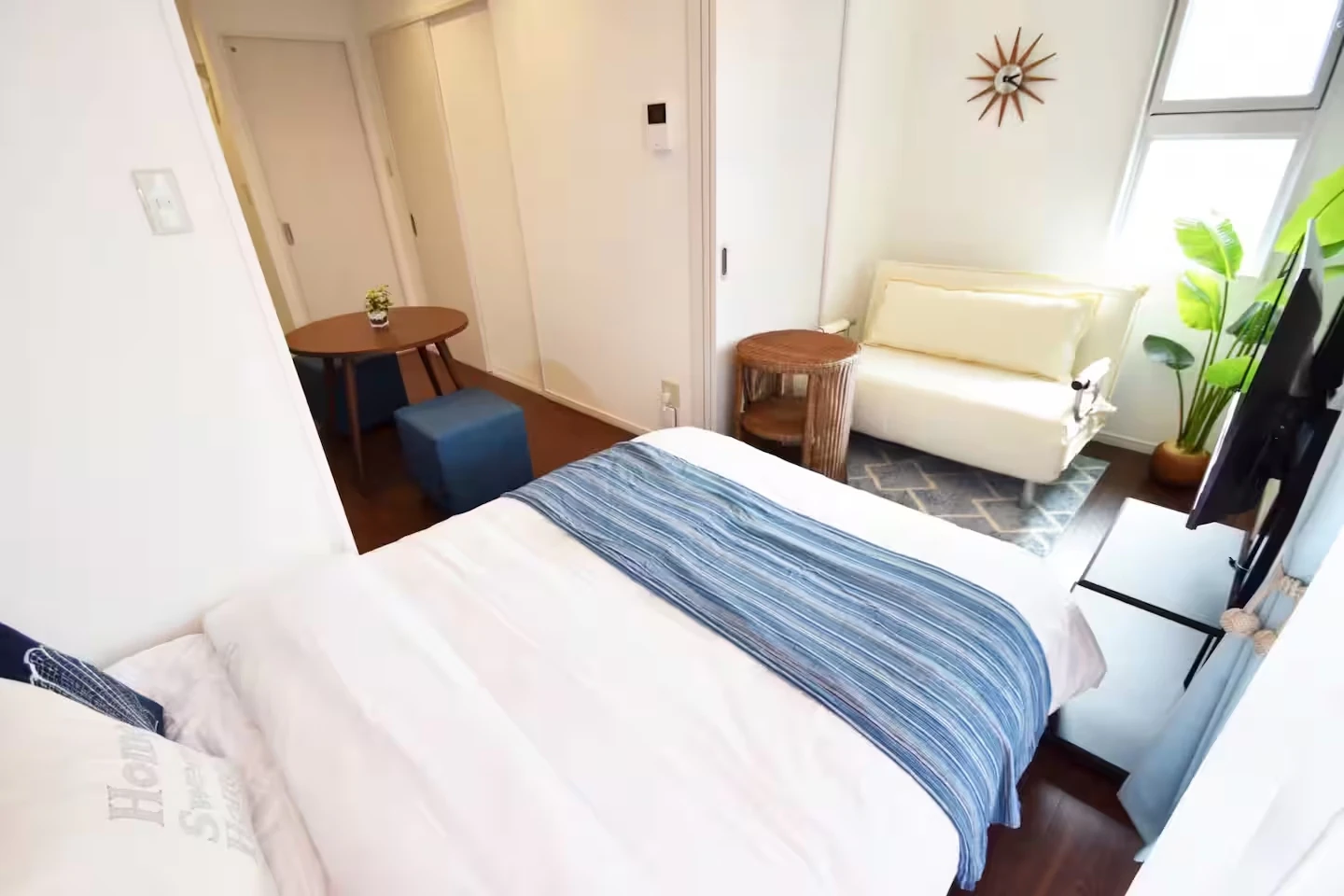
A base for walking around Naha
Enjoy Maru 402
- Up to 6 guests; studio
- Kitchen and washing machine
- Paid off-site parking
This private studio accommodates up to 6 guests and has a kitchen and washing machine. The official walking estimates are 13 minutes to Kokusai Street and about 9 minutes to Miebashi Station. Parking is off-site and paid, so include that cost if driving. Consider how your companions’ routines fit sharing the sleeping and getting-ready space of a studio.
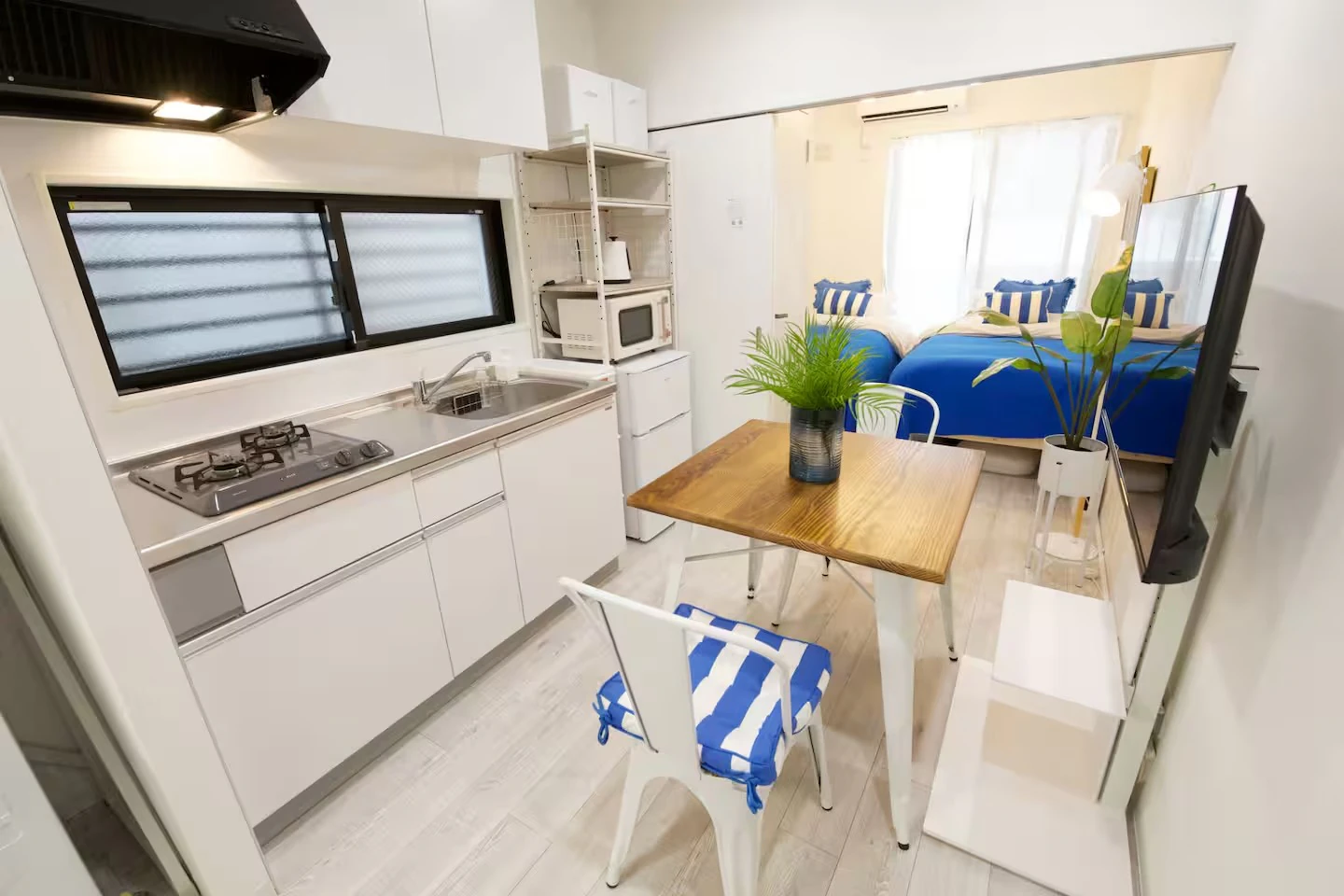
A Naha stay for a small party
GIRASOL 301
- Up to 2 guests; 1DK; about 22㎡
- Kitchen, washing machine, and dryer
- 3rd floor; no elevator
This 1DK apartment is about 22㎡ and accommodates up to 2 guests, with a kitchen, washing machine, and dryer. Consider it for 1–2 people exploring Naha and preparing a light breakfast in the room. It is on the 3rd floor with no elevator. If bringing suitcases or a stroller, choose it only after considering whether stairs suit everyone in your party.
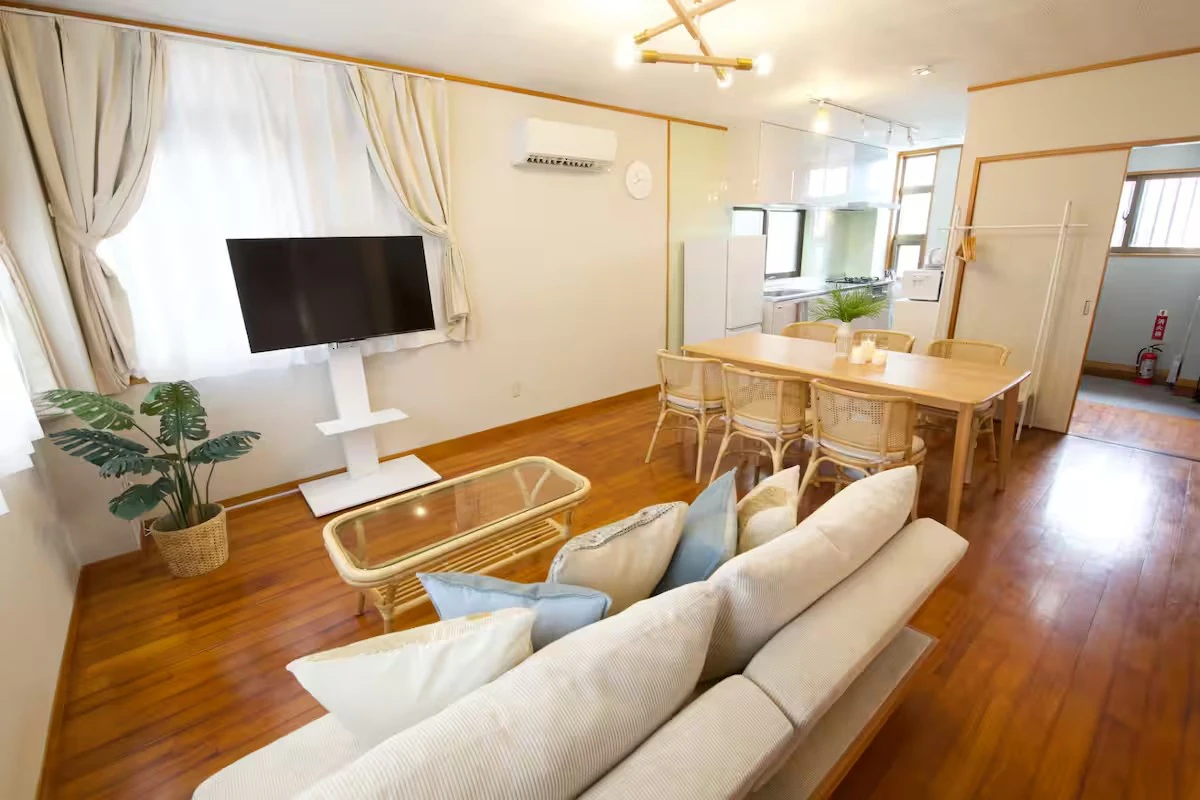
A Naha base for families and groups
AZUKI Heights 2F/3F
- Up to 9 guests; 3LDK; 91㎡
- Kitchen and washing machine
- Free parking for 1 car
This 91㎡, 3LDK apartment accommodates up to 9 guests, with a kitchen, washing machine, and free parking for 1 car. It is an option for families and groups planning a mix of breakfasts out and at their accommodation. Discuss parking for additional cars, morning routines, and how you’ll use the beds together with your group size; capacity alone doesn’t determine how a stay will suit everyone.