


Before visiting a coffee farm in Okinawa, decide whether you most want to pick coffee cherries, try roasting, or drink Okinawa-grown coffee. Harvesting is seasonal, and beans used in a roasting workshop may differ from those served in the café. Knowing your priority makes it easier to choose an experience and budget that fit your travel dates.
If your trip from Taiwan also includes beaches and Okinawan food, your itinerary will depend on whether the farm is the main event or a café stop. Your family can include workshop participants, observers, and people enjoying another drink. Accompanying guests are not always admitted free, so explain each person’s role when booking.
Using Matayoshi Coffee Farm in Higashi Village and Nakayama Coffee & Herb Farm in Nago as examples, this guide covers choosing an experience, calculating costs from official prices, booking, clothing, and planning a stay in northern Okinawa. Information was checked on October 2, 2026. Published details do not guarantee a place or the condition of the cherries; check the instructions for your specific date and course before booking.
TL;DR
- Choose harvesting, a farm walk, roasting, or a café visit, and check the beans’ origin
- Calculate the total for participants and accompanying guests using official prices
- Check the harvest season, booking deadline, guide language, and change policy
- Plan clothing, a northern itinerary, souvenirs, and a base in Nago
Four ways to enjoy a coffee farm
Start with what you want to do. Seeing coffee trees grown in Okinawa, roasting beans yourself, and drinking locally grown coffee require different amounts of time and different bookings. Use this table to compare your wishes with those of your companions.
| What you want to do | What to look for | Conditions to check first |
|---|---|---|
| Pick cherries from the trees | A course that includes harvesting | Whether it runs on your date, the condition of the cherries, and whether picking is included |
| See the trees and farm environment | A course that includes a walk | Walking area, guide, clothing, and your companions’ mobility needs |
| Roast beans and brew a cup | A course with roasting and brewing | Bean origin, activities, and start and finish times |
| Drink Okinawa-grown coffee | A café menu featuring locally grown beans | Local bean content, hot or iced options, and availability |
Roasting and café visits can be options outside the harvest season. Matayoshi lists its regular roasting workshop as available year-round; Nakayama’s official experience page also lists its walk-and-roast course and roasting-only course as year-round. This does not mean you can take part every day without a booking. (Sources: Matayoshi Coffee Farm: experiences, Nakayama Coffee & Herb Farm: experiences)
If your companions have different priorities, ask about the options before booking everyone onto the longest course. Some may want hands-on activities while others prefer a café break. Check the rules for accompanying guests and where they can wait. A café purchase does not necessarily allow an unrestricted walk around the farm, so ask which areas you may enter.
Understanding “roasted in Okinawa” and “grown in Okinawa”
Coffee served at a farm, or beans used in its workshops, may not all have been grown there. Matayoshi explicitly states that its regular roasting workshop uses selected specialty green coffee beans from overseas. You can choose to learn roasting in Okinawa, to taste beans grown in Okinawa, or to do both separately. (Source: Matayoshi Coffee Farm: roasting workshop)
If local beans are your priority, check where they were grown as well as where they were roasted, and whether they are blended with overseas beans. Matayoshi’s café distinguishes Okinawa-grown coffee made with its farm’s beans, Matayoshi Blend combining Okinawan and overseas beans, and coffee made from overseas beans. (Source: Matayoshi Coffee Farm: farm café)
Nakayama also lists Nakayama-grown coffee, Nakayama Blend, and overseas coffee separately. Do not infer the proportion of local beans from a blend’s name; ask if it matters to you. Comparing serving options and prices alongside the origin will help you decide what you want to try. (Source: Nakayama Coffee & Herb Farm: café)
You can choose a cup made entirely from local beans or compare it with a blend. The higher-priced option will not necessarily suit your taste better. Let your goal and budget guide you, whether you want to try the producer’s beans or compare them with your usual coffee.
Check whether harvesting runs on your travel date
Matayoshi gives November to around April as the approximate harvest period, with the start and end depending on the cherries’ condition. It also has an announcement opening bookings for the 2026–2027 season. This is a seasonal booking announcement, not a guarantee of availability on your preferred date or sufficient ripe cherries. (Sources: Matayoshi Coffee Farm: experiences, Harvesting experience)
Nakayama’s experience page says roughly late November to early April, while its FAQ says late November to around late April. When checked, the harvest course on the booking page linked from the official site still carried a 2025–2026 season label. Use winter to spring as a general guide, then confirm bookings for the next season and the activities on your actual visit date directly. (Sources: Nakayama: experiences, FAQ, Booking page linked from the official site)
Near the start or end of the season, do not assume harvesting will be possible simply because it is winter or because a page mentions spring. Explain your date, the activity you want, and whether you would still take part if it changes. If harvesting is the main goal, decide whether you would accept a roasting workshop or café visit instead, so you know what to ask when booking.
A summer or autumn trip can still include a coffee farm. Choose from non-harvesting experiences and the café according to your interests. Base your plans on the activities offered on your date, rather than assuming special access to picking cherries.
Matayoshi Coffee Farm in Higashi: harvesting or roasting
Matayoshi Coffee Farm is at 718-28 Gesashi, Higashi Village. Its official Japanese experience pages give the following conditions for harvesting and the regular roasting workshop. Prices include tax and were checked on October 2, 2026. (Sources: Harvesting experience, Roasting workshop)
| Course | Experience fee per person | Duration and start times | How to judge whether it suits your goal |
|---|---|---|---|
| Harvesting experience | ¥11,000; elementary-school age and older | 150 minutes; 10:00 or 14:00 | Pick cherries and learn the processing, roasting, and brewing stages |
| Regular roasting workshop | ¥4,200 | 50 minutes; 10:00 or 13:00 | Roast, grind, and brew green beans from overseas |
Both courses ask you to check in at the café at least 10 minutes before the start. Harvesting takes a maximum of 6 people per session; larger groups should ask about arrangements. Give participant and accompanying-guest numbers separately, including children’s ages. A large accommodation capacity does not mean the farm can accept the same number in a session. (Sources: Matayoshi: harvesting experience, Roasting workshop)
The harvesting course is an option for people who want to learn the process from picking cherries to a cup. Ask which tasks participants perform and which beans are used, so you can judge whether it covers what interests you. The regular roasting workshop offers a shorter opportunity to notice changes in colour, sound, and aroma.
If drinking locally grown beans is your main priority, compare the café’s local menu as well as the regular roasting course. Choosing the activity and bean origin separately, rather than relying only on course length, helps align the visit with your expectations.
Nakayama Coffee & Herb Farm in Nago: a forest walk or roasting
Nakayama is at 378 Nakayama, Nago City. Its official experience page introduces three courses. The table shows that page’s tax-inclusive prices and approximate durations; it does not guarantee the conditions of your booking. (Source: Nakayama Coffee & Herb Farm: experiences)
| Course | Price on the official experience page | Duration shown on that page | What to consider |
|---|---|---|---|
| Harvesting & roasting | ¥11,000 | About 3 hours | You want to include picking cherries during the harvest season |
| Walk & roasting | ¥8,800 | About 2 hours | You want to see the trees and farm environment and learn roasting |
| Roasting only | ¥6,600 | About 1 hour | You want to focus on roasting and a cup rather than a farm walk |
The booking page linked from the official site describes roasting and brewing with “the farm’s green beans” on Course A, which includes a walk, and with “Nakayama-grown green beans” on roasting-only Course B. If using locally grown beans is your goal, confirm the origin of the materials for your chosen course and date. (Source: Nakayama: official booking page)
Confirm the duration when booking. The booking page linked from the official site lists the walking Course A as about 1 hour 30 minutes, compared with about 2 hours on the experience page. Even when course names look similar, confirm the actual activities, start time, and expected finish before making your next commitment. (Sources: Nakayama: experiences, Booking page linked from the official site)
If a forest walk appeals to you, check the route and conditions on the day before choosing a course with a walk. People who prefer less walking or want other sightseeing that day can start by considering the roasting-only course. A short course does not necessarily mean there are no steps or uneven surfaces; describe your companions’ mobility needs when asking.
The official FAQ says booking by the previous day is the standard arrangement and workshops are not held without a reservation. Courses A and B on the official site’s linked booking page have a deadline of 17:00 the day before. Ask separately about requests after that deadline or on the day, without assuming they can be accepted. Bookings require approval, so check the acceptance or approval reply rather than treating submission alone as confirmation. (Sources: Nakayama: FAQ, Booking page)
Calculate costs for participants, accompanying guests, and café visits
Calculate your budget by separating participants, observers or accompanying guests, and any additional café orders. Do not plan to book the whole family as participants and change some of them to observers on arrival.
Matayoshi’s harvesting course charges accompanying guests of elementary-school age and older a ¥5,500 guide fee, while accompanying preschool children are free. The regular roasting workshop charges observers of elementary-school age and older ¥1,100. These are course-specific conditions; the harvesting companion fee does not carry over to roasting. (Sources: Matayoshi: harvesting experience, Roasting workshop)
| Participation examples at Matayoshi | Calculation | Total for the experience and observation |
|---|---|---|
| Two adults take the regular roasting workshop | ¥4,200 × 2 people | ¥8,400 |
| Two adults roast; one person observes | ¥4,200 × 2 people + ¥1,100 × 1 person | ¥9,500 |
| Two adults harvest; one person accompanies them | ¥11,000 × 2 people + ¥5,500 × 1 person | ¥27,500 |
These examples are calculated from published prices. Explain children’s ages and each person’s role to confirm participation, what observers may do, and how people count towards a booking slot. Additional café orders, transport, accommodation, and shopping are not included. Ask what the fee covers; do not assume observers may drink the coffee brewed in the workshop.
If four participants choose Nakayama’s walk-and-roast course at ¥8,800, the calculation is ¥8,800 × 4 people = ¥35,200. This also uses the official experience page’s displayed price; confirm the final course conditions and fees for your group when booking. Changing people’s roles can change the total even if your group size stays the same. (Source: Nakayama: experiences)
On the official booking page, Course A lists accompanying preschool children as free, with a ¥2,000 guide fee for accompanying guests of elementary-school age and older. Two participants plus an accompanying guest of elementary-school age or older would be ¥8,800 × 2 people + ¥2,000 × 1 person = ¥19,600. Their roles differ from the four-participant example, so explain which arrangement applies when booking. (Source: Nakayama: official booking page)
Course B says children joining the experience together are free, while a child taking part independently is charged a full participant fee. Treat this separately from Course A’s companion fee. Do not decide the eligible ages, number of free children, or arrangements for tasks, equipment, and drinks yourself; explain the actual ages and participation plans to confirm the total. (Source: Nakayama: official booking page)
For a café visit, compare origins and serving options
A café visit can be an option when adding a farm to your day. Nakayama’s FAQ says café-only visits and takeaway are possible. Even when not everyone wants a lengthy workshop, a cup of locally grown coffee can be the purpose of the visit. Check opening days and menu availability before setting out. (Source: Nakayama: FAQ)
| Examples from the official café menus | Tax-inclusive price checked | Origin and serving options |
|---|---|---|
| Matayoshi’s Okinawa-grown coffee | ¥2,500 | 100% beans from the farm; hot only |
| Matayoshi Blend | ¥1,600 | A blend of Okinawan and overseas beans |
| Nakayama-grown coffee | ¥2,000 | Hot and iced options are listed |
| Nakayama Blend | ¥1,300 | Choose it separately from the all-local-bean option |
Sources:Matayoshi: farm café, Nakayama: café. Prices and menus were checked on October 2, 2026.
At Matayoshi, a cup of local coffee plus a cup of the blend would be ¥2,500 + ¥1,600 = ¥4,100. At Nakayama, Nakayama-grown coffee plus Nakayama Blend would be ¥2,000 + ¥1,300 = ¥3,300. These are separate café-order examples, not workshop fees or a dedicated tasting-set price. Decide whether to order a cup each or ask about comparing them under the café’s rules, according to your companions’ wishes.
If someone does not drink coffee, look at the other drinks first. Matayoshi lists options such as juice; Nakayama also lists teas and orange juice. A coffee farm visit does not require everyone to choose coffee. If the reason involves dietary restrictions, check the ingredients of the alternative drink too. (Sources: Matayoshi: farm café, Nakayama: café)
When booking, explain the date, roles, language needs, and change conditions
Before booking, put your desired activity and conditions into a short note alongside names and numbers. For an overseas trip, check that you can receive replies and be contacted on the day, making it easier to respond to time changes or weather-related updates.
- Date and course: visit date, morning or afternoon preference, whether harvesting is included, and preferred bean origin.
- Numbers and roles: participants, accompanying guests or observers, and children’s ages and numbers.
- Language of the explanation: how much Japanese you understand and whether you need another language.
- Meeting and finish: meeting point, check-in deadline, expected finish at booking, and contact details if you run late.
- Changes and cancellations: separate changes you request from farm cancellations, and check contact methods and fees.
Matayoshi’s roasting workshop requires advance application; requests for the same or following day should be made by phone. Harvesting also requires advance application, with next-day requests checked by phone. Do not count on an unbooked experience at Nakayama either. Check whether you have submitted a form, received an acknowledgement, or obtained confirmation before finalising transport and meals. (Sources: Matayoshi: roasting, Harvesting, Nakayama: FAQ)
An official page in another language does not ensure that your chosen session will be explained in that language. Ask about taking part with Japanese explanations and having time to use translation, according to your situation. Do not assume interpreters or foreign-language staff are included without confirmation.
If your plans may change, check cancellation charges
Matayoshi’s experience pages list cancellation charges for changes made by the guest: 100% on the day, 80% the previous day, and 50% 2–7 days before. Nakayama’s FAQ lists 100% of the booking price for an unannounced cancellation on the day. The conditions differ, so check your actual course and booking screen rather than applying one farm’s policy to the other. (Sources: Matayoshi: roasting, Harvesting, Nakayama: FAQ)
Ask separately about farm cancellations caused by weather or the cherries’ condition. Matayoshi’s harvesting page explains notification when growth or bad weather prevents the activity and states that losses from itinerary changes are not compensated. Other transport or activities have their own conditions; a farm cancellation does not automatically refund every related cost. (Source: Matayoshi: harvesting terms)
What to wear and what to notice during the experience
Choose clothing for walking around a farm separately from a café-only visit. Matayoshi’s harvesting instructions request easy-to-move-in clothes and shoes, avoiding sandals, heels, and long skirts. Nakayama advises comfortable shoes without heels, long sleeves and trousers, and insect repellent if needed. (Sources: Matayoshi: harvesting experience, Nakayama: FAQ)
If someone finds prolonged walking difficult, ask about slopes, steps, resting places, and observation areas when booking. A short course does not necessarily mean no walking, and being an observer does not mean you can wait anywhere. Ask about rainwear, spare clothes for the weather, and where you can leave belongings to help plan the meal or accommodation stop afterwards.
Rather than memorising every step, note these differences in your own words during the activity. They can help when choosing coffee at home. Follow staff instructions for equipment and handling heat.
- For harvesting: which cherries to pick and how beans are removed from the fruit.
- For roasting: when the beans’ colour, sound, and aroma change.
- For brewing: which beans and grind were used, and the flavour you noticed.
- For the café: origin, blend, hot or iced, and your preferences.
Your group does not need to describe the coffee in the same way. Record your own impressions, such as liking the aroma or wanting to try a lighter roast. Keep taste impressions separate from the producer’s information about origin, variety, and roasting, making it easier to compare similar products later.
Build your day in the north around a confirmed booking
Add check-in, travel, meals, and breaks to the activity time. You can choose a single farm that suits your goals rather than planning to visit both Nago and Higashi. Keeping other sightseeing flexible according to the finish time and your companions’ energy reduces the need to rush to the next stop.
Suppose you secure a 13:00 regular roasting booking at Matayoshi. Check-in would be by 12:50, with the 50-minute activity giving a calculated finish around 13:50. This is a planning example, not a guarantee of a slot or finish time. Allow for café orders and payment, and avoid booking the next activity for exactly 13:50. (Basis: Matayoshi: roasting workshop)
For a confirmed 14:00 harvesting start, check-in by 13:50 plus 150 minutes gives an approximate finish around 16:30. If followed by dinner farther away, a drive to Naha, or arrival at your accommodation, allow separately for travel and breaks. Do not underestimate the duration or feel obliged to add several long activities to the same day. (Basis: Matayoshi: harvesting experience)
For a café-only visit, you can plan another main attraction and fit in the stop after checking opening arrangements. Another option is separate days for an experience and a café. This accommodates both people interested in locally grown beans and those who want practical activities without giving everyone the same length of programme.
Save your rental-car destination and return route beforehand
Nakayama’s booking page advises Google Maps because car navigation systems may take you to a different location. Save the destination map from the official site, avoid similarly named places, and compare it with the meeting point in your booking. (Source: Nakayama: booking page linked from the official site)
Your starting point depends on your accommodation. Do not assume every farm is a quick drive simply because you are staying in Nago; check the actual farm and accommodation addresses. Confirm farm parking, the number of cars, and somewhere to eat afterwards to coordinate a family or several vehicles.
When buying beans, check the label and how you will brew them at home
When buying coffee you enjoyed, the beans for sale may differ from those in your cup. Nakayama advertises bean sales, but check that day’s stock, amounts, and whether grinding is offered at the café. (Source: Nakayama: FAQ)
Read the origin, blend description, roast information, quantity, and storage instructions, choosing a form that works with your home equipment. If you own a grinder, whole beans may suit you; otherwise ask whether they can be ground. For gifts, consider the recipient’s brewing equipment too.
For gifts brought back to Taiwan, ask whether the product is roasted beans, green beans, or a plant, and note its name and processing state. Before buying, use Taiwan’s Animal and Plant Health Inspection Agency guidance for travellers to check the conditions for that product. The agency lists fresh fruit and plants with soil among items that cannot be brought in. Coffee cherries or seedlings should not be treated as the same kind of souvenir as roasted beans.
Frequently asked questions
Is a farm visit worthwhile outside the harvest season?
Roasting, courses with walks, and cafés are also options. Decide whether picking cherries or enjoying a cup and roasting is your priority, then choose a plan offered on your visit date.
Do roasting workshops always use Okinawa-grown beans?
No. Matayoshi explicitly states that its regular roasting workshop uses overseas green beans. If locally grown beans are your priority, check the course materials separately from the café’s local-coffee menu. (Source: Matayoshi: roasting workshop)
Are family members who only accompany us admitted free?
It depends on the farm, course, and age. Matayoshi’s harvesting and roasting conditions also differ. Explain participants, observers, accompanying guests, and children’s ages separately, then confirm numbers and the total before booking.
Can I participate if I do not understand much Japanese?
There is no universal answer. Ask about the language in your session, understanding equipment instructions, and using translation. An official foreign-language page does not mean an interpreter is included.
Can I combine a northern farm experience with other sightseeing that day?
Judge this from the start and finish, check-in, travel, meals, and your companions’ stamina. Confirm the farm booking before building plans around it rather than filling the day with commitments first.
Choose the activity and origin for a memorable cup
Pick cherries, see trees, roast beans, or drink locally grown coffee: knowing your main priority lets you compare time, reservations, and costs. Consider everyone’s wishes and participation conditions instead of assigning the whole family the same role.
Before booking, summarise the course on your date, bean origin, numbers and ages, start and finish, and change conditions. Afterwards, make a brief note of the beans and your impressions, connecting your farm visit with choosing coffee once you are home.
Base your northern coffee trip in Nago
If your family or group travels by car, coordinate the farm visit with your accommodation dates and choose somewhere to rest before or after the activity. Compare capacity, bedding, car numbers, and check-in time to see whether everyone’s needs fit.
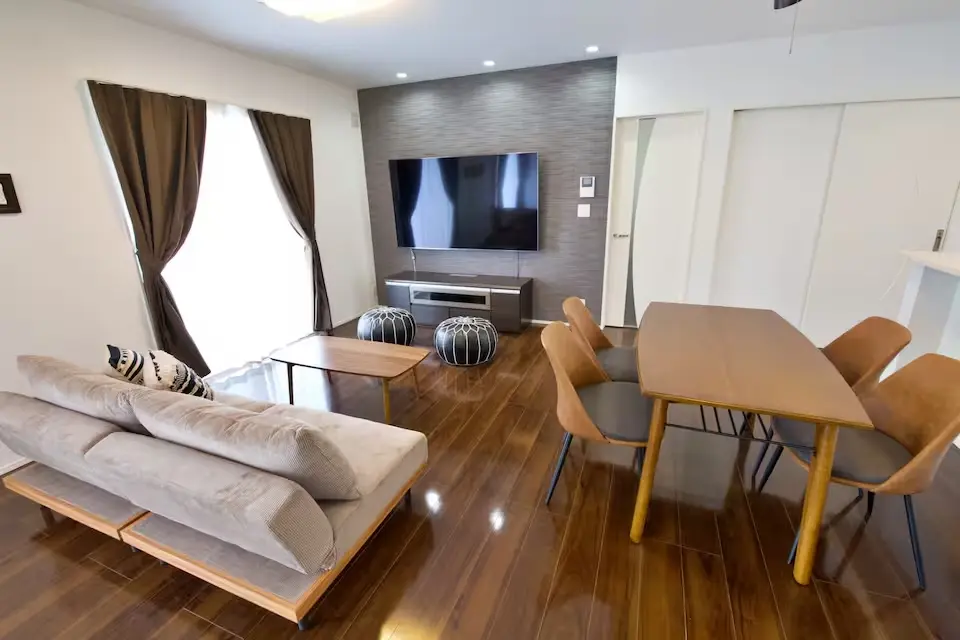
A Nago base for the north
Nago Goga House
- Up to 10 guests · 90㎡ · 3 bedrooms
- Kitchen and washing machine
- Free parking for 2 cars
This whole-house rental accommodates up to 10 guests across 90㎡ with 3 bedrooms, a kitchen, a washing machine, and free on-site parking for 2 cars. Check-in is from 16:00 and check-out by 10:00. Check routes from your actual accommodation and farm locations, and consider who will share bedding and how many cars you have rather than capacity alone. Compare prices and availability for your dates and group size through the property page.