


Before booking a property that accommodates up to 14 guests, decide where everyone will sleep and who will share a room. Ocean Terrace Sesoko 203 is a private 55 m² apartment with 3 bedrooms and a living, dining and kitchen area (3LDK). It lists 4 semi-double beds, 1 queen bed, 1 sofa bed and 1 futon set. That is 7 sleeping units in total, not 14 separate beds.Ocean Terrace Sesoko 203: official property page
When parents, children, grandparents and siblings’ families travel from Taiwan to Okinawa, sharing meals and conversations in one place can be part of the appeal. But leaving sleeping arrangements until arrival can push aside the needs of people who want their own bed, children who go to bed early, or anyone who finds it difficult to get up from the floor. Gather everyone’s preferences before the person making the booking decides on a plan.
This guide distinguishes what the published bedding list confirms from what you need to ask the operator. It covers different family groups, bathroom routines, laundry, groceries, cars and shared costs. Property information was checked on October 1, 2026. Examples involving guest numbers and time are planning suggestions, not accommodation arrangements approved by the property.
TL;DR
- The listed bedding and what to check before assigning everyone a place to sleep
- Room arrangements for different family groups and questions to ask before booking
- How to plan bathroom use, laundry, grocery shopping and car arrangements
- Choosing a stay beyond its guest limit and agreeing how to share costs
Start with three separate questions: guest limit, bedding and bedrooms
The maximum number of guests, the number of sleeping units and the number of bedrooms are separate conditions. Meeting just one of these needs does not establish that a property suits the whole group.
| Item | What the official page lists | What the number does not tell you |
|---|---|---|
| Maximum occupancy | 14 guests | How different ages count toward occupancy, how many people may share each sleeping unit, or everyone’s comfort |
| Floor area and layout | 55 m²; 3LDK | Individual bedroom sizes, passage widths or space to open luggage |
| Bedrooms | 3 rooms | Bedding arrangements in each room, doors and locks, or sound transmission |
| Bedding | 4 semi-double beds, 1 queen bed, 1 sofa bed and 1 futon set | Actual dimensions, sharing conditions, extra bedding, or the sofa bed when unfolded |
| Bathroom | 1 room | Number of toilets, changing space, bathroom layout or dimensions needed for assistance |
| Parking | 1 free on-site space | Location and cost for a 2nd vehicle or more, and permitted vehicle size |
Check the published details on the official property page. Do not infer exact widths from the labels “semi-double” or “queen,” or assume every sleeping unit can be shared by the same number of people. The public information does not confirm that extra bedding is available.
Dividing 55 m² by the number of guests does not reveal each person’s usable space: the total also includes the kitchen, bathroom and passageways. As the group grows, use photographs and the operator’s answers to check where you can open suitcases, sit down to eat and move around while others are sleeping.
Step 1: Ask everyone what they need to sleep comfortably
Before assigning rooms, ask each person what they cannot compromise on. Relatives may not want to share bedding; even couples may prefer separate sleeping spaces. For children, explain their ages, usual sleeping arrangements and whether they need to sleep in the same room as a parent or guardian.
| What to ask | Example answers | What this helps you decide |
|---|---|---|
| Using the bedding | I want my own sleeping unit / I can share if the conditions suit me | Number of sleeping units needed and dimensions to check |
| Sharing a room | Parent and child together / Separate rooms for each family / Happy to share a room | Number of bedrooms needed |
| Bedtime and waking up | Children go to bed early / Early departure / Would like to talk in the evening | How to balance shared living space with sleeping space |
| Mobility | Difficulty getting up from the floor / Visits to the toilet at night | Type of bedding, passageways and changes in floor level |
| Luggage | Number of suitcases, strollers and bulky items | Space in the car and inside the apartment |
These examples help you organize requirements; they are not a list of needs the property can accommodate. Some preferences can be difficult to raise in a large group chat. Having a representative from each family ask privately first can make planning easier.
For infants and older relatives, check how bedding will be used
A guest limit does not tell you whether infant bedding, equipment or bed guards are available, or whether there are steps. Describe the child’s usual sleeping arrangements and specific needs, then distinguish what is provided from what you must bring. Do not use this article or the maximum occupancy alone to decide that sharing an adult bed is suitable.
If sleeping on a floor futon does not suit an older relative or another guest, establish their needs before arrival instead of assigning whatever is left. The property lists an elevator, but that does not confirm a step-free route from the entrance to the bedrooms and bathroom, or wheelchair accessibility. Ask about dimensions and changes in floor level where needed.Official property page: amenities
Step 2: Match people to the 7 sleeping units
First count the people who need a sleeping unit to themselves, then identify any pairs or groups who would like to share. Sharing depends on the actual dimensions and the property’s conditions as well as personal preferences. Check the booking form and ask the operator how children count toward occupancy.
If everyone wants a separate sleeping unit, the 7 listed units are not enough for 8 guests. Even with 7 guests, you need to investigate further if everyone wants a conventional bed. There are 4 semi-double beds and 1 queen bed; the remaining options are a sofa bed and a futon.Official property page: bedding configuration
Use a checklist like the one below to record the operator’s answers. It is not the property’s floor plan, and the letters are not actual room or bed numbers.
| Temporary label | Listed bedding | What to check before booking | What the family needs to decide |
|---|---|---|---|
| A–D | 4 semi-double beds | Actual dimensions, bedroom location and conditions of use for each bed | Who will use each bed, and agreement on any sharing |
| E | 1 queen bed | Dimensions, bedroom location and surrounding passageways | Users and the bedding or linen they need |
| F | 1 sofa bed | Location, dimensions when unfolded and setup instructions | Bedtime and use of the shared living space |
| G | 1 futon set | Where it can be laid out, storage and what is provided | Whether sleeping on the floor suits the person using it |
You cannot simply calculate “14 guests ÷ 7 sleeping units” and assign two people to every unit. Check the conditions for each type, including the futon and sofa bed. Even below the guest limit, you may not be allowed to move the bedding you want into the room you prefer.
Step 3: Identify room-sharing difficulties for your family group
Establish your requirements before drawing up a finished plan such as “this many people in bedroom 1” without knowing where the bedding is. The following examples show how to approach the discussion; they do not guarantee that the property can accommodate those arrangements.
6 adults who each want their own sleeping space
You need 6 separate sleeping units. Although 7 units are listed, only 5 are conventional beds, so the published configuration cannot provide a conventional bed for each person. Check whether someone is happy to use the sofa bed or futon, and whether its location and conditions work for them.
Do not conclude that there must be plenty of room simply because your group is less than half the maximum size. If, for example, each couple wants a bedroom, check whether that room contains the bedding they need. Being below the guest limit and having suitable room arrangements are different questions.
Several families with 6 adults and 4 children
For a group of 10, the number of bedrooms needed still depends on the family combinations. Decide which parents and children need to be together, then check the bedding each group requires. If anyone wants to share, give the operator the children’s ages and numbers when checking the conditions.
If three families each want a separate room, you can ask how to distribute them across the 3 bedrooms. However, each room may not contain suitable bedding for that family. If four families all want separate rooms, 3 bedrooms cannot meet that preference as stated. If you cannot agree who is willing to share a room, compare other accommodation arrangements.
Planning for the maximum of 14 guests
Everyone sleeping separately would require 14 units, while only 7 are listed. Until sharing or extra bedding has been confirmed to meet the conditions, do not assume the guest limit means there is a suitable place for everyone to sleep. Once bedding is resolved, continue checking bathroom use, dining seats, luggage and cars.
Also check that the plan does not work only because someone is putting up with an unsuitable arrangement. An early sleeper in a shared living space cannot rest while others continue talking there. If the sofa bed is used in a shared space, agree when lights and conversation will stop. Confirm its actual location with the operator.
Plan the evening and morning routines alongside the sleeping arrangements
Add bedtimes and morning departure times to the room plan. If someone returns late or packs early, consider whether they can reach what they need without passing through another person’s sleeping area. Follow the property’s guidance when checking that passageways remain clear with all bedding laid out.
Spread out use of the 1 bathroom
Sesoko 203 lists 1 bathroom. This figure alone does not establish the number of toilets or the changing-area layout. If separate use of these facilities is important to your group, ask before booking.Official property page: specifications
As a planning example, allowing 15 minutes of bathroom use per person gives 150 minutes for 10 guests or 210 minutes for 14 guests. These are calculations to make waiting time visible, not the property’s rules or measured usage times. Changing clothes, helping children and cleaning will affect the schedule; do not shorten the estimate by assuming more people can use the facilities simultaneously.
Discuss options such as children bathing with their caregivers earlier, or guests taking turns as they return, so everyone is not waiting until after dinner. If anyone wants a morning bath or shower, work back from checkout time. Sharing tasks such as collecting keys and arranging meals also reduces the burden on the person who made the booking.
Share the arrival and departure routines in advance
Check-in is from 16:00 and checkout is by 10:00. Ask as needed about luggage storage before check-in, use of facilities after checkout and entry procedures for a late arrival. A large group will also need time to inspect the sleeping arrangements, so avoid booking dinner too close to arrival.Official property page: check-in and checkout
If everyone starts laundry, showers and packing on checkout morning, the same spaces will be in demand. The night before, check personal belongings, food in the refrigerator, clothes still drying and chargers. Leave breakfast and final checks for the morning where possible. Follow the property’s checkout and waste-disposal instructions.
For a 3–4-night stay, plan how to use the laundry facilities
The property lists a washing machine, dryer and laundry detergent. The public page does not specify capacity, cycle times, suitable clothing or rules for nighttime use. Do not pack less on the assumption that everyone’s clothes can be washed in one load or dried just before departure.Official property page: laundry facilities
| Stay | Example laundry plan | Packing considerations |
|---|---|---|
| 3 nights | Wash necessary items during the stay and make sure they are dry and collected by the final evening | Bring enough changes of clothes for the beginning of the trip; do not assume you can wash immediately on arrival |
| 4 nights | Set aside a day for laundry and divide loads according to quantity | Consider the number of people and beach items as well as the length of the stay |
| If your stay includes a beach day | Check how to handle sand and wet items after returning before washing them | Read swimwear care labels and check whether tumble drying is permitted |
Separate laundry bags or mesh bags for each family can help prevent mix-ups. Assign someone to collect clothes before the next family uses the machine. Even when detergent is listed, check your own requirements if a particular product or washing method is needed.
Ask how many towels are provided per person and about extra towels or replacement arrangements. The presence of towels does not tell you whether they may be taken to the beach or whether you are expected to wash and reuse them.
Shop for the meals you will eat at the apartment
The kitchen lists a 2-burner gas stove, refrigerator, microwave, electric kettle, cookware and tableware. Separately confirm whether you can prepare and serve food for everyone at once, the number of dining seats, pot sizes, and whether a rice cooker or seasonings are supplied. Do not plan meals around items that are not listed.Official property page: kitchen
For example, 10 guests staying 3 nights need 20 breakfast portions if they eat breakfast at the apartment only 2 times. For 3 breakfasts, that becomes 30 portions. Add another 10 portions if everyone also eats dinner there 1 time. Instead of buying food for every meal simply because you are staying 3 nights, mark which meals will be eaten out first to reduce leftovers.
You could limit the first shop to breakfast, drinks and essential supplies for the following morning. Buying the next batch after seeing the refrigerator and cookware can help avoid bringing more than you can store. Share the work of gathering requests, shopping and cleaning up as well as cooking.
Know one grocery option in Motobu
One option is The Big Express Motobu. Its address is 851-1 Ohama, Motobu, and its published hours are 8:00–22:00. It sells food and everyday household supplies. This does not guarantee stock of a particular product or a journey time from the apartment; check opening arrangements for your arrival day and any specific items you need.AEON Ryukyu: official store page
If someone has an allergy or cannot eat certain foods, make sure they or their caregiver can check product labels instead of leaving everything to the shopper. Ask each person what and how much they would like to eat, rather than making broad assumptions about older guests or children.
Decide how many cars you need while planning the sleeping arrangements
There is 1 free on-site parking space. If your family rents 2 or more cars, ask about additional parking, location, fees, the walk to the apartment and nighttime access. The listing does not promise available parking nearby. A property accommodating 14 guests does not necessarily provide free parking for all their vehicles.Official property page: parking
Discuss suitcases, strollers and child seats with the rental company as well as passenger numbers. The property’s guest limit does not establish whether one larger vehicle will be enough or whose licence permits them to drive it. If you use separate cars, give everyone the same map and arrival instructions so the information is not confined to one vehicle.
For visitors making a short trip to Japan with a Taiwan-issued driving licence, JAF explains the option of carrying the original licence together with a Japanese translation. You may also be asked to show your passport to verify your entry date. Before departure, check licence validity, permitted vehicle types and the rental company’s document requirements. The translation alone does not authorize driving.JAF: driving in Japan with a foreign licence
Agree on the total cost and how to divide it
Accommodation prices vary with dates, guest numbers and booking conditions. Follow the property page to the booking screen, enter the actual guest numbers and children’s ages, and compare the full amount payable. Do not simply multiply the first nightly price displayed by the number of nights or divide it by the maximum occupancy.Official property page: availability and rates
For comparison, record accommodation total + extra parking + transport + shared purchases, keeping personal shopping separate. Check whether cleaning fees and other charges are already included so they are not counted twice. Verify exchange rates and payment fees for your chosen payment method, and record Japanese yen and New Taiwan dollar amounts separately.
| Cost | What to agree before booking |
|---|---|
| Accommodation | A method everyone accepts: equal shares per person, shares per family, or a split reflecting rooms and bedding used |
| Children’s share | Distinguish the booking’s child-price categories from the family’s own cost-sharing rules |
| Cars and parking | Drivers, passengers in each vehicle and payment for extra parking |
| Shared meals and supplies | Keep itemized records and separate personal purchases |
| Changes in guest numbers or cancellation | Who contacts the operator and how non-refundable costs will be handled |
For example, if the preferences of guests using the sofa bed or futon differ from those using a private room, agreeing on the cost split in advance can prevent misunderstandings. This is not an offer of a discount or refund. Ask the booking provider how changes in guest numbers affect charges or bedding preparation.
A message to the host: guest numbers and sleeping preferences
Giving guest numbers, ages, bedding preferences and car details is more useful than a vague question about whether a large group is welcome. Fill in the blanks below and remove anything that does not apply.
We are considering a stay of [number] nights from [date], with [number] adults and [number] children aged [ages].
[number] guests would like a sleeping unit to themselves, and [number] pairs or groups would like to share. Our parent–child or family room-sharing preferences are [details]. Could you confirm the dimensions of each listed sleeping unit, its bedroom location, where the sofa bed and futon are used, and the conditions including those for children?
We would also like to ask about extra bedding, [required equipment], towel quantities and replacement arrangements, and toilet or washing facilities separate from the bathroom.
We will have [number] cars and expect to arrive around [time]. Could you explain additional parking options, entry procedures and how to register guest details?
Once you receive a reply, assign names to the bedding checklist and share it with everyone. A reply confirming availability does not also confirm your requests for sharing, equipment or parking. Resolve any outstanding conditions before booking.
Frequently asked questions
If the maximum is 14 guests, can 14 people each have a separate bed?
The listing has 7 sleeping units: 4 semi-double beds, 1 queen bed, 1 sofa bed and 1 futon set. It does not confirm 14 separate beds. Ask the operator about sharing and extra bedding.Official property page: bedding
Do 3 bedrooms guarantee separate rooms for 3 families?
That depends on the bedding in each room and the size of each family. Even if the room count matches, each room may not have the sleeping arrangements you need. Confirm both the room plan and bedding with the operator.
How should we check whether infants count toward the guest limit?
Do not decide from the maximum occupancy alone. Enter the children’s numbers and ages accurately in the booking form and check the conditions. Explain bedding and equipment requests separately. This article does not guarantee free bed-sharing for children or exemption of infants from the guest count.
Can relatives staying elsewhere gather here with us?
The property requires guest details in advance and does not allow unregistered visitors. Do not plan on inviting relatives staying elsewhere; choose meal and meeting locations whose rules permit your gathering. Parties are also prohibited.Official property page: guest rules
Can a large group talk together at night?
Quiet hours are 23:00–7:00 the next morning. Earlier in the evening, agree when to finish conversations with consideration for sleeping family members and neighbours. Plan around the property’s rules.
Smoking, including e-cigarettes, is prohibited indoors, on the balcony and at the building entrance. Pets are not permitted.Official property page: conditions of stay
Consider Sesoko 203 once everyone has a suitable place to sleep
Work through the bedding needed, room-sharing groups, bathroom and daily routines, cars, then total cost. Once those conditions fit, you can plan time together at the apartment. Avoid booking solely on the guest limit while someone’s sleeping arrangements remain unresolved. If preferences do not fit, comparing options that split the group across accommodation may make it easier to reach agreement.
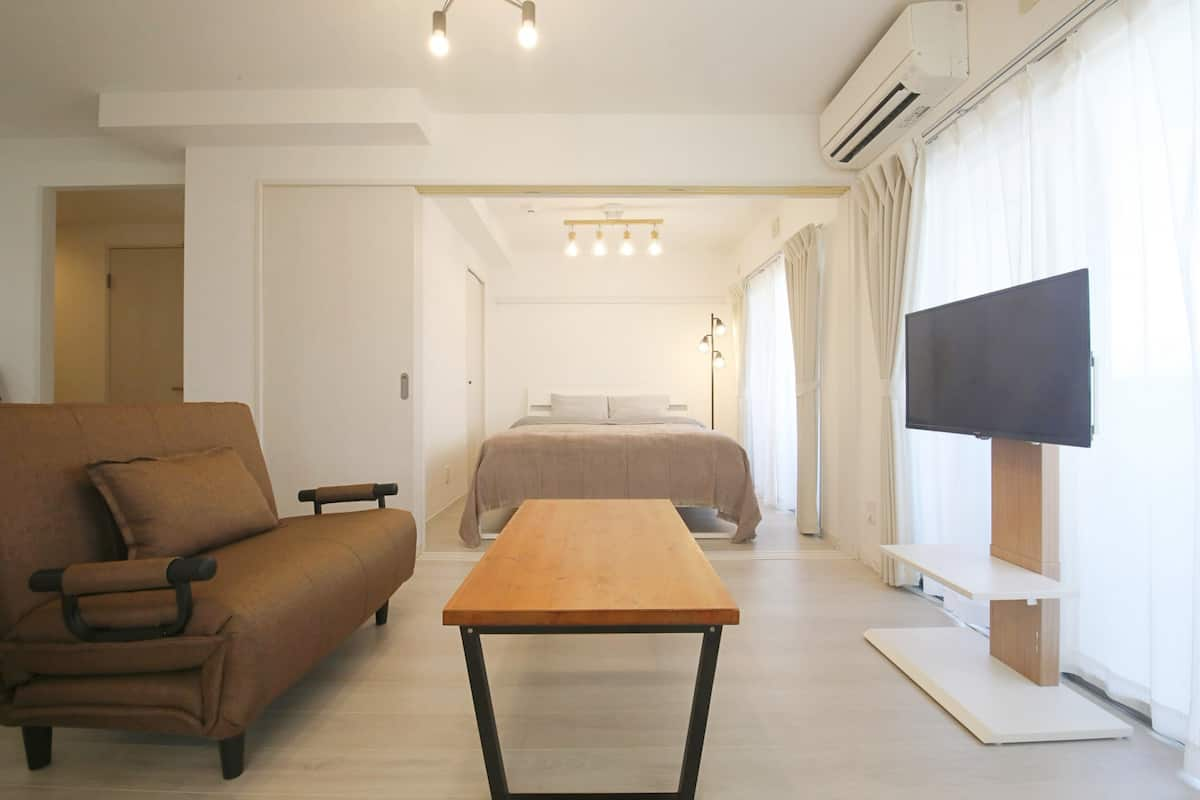
A base in Sesoko, Motobu
Ocean Terrace Sesoko 203
- Up to 14 guests · 55 m² · 3 bedrooms
- Washing machine · Dryer · Kitchen
- 1 bathroom · 1 free parking space
A private 55 m², 3LDK apartment with 3 bedrooms in Sesoko, Motobu. It lists a maximum of 14 guests, 7 sleeping units, 1 bathroom and 1 free on-site parking space. Families looking for a kitchen, washing machine and dryer should confirm the bedding layout and conditions, then check availability and the total price for their dates and group size.