

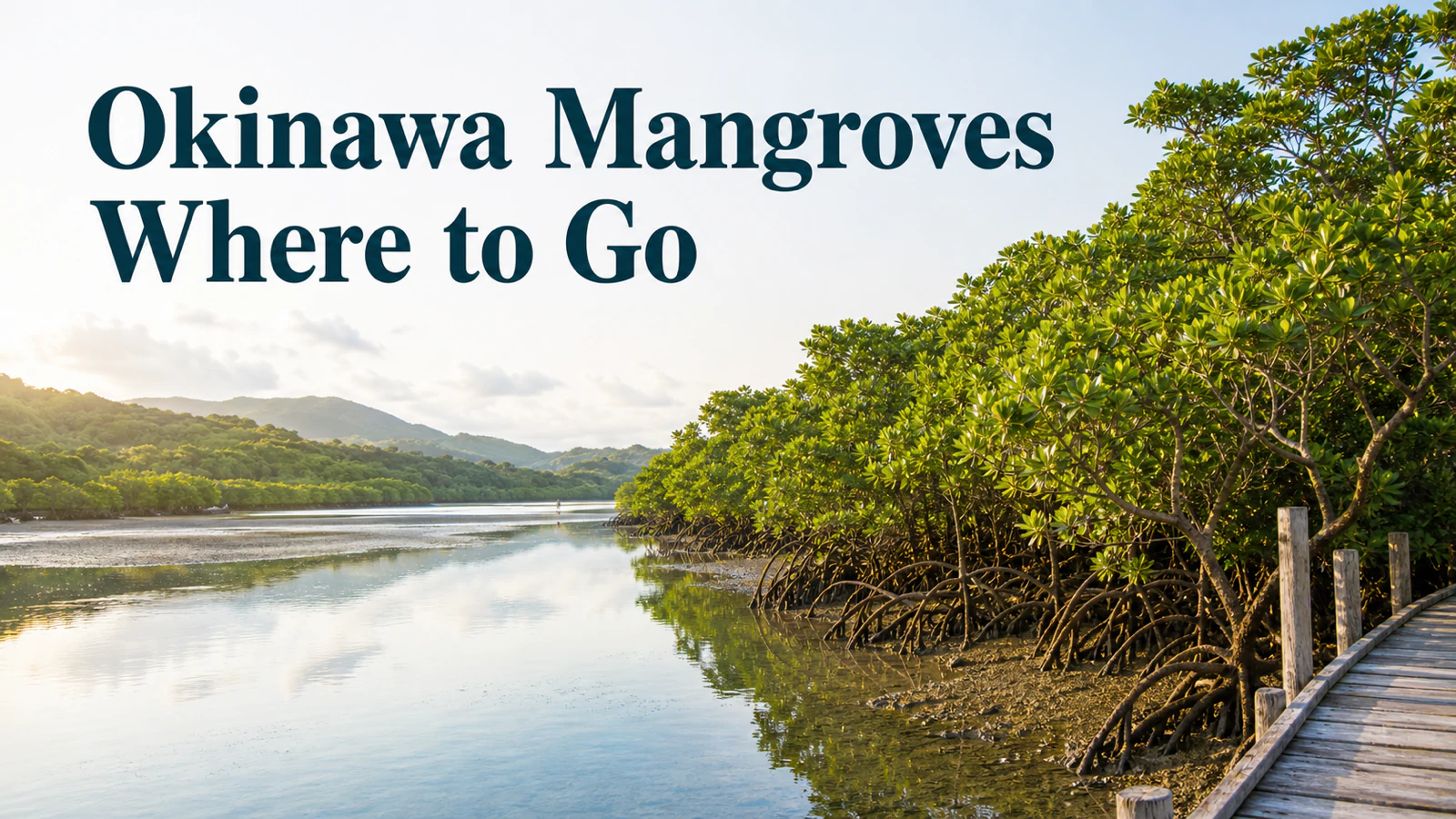
If you want to see mangroves on Okinawa Main Island, compare three areas first: Manko near Naha, Okukubi River in Kin, and Gesashi in Higashi Village. Choose Manko for a short nature stop near Naha, Kin for a river experience during a central-to-northern drive, and Gesashi when northern nature is the focus of your trip.
TL;DR
- How Manko, Kin, and Gesashi differ
- Whether kayaking is necessary
- How families, beginners, and couples should choose
- What to wear and check before booking
- How to choose a base in Naha, central Okinawa, or the north
Quick answer: choose by distance or depth of nature experience
Mangrove sightseeing on Okinawa Main Island depends on what you want from the day. Some travelers need an easy nature stop near Naha. Others want kayaking or a fuller northern nature experience.
| Area | Best for | How to enjoy it | Best base |
|---|---|---|---|
| Manko near Naha | Naha stays, no-car days, short nature viewing | Observe tidal flats, mangroves, and birds from nearby paths and facilities | Naha |
| Kin and Okukubi River | Rental-car trips between central and northern Okinawa | River observation and kayak tour options | Central Okinawa or Nago |
| Gesashi and Higashi Village | Travelers making northern nature the main plan | Mangrove forest viewing and canoe or kayak tour options | Nago or northern Okinawa |
Manko is listed by Japan’s Ministry of the Environment as an important wetland with mangrove wetland and tidal-flat habitats (MOE Important Wetlands: Manko).
Main mangrove areas on Okinawa Main Island
Manko: a short nature stop near Naha
For mangroves near Naha, Manko is the easiest candidate to consider. The Manko Waterbird and Wetland Center describes Manko as an urban wetland with tidal flats, mangrove forest, reed beds, waterbirds, and other wildlife (Manko Waterbird and Wetland Center).
This area is useful when you are staying in Naha and want a short nature stop on a day without a rental car. Treat it mainly as a walking and observation stop, not as a kayaking destination.
Kin: add a river experience on a central-to-northern drive
Okukubi River in Kin is a good fit when you want to add nature to a rental-car day. Visit Kin Town introduces Okukubi River with mangroves around the river mouth, kayaking, walking paths, observation decks, and birdwatching (Visit Kin Town: Okukubi River).
The Ministry of the Environment also lists the Okukubi River basin as an important wetland, noting mangrove wetland around the river mouth and rich habitat for benthic organisms (MOE Important Wetlands: Okukubi River Basin).
Gesashi: make northern nature the main plan
If you want a deeper northern nature experience, look at Gesashi in Higashi Village. The Ministry of the Environment lists Gesashi mangroves and inflowing rivers as an important wetland where mangrove species such as Kandelia obovata, Bruguiera gymnorhiza, and Rhizophora stylosa grow (MOE Important Wetlands: Gesashi Mangroves and Inflowing Rivers).
Higashi Village is on the eastern side of northern Okinawa Main Island, and its official tourism information presents the village around nature and outdoor experiences (Higashi Village tourism information).
Comparing the three areas
These places may appear under the same search term, but they fit different travel days.
| Point | Manko near Naha | Kin and Okukubi River | Gesashi and Higashi Village |
|---|---|---|---|
| Trip fit | Easy to add to a Naha-based day | Good during a central or northern drive | Better with extra time for a northern nature day |
| Kayaking | Not necessary for basic observation | Kayaking is an option, but observation is also possible | Canoe or kayak tours are often part of the plan |
| Families and beginners | Easy to keep short | Check tour details and age conditions | Check travel distance and tour conditions carefully |
| Stay base | Naha | Central Okinawa, Onna, or Nago | Nago or northern Okinawa |
A simple rule helps: mangrove viewing is easy to add, but kayaking needs preparation. For walking, bring comfortable shoes and sun protection. For kayaking, prepare for wet clothes, changing time, and the operator’s safety guidance.
How should families, beginners, and couples choose?
Families and first-time visitors should put distance, rest breaks, and backup plans before the intensity of the experience.
| Travel style | Easier choice | Why |
|---|---|---|
| Families with small children | Manko or the closest option to your stay | It is easier to keep the outing short |
| Families with school-age children | Kin or Gesashi | Kayaking can become a memorable nature activity |
| Couples | Kin or Gesashi | Easy to combine with a scenic drive |
For canoeing and kayaking, Japan Coast Guard’s water safety guidance emphasizes checking weather and sea conditions, equipment, and self-rescue basics before heading out (Japan Coast Guard Water Safety Guide: Canoe).
Clothing, items, and what to check before booking
For walking and observation, comfortable shoes, a hat, sunscreen, and water are enough for most travelers. Near tidal flats and rivers, paths can be wet or slippery, so avoid shoes or clothing you do not want to get dirty.
For kayaking or canoeing, plan on getting wet. Bring clothes that can get wet, a change of clothes, towel, sandals or marine shoes, and a waterproof bag. On sunny days, a hat and rash guard help as well.
Check before booking
- Age, height, and health requirements
- Weather cancellation policy and contact method
- Meeting point and parking
- How wet you may get and where to change
- Shower or changing-room availability
- Tide and weather-related changes
- Price, cancellation terms, and payment method
These details change by operator and season. Treat this article as a place-selection guide, then confirm the latest conditions on the official page of the tour or facility you plan to use.
Where should you stay: Naha, central Okinawa, or the north?
Stay in Naha if you choose Manko
Naha works well if Manko is your short nature stop. It is also easier to adjust plans on rainy days, with city walks, meals, and shopping nearby. For rainy-day planning, see our guide to rainy-day stays in Naha.
Stay in central Okinawa if you choose Kin
Central Okinawa is useful if you want to combine Kin, Onna, Uruma, and coastal driving. It can reduce backtracking compared with returning to Naha after every outing.
Stay in the north if you choose Gesashi
If Gesashi is a main activity, consider Nago, Motobu, Higashi, or another northern base. Staying north gives you more room around morning departures, late-afternoon drives, and rest after outdoor activities. For the overall route, our 3-night, 4-day Okinawa Main Island itinerary can help you place a northern nature day.
FAQ
No. Manko is suitable for walking and observation, and Okukubi River in Kin also has walking paths and observation decks introduced by the official tourism portal.
Manko is the easiest candidate to consider during a Naha stay. It is an urban wetland with tidal-flat and mangrove habitats.
Yes, but choose by distance and activity type. For kayak or canoe tours, check age limits, equipment, weather policy, tide conditions, and health requirements before booking.
Light rain may still allow walking or observation, but slippery paths, lightning, rising water, and wind can change the situation. For kayaking, follow the operator’s same-day guidance.
Not for walking. For kayaking or canoeing, wear clothes that can get wet and bring a towel, change of clothes, and waterproof bag.
Yes. If Gesashi or another northern nature activity is central to your trip, staying around Nago or the north reduces backtracking and gives you more time to rest.
Summary
Manko, Kin, and Gesashi are not interchangeable. Choose Manko for a short nature stop during a Naha stay, Kin for a mangrove river experience during a central or northern drive, and Gesashi when northern nature is the center of the day.
Decide first whether you want walking or kayaking, whether you are traveling with children, and whether you will stay in Naha or the north. Once those choices are clear, the right mangrove area becomes much easier to choose.
Planning a northern nature day? Choose a base where you can come back and rest.
If you plan to visit Gesashi or Kin for a mangrove experience, think about where you will return afterward. Nago Goga House is listed by Fujii Okinawa Stay as a whole-house stay in Goga, Nago, with three bedrooms, space for up to 10 guests, a full kitchen, dining area, and parking for two cars. It fits a rental-car trip focused on northern Okinawa.
View Nago Goga House