
Enjoying the Blue Cave takes more than booking a tour. You also need to plan around sea conditions, equipment, the meeting point, and where you will shower and change afterward. Cape Maeda is not a conventional swimming beach, and conditions are affected by tides and waves.
This guide walks first-time visitors through what to check before booking, what to wear and bring, essential safety points, the facilities at Cape Maeda, and the advantages of staying nearby.
TL;DR
- What the Blue Cave and Cape Maeda are like
- How first-time visitors can compare snorkeling tours
- Age, health, and meeting-point details to confirm before booking
- What to wear, what to bring, and how to use the facilities
- How to plan for unsuitable sea conditions
- Why staying near the Blue Cave can simplify the day
What is the Blue Cave?
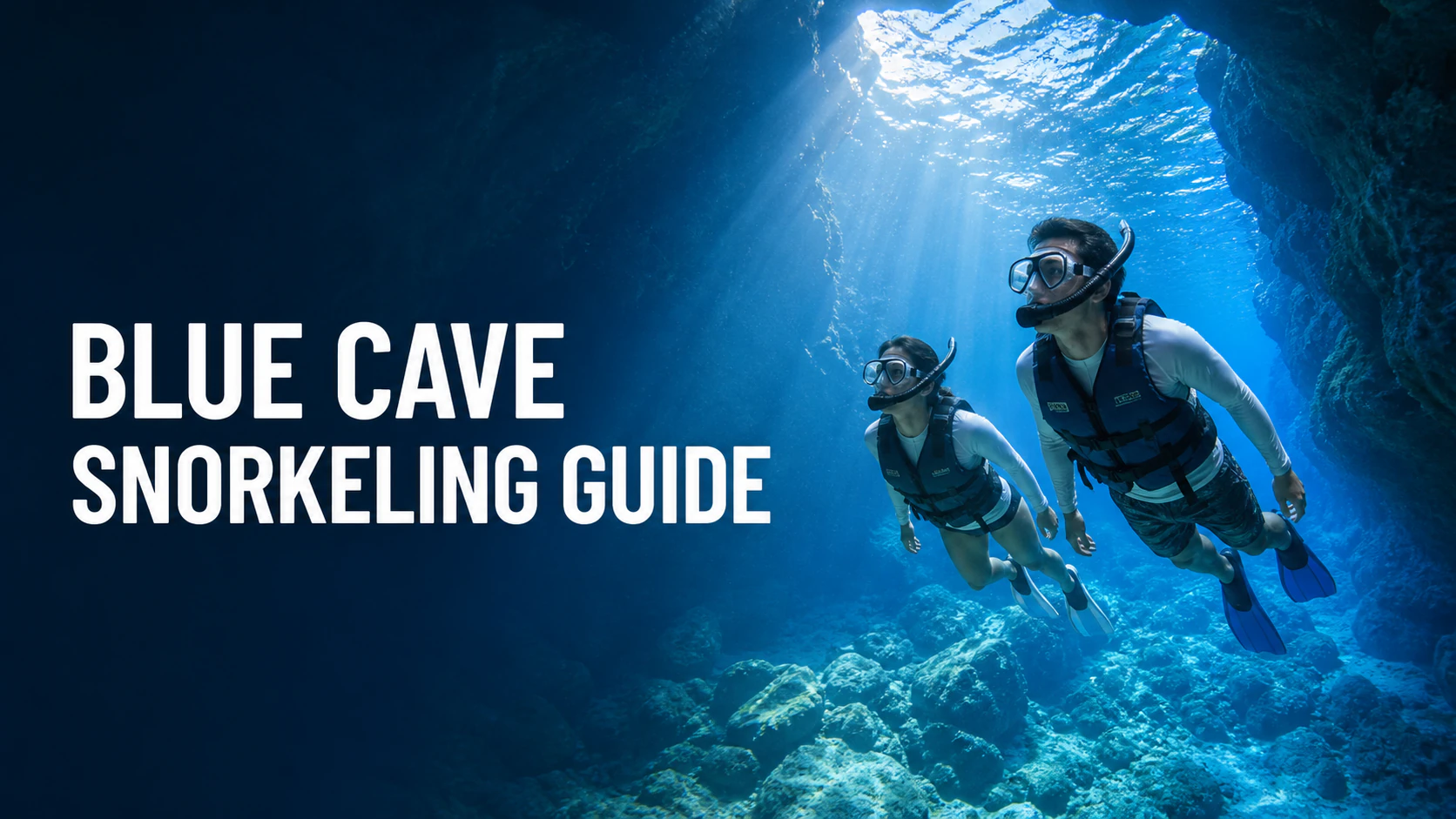
The Blue Cave is a sea cave near Cape Maeda in Onna, on Okinawa's main island. It is known for the blue appearance created as incoming light reflects across the water and seabed. Cape Maeda is a popular diving and snorkeling area, while visitors who do not enter the water can still look over the west coast from the observation area (sources: Cape Maeda Official Website and Visit Okinawa: Cape Maeda and the Blue Cave).
The color and visibility vary with the weather, waves, tide, and angle of the light. This is a natural setting, so it will not always look exactly like a promotional photograph. Meeting points also differ by tour and may be at Cape Maeda, a shop, or a port. Do not assume you should go directly to Cape Maeda; check the address in your booking confirmation.
Why first-time visitors should consider a guided tour
Snorkeling requires the correct use of equipment, knowing what to do if water enters the mask or snorkel, using fins properly, and judging waves and currents. The Japan Coast Guard warns that a lack of basic skills can lead to panic and notes that instruction from a certified guide can be helpful (source: Japan Coast Guard Water Safety Guide: Snorkeling).
Prioritize a guided tour rather than entering on your own if any of the following applies.
- You are snorkeling for the first time or after a long break
- You are not confident swimming or treading water
- You are traveling with children or older adults
- You cannot assess sea conditions or currents yourself
- You do not know how to fit the equipment correctly
- You do not know the route to the Blue Cave
A guide does not remove every risk at sea. Do not rely only on a label such as “beginner friendly.” Check the maximum group size, practice provided before entering, use of life jackets, and emergency procedures.
How to choose a Blue Cave snorkeling tour
Comparing the meeting point, entry method, and participation requirements, not only the price, makes it easier to find a tour that fits your group.
| What to compare | What to check | What can go wrong if you miss it |
|---|---|---|
| Meeting point | Cape Maeda, the operator's shop, or a port | You may have to travel to a different location on the day |
| Water entry | Shore or stairs, or by boat | The duration or physical effort may differ from what you expected |
| What the price includes | Equipment, insurance, photos, showers, towels, and other items | You may need to pay additional charges on site |
| Group size | Private, small group, or mixed group | Access to the guide and waiting times may differ |
| Participation requirements | Age, health, swimming ability, and consent forms | Someone in your party may not be allowed to join on the day |
| Response to cancellation | Alternative site, date change, and refund terms | You may struggle to rearrange the day when conditions are poor |
| Language support | Languages available for the briefing and consent forms | You may not fully understand the safety briefing |
Shore-entry plans can make it easier to use Cape Maeda's facilities, but they involve going up and down stairs. Boat plans require you to confirm the departure port, time on the boat, seasickness precautions, and changing facilities. A boat does not guarantee access to the Blue Cave, so discuss both your health and sea conditions with the operator.
If photos are included, check not only the number of images but also how they are transferred to your phone and how long they remain available. Light and visibility depend on natural conditions, so a particular photographic result cannot be guaranteed.
Seven things to check before booking
| Item | What to confirm |
|---|---|
| Age and health requirements | Minimum age, medical conditions, medication, and prior surgery; disclose anything relevant accurately |
| Meeting time | The time allowed for reception, changing, and the safety briefing, plus how late arrivals are handled |
| Meeting point | The address of Cape Maeda, the shop, or the port; parking location; and whether transfers are available |
| Additional charges | Whether equipment, insurance, photos, towels, showers, and parking are included |
| Facilities afterward | How to use changing rooms, hot showers, towels, and lockers |
| Poor sea conditions | Alternative sites, date changes, and when and how cancellation notices are sent |
| Cancellation terms | How refunds differ between traveler cancellations and cancellations made by the operator |
Do not schedule the next activity immediately after the advertised finish time. Allow for showering and changing as well. If you are unsure about age or health requirements, contact the operator before confirming the booking.
A typical schedule on the day
Details vary by tour, but the day commonly follows this sequence.
- Check your condition after waking up
If you are sleep-deprived, feverish, unusually tired, or affected by alcohol, do not push yourself; contact the operator.
- Check sea conditions and messages from the operator
Review Cape Maeda's official swimming status and any update from your tour operator.
- Put on your swimsuit and go to the meeting point
Wear your swimsuit under your clothes and recheck the address and map before leaving.
- Complete reception, change, and fit your equipment
Ask for adjustments if any item is painful or loose.
- Listen to the safety briefing and practice the basics
Understand breathing, clearing water, and the guide's signals before entering the sea.
- Enter the water with your guide
Stay with the group and avoid touching fish or coral.
- Shower and change after the activity
Rehydrate and check how you feel before traveling onward.
Reception, showering, and changing all take time. Leave extra time on days when you are heading to the airport or driving a long distance.
Clothing and packing checklist
- A swimsuit you can wear under your clothes
- Comfortable clothing that can get wet and is easy to change
- Wet-friendly footwear that stays secure around the heel
- A hat or light outer layer for sun protection
- A change of clothes and underwear
- A towel
- Drinking water
- Sun-protection products
- A bag for wet swimwear
- Cash for coin-operated facilities
- Spare items for glasses or contact lenses
- Seasickness precautions if you are concerned about the boat
- A phone that can display your booking confirmation
Check whether equipment is included in the tour price. A waterproof case cannot fully prevent loss or water damage, so leave unnecessary valuables at your accommodation or in a locker. Follow the operator's environmental policy for sunscreen and take all rubbish with you.
Safety rules to follow
The Cape Maeda official website instructs snorkelers to wear a life jacket or other flotation device (source: Cape Maeda Official Website).
- Wear a properly fitted life jacket or other flotation device
- Do not go alone or separate from your guide, buddy, or group
- Check the weather, waves, wind, and swimming status before entering the water
- Do not enter the sea when sleep-deprived, affected by alcohol, or unwell
- Do not jump into the water near the cape or the Blue Cave
- Do not touch coral or fish, and follow instructions from staff and guides
- Do not enter when swimming is prohibited
- Tell your guide immediately if you feel anxious or notice anything unusual
The Japan Coast Guard also recommends appropriate equipment, checking current weather and sea conditions, and using the buddy system or staying in a group (source: Japan Coast Guard Water Safety Guide: Snorkeling). Even if you have previous experience, make decisions based on your current condition and the sea that day, not on what was safe on a past visit.
Parking, showers, and lockers at Cape Maeda
Cape Maeda has parking, toilets, hot showers, changing rooms, lockers, and hair dryers. Bring some cash for the coin-operated facilities (source: Cape Maeda Facilities).
Official information checked on August 23, 2026
| Facility | Details |
|---|---|
| Standard-car parking | 180 spaces |
| Standard-car parking fee | ¥100 for the first hour, then ¥100 for every additional 60 minutes |
| Parking hours | 7:00–19:00 from April to November; 7:00–18:00 from December to March |
| Toilets and shower rooms | 7:00–18:30 from April to November; 7:00–18:00 from December to March |
| Hot shower | ¥200 for two minutes |
| Hair dryer | ¥100 for four minutes and 30 seconds |
| Coin locker | ¥100 per use |
The official site lists inspection and cleaning from 2:00 to 3:00 p.m. for the toilets and from 4:30 to 5:30 p.m. for the shower rooms. Times may change, so allow extra time for parking and changing (source: Cape Maeda Facilities). Food and drink tenants may also be open, but bringing water in advance is a sensible precaution if operating conditions change.
What if sea conditions are poor?
Swimming may be prohibited or a tour may change when conditions are unsuitable. You can check the current swimming status on Cape Maeda's official website, but follow the final operating notice from your tour provider (source: Cape Maeda Sea Conditions).
- The tour runs as planned: Go to the confirmed meeting point at the confirmed time.
- The tour moves to another site: Confirm the new location, transportation, price, and cancellation options.
- The marine activity is canceled: Switch to an indoor attraction, café, or shopping plan.
Choose one backup plan and leave some flexibility in a multi-night stay so that moving the activity to the following day remains an option. Changes and cancellations are safety decisions. Follow local instructions if the facilities close or severe weather develops.
Benefits of staying near Cape Maeda
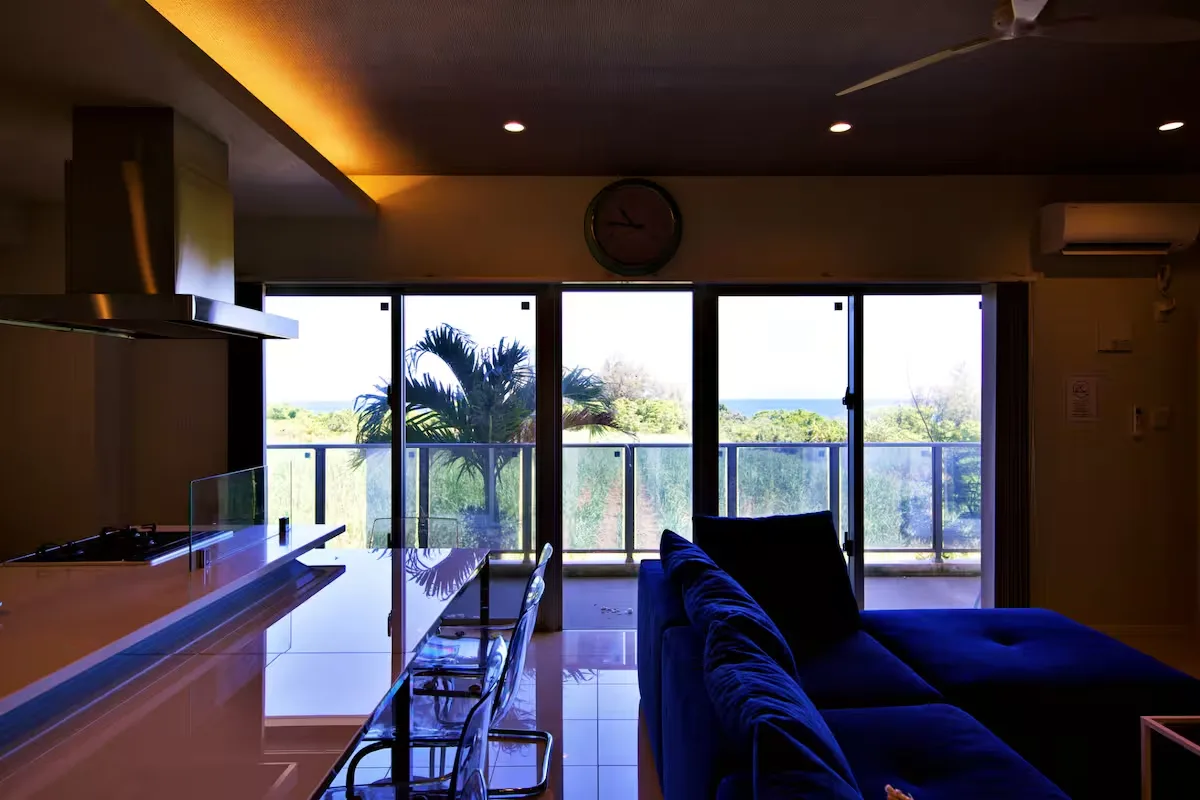
If the Blue Cave is central to your trip, consider not only distance but also what happens after you leave the water. Ocean Resort Cape Maeda 104 is about a five-minute walk from Cape Maeda and about a one-minute walk from Diamond Beach. The 95-square-meter, three-bedroom condominium sleeps up to seven guests with one queen bed, two double beds, and one single futon set. It also has a washing machine, clothes dryer, bathtub, full kitchen, Wi-Fi, and two free private parking spaces (source: Fujii Okinawa Stay: Ocean Resort Cape Maeda 104).
- Give yourself more time to prepare in the morning
- Check sea conditions and tour messages before leaving your accommodation
- Wash and dry swimsuits and towels more easily afterward
- Plan separate activities for anyone who is not entering the sea
- Consider moving the activity to another day during a multi-night stay
- Give group members separate spaces to rest across three bedrooms
Remember that a tour meeting at a shop or port will still require transportation. A different area may also suit travelers who plan to explore the entire main island every day, so choose a base around the place where you expect to spend the most time.
Who this itinerary suits and who may prefer another base
A Blue Cave-focused stay in Onna is a good fit for the following travelers.
- First-time snorkelers who want to plan preparation and safety carefully
- Families or groups who want to reduce travel time to Cape Maeda
- Travelers staying several nights in Onna who want flexibility if sea conditions change
- Anyone who wants to wash and dry swimwear and towels after a marine activity
Travelers whose days center on sightseeing in Naha or ferries to nearby islands, or those who want to rely only on urban public transportation rather than a rental car, may find it easier to compare bases in Naha or another area.
How to avoid choosing the wrong accommodation
Do not choose on proximity to Cape Maeda alone. Check the tour meeting point, group size, number of bedrooms, parking capacity, and laundry facilities. A tour that meets at Cape Maeda and one that meets at a shop or port can require very different transportation even when you stay in Onna.
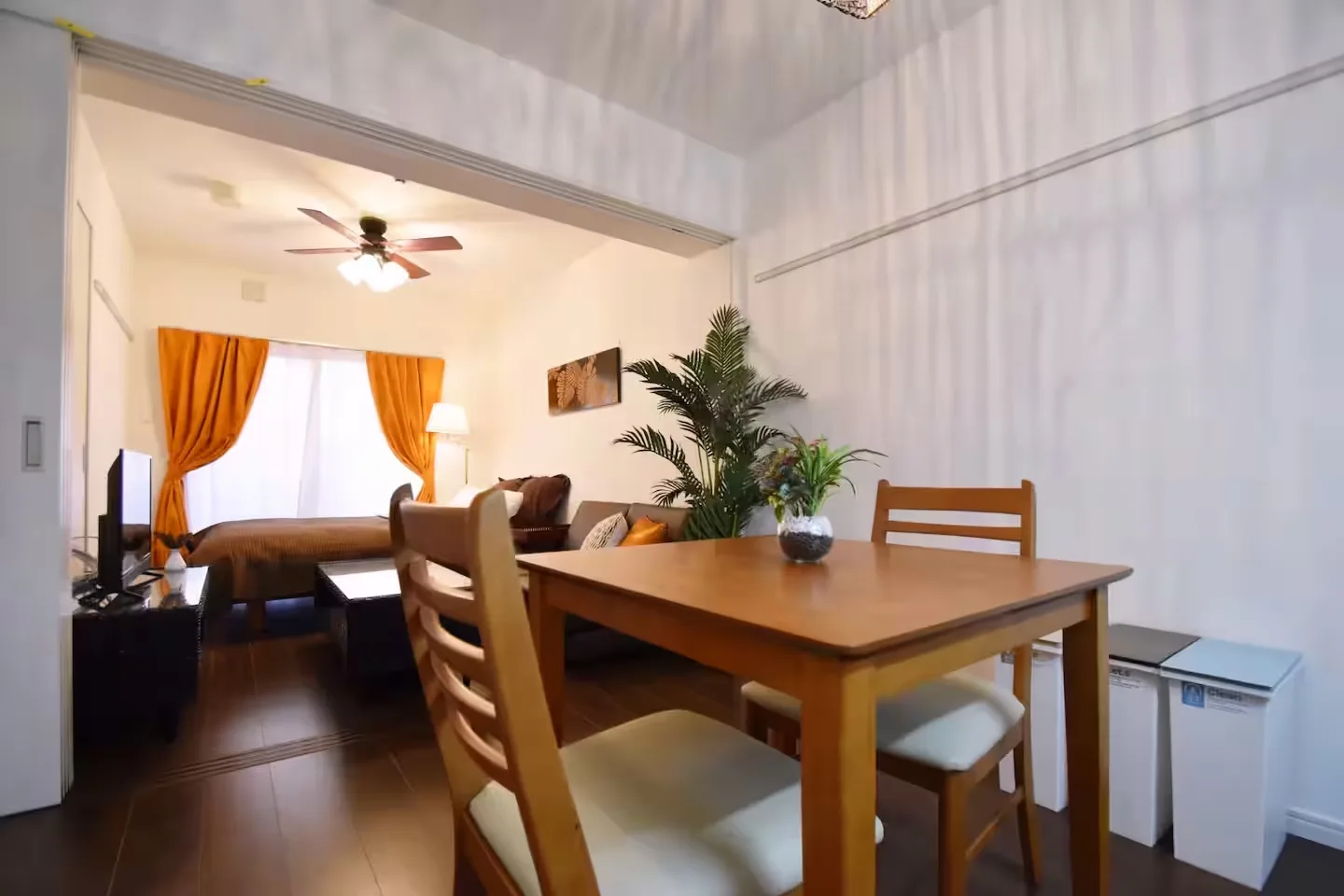
For up to seven guests who prioritize proximity to Cape Maeda, the three-bedroom Ocean Resort Cape Maeda 104 is one option. Larger groups that value sharing one private unit can also compare Mishuku Onna 302, a two-room unit in Onna that sleeps up to ten. Mishuku Onna 302 has a kitchen, washing machine and dryer, Wi-Fi, and one free parking space (source: Fujii Okinawa Stay: Mishuku Onna 302).
Frequently asked questions
Some tours can accommodate non-swimmers, but requirements vary by operator. Ask about flotation devices, the number of guests per guide, and practice before entering, and explain your swimming ability before booking.
There is no single age limit for every tour. Check the operator's current minimum age, height requirements, equipment sizes, and rules for accompanying adults.
Rain alone does not always cancel a tour, but the appearance changes with weather, waves, and light. The operator decides whether the tour can run after considering overall sea conditions.
Operators may move to another site, change the time, or cancel. Check messages from your provider and do not enter the water independently without instructions.
Independent entry requires knowledge of equipment, currents, sea conditions, and risk management. First-time visitors and anyone unable to assess the sea should consider a guided tour.
Yes. Parking, hot showers, changing rooms, lockers, and hair dryers are available. Check current fees and hours, and whether any facility charges are included in your tour price.
Summary: Plan the time before and after the Blue Cave as carefully as the activity
Before booking, confirm the meeting point, participation requirements, additional charges, and what happens if sea conditions are poor. On the day, use the required equipment and follow your guide's instructions. For first-time visitors, a guided tour that includes a briefing and equipment practice is a sensible option.
Planning for changes and choosing a backup activity means the trip can still be enjoyable even if the cave is inaccessible. Accommodation distance, laundry and drying facilities, the bathroom, and the number of bedrooms all affect how comfortable the day feels after you leave the water.
Two stays to consider in Onna