


Start your search for yachimun with Yachimun no Sato in Yomitan and Tsuboya Yachimun Street in Naha. A kiln’s own shop lets you explore its makers’ work in depth; a store carrying several makers gives you different styles to compare. Choose shops that fit your itinerary so you spend less time traveling between them and more time considering each piece.
Yachimun is the Okinawan word for pottery. It does not refer only to Tsuboya ware: there are makers throughout Okinawa. Alongside the best-known pottery districts, this guide covers confirmed places to shop in Ginowan, Uruma, Motobu, Nakijin, Nanjo, Ishigaki Island, and Naha Airport. Okinawa Story: What Is Yachimun?
Information was checked on September 6, 2026. Opening hours and closures reflect official information available on that date. The makers and collections mentioned are examples of what shops carry, not a guarantee of stock on the day you visit. Before setting out, check each shop’s official website and the latest announcements it links to.
TL;DR
- Where to buy yachimun in Yachimun no Sato and on Tsuboya Yachimun Street
- Workshops around Okinawa and places to buy pottery at Naha Airport
- What each shop offers, with official links and sources for opening hours and closures
- How to choose pottery for your daily life, plan a shopping route, and prepare to take your purchases home
Choose where to shop based on your itinerary and interests
You’ll make different comparisons at a kiln’s own store than at a shop carrying several makers. If this is your first time buying yachimun, think about how you’d like to spend the day as well as the pottery itself.
| What you want from the visit | Where to look first | How to approach your choice |
|---|---|---|
| Understand the differences between makers | Shared shops in Yachimun no Sato and kilns’ own stores | Compare plates or bowls intended for the same use to discover which shapes, decoration, and textures appeal to you |
| Visit shops mainly on foot while staying in Naha | Tsuboya Yachimun Street and shops in Makishi and Matsuo | Choose a few shops open on your travel dates, and plan how to get back with your purchases |
| Consider the overall look of your table | GARB DOMINGO, tituti, miyagiya, mofgmona no zakka, and similar shops | Look at how pottery works with glass and textiles |
| Visit newer shops in Yomitan too | TERRACE WITH POTTERY and Yuntan | Combine a walk around Yachimun no Sato with one other shopping stop in the village |
| Add a shop to a day sightseeing in northern or southern Okinawa | Workshops in Motobu, Nakijin, and Nanjo | Visit on a day when the workshop’s opening hours fit your sightseeing route |
| Find island-made pottery while on Ishigaki | Ishigaki-yaki Pottery | Include it in your Ishigaki stay, separately from your plans on Okinawa’s main island |
| Browse crafts one last time at the airport | Dear Okinawa, | Allow enough time for your departure procedures before stopping to shop |
This table suggests ways to choose among the shops in this guide. Yachimun no Sato has several workshops, while Tsuboya Yachimun Street is an approximately 400 m street in central Naha. When checking the map, distinguish shops within Yachimun no Sato from other shops elsewhere in Yomitan Village. Yomitan Village Tourism Association: Yachimun no Sato / Okinawa Story: Tsuboya Yachimun Street / Yomitan pottery and crafts map
If you are still deciding which pottery district to build your trip around, our comparison of Tsuboya Yachimun Street and Yachimun no Sato in Yomitan may help.
Yachimun no Sato in Yomitan: shared shops and individual workshops
Yachimun no Sato is not a single large store. Its workshops and shops operate individually, so there is no one opening time or weekly closing day that applies to the whole village. Find the shop you want on the map first, then check its own visitor information. Yomitan Village Tourism Association: Yachimun no Sato
For a first visit, try comparing shapes and patterns in a shared shop before visiting a workshop that catches your interest. Trying to see every shop can make it hard to remember what you have already seen. Decide on one thing you would like, such as an everyday side plate or a morning mug, to give yourself a consistent point of comparison.
Yomitanzan-yaki Cooperative Shop: a starting point for comparing pottery in the village
Yomitan Village’s official guide lists this shared shop in Yachimun no Sato as a place to buy pottery and shisa guardian figures. Its address is 2653-1 Zakimi, Yomitan Village. You can use the village’s facility listing in place of a standalone shop website. Yomitan Village: Yomitanzan-yaki Cooperative Shop / Yomitan Village: Yachimun no Sato
Checking who made a piece you like can help you decide which shop to visit next. Notice your own responses: perhaps you like a particular color, or a raised rim looks useful for the dishes you cook. Keep a label or card with the kiln’s name so you can find the same maker again after you return home.
Do not assume the shop will be open on your chosen day simply because it appears in the village guide; check before visiting. Kitagama Shop is in the same pottery village but is a separate shop, so confirm the name on your map.
Kitagama Shop: compare the work of four workshops
Kitagama Shop brings together the four workshops of Masataka Miyagi, Masamori Yonahara, Yoneshi Matsuda, and Kyoshi Matsuda. The shop shares information on its official Instagram account and is also listed by Yomitan Village as a place to shop in Yachimun no Sato. Its address is 2653-1 Zakimi, Yomitan Village. Kitagama Shop official Instagram / Yomitan Village: Yachimun no Sato
Here you can explore the differences between workshops that share the Kitagama name. If you’re still discovering your taste, compare pieces of similar size made for the same use, rather than grouping them only by similar patterns. Even if you already know a maker you like, consider the actual shape and weight as well as the name.
If you are buying several pieces, consider both how much you like each one and how they look together. A photograph of the tableware you already use can help you compare. Check the shop’s own official updates for the latest opening information.
Tsunehide Kobo Gallery Utsuwa-ya: choose by the character of the decoration
Utsuwa-ya, the sales gallery attached to Tsunehide Kobo, presents pottery made using various techniques, including sansai, dot decoration, sometsuke, tobikanna, and itchin. The address is 2748 Zakimi, Yomitan Village. Details of the workshop and gallery are available on the Tsunehide Kobo official website.
You don’t need to memorize the names of the patterns before visiting. You might be drawn to flowing lines, the rhythm of dots, or the texture of a surface. Notice what appeals to you first, then ask how it was made to connect the piece with the technique.
As you compare pieces, look beyond the pattern to the center where food will sit and the rim that will remain visible on the table. Your choice may differ depending on whether you want the decoration to stand out or the food to take the lead. Follow the latest opening information on the official website, and check ahead if your visit will overlap lunchtime.
Beyond Yachimun no Sato: direct sales and newer shops in Yomitan
Your search for pottery in Yomitan does not have to end at Yachimun no Sato. Elsewhere in the village are kilns’ own shops, workshop galleries, and stores carrying several makers. Treat the following shops as separate stops from those inside the pottery village, allowing for travel between them. Yomitan pottery and crafts map
Tsuboya Ware Kiln Tousingama Direct-Sales Shop: from familiar designs to larger pieces
Tousingama’s direct-sales shop has its workshop behind it. Its official information introduces familiar arabesque-patterned tableware alongside limited-production pieces, one-offs, sake jars, and large bowls. The address is 2898-4 Zakimi, Yomitan Village. Usual hours are Monday–Saturday, 9:00–17:30; closed Sunday. Tousingama: direct-sales shop
Start with smaller tableware, then take a look at large bowls for entertaining or pieces you might display at home. The chance to compare functional tableware and decorative pieces from the same kiln can be a reason to visit.
If a large piece catches your eye, consider where it will go at home and how you will transport it before deciding to buy. Note its diameter and base width as well as its height. Do not assume that buying direct means a lower price; judge the individual piece by its price tag and the information provided.
Touki Kobo Ichi: compare collections in a second-floor gallery
Touki Kobo Ichi sells its pottery in the gallery on the workshop’s second floor. The official website presents several styles, including sometsuke decoration and Persian Blue. The address is 925-2 Nagahama, Yomitan Village. Usual hours are 9:00–18:00, with some Sunday closures. Touki Kobo Ichi official website / Touki Kobo Ichi: workshop
Even if you know you want blue pottery, blue painted decoration and an all-over blue finish create different impressions on a table. Compare the collections with your intended use in mind: will you add one piece to white dishes you already own, or build a table setting with a consistent look?
The second-floor location is useful to know in advance if you have heavy bags or are concerned about stairs. The workshop also posts notices for particular dates, so once your travel dates are set, check the latest announcements as well as the usual closing days.
Okinawa Art Shop Yuntan: browse pottery and other craft gifts together
Okinawa Art Shop Yuntan, inside Gala Aoiumi, carries yachimun from Yomitan and elsewhere, glassware, and Okinawan souvenirs. It is at 915-1 Takashiho, Yomitan Village, inside Gala Aoiumi. Consider it if you would like to compare craft gifts beyond tableware alone. Yuntan: products / Yuntan: shop information
If you’re visiting with family or friends, everyone can explore different materials. A pottery enthusiast might focus on ceramics, while someone choosing something for their daily drinks could also look at glassware. Let each person’s habits guide the choice; you don’t all have to buy work by the same maker or the same kind of tableware.
Gala Aoiumi provides official parking information. Before setting out, check the shop’s own latest opening hours rather than assuming they are the same as the opening hours of the wider complex. Gala Aoiumi: access
TERRACE WITH POTTERY: a new Yomitan option in 2026
TERRACE WITH POTTERY is a gallery and shop inside YOMITAN GARDEN. It presents work from Yomitan workshops, and the complex also has a dining venue, Zakimi Sabo. This shopping destination opened in 2026 at 2723-1 Zakimi, Yomitan Village. Its usual closing day is Thursday. YOMITAN GARDEN official website / Opening announcement from the operator
Consider this stop if you would like to see work from several Yomitan workshops in one place. If you come after visiting Yachimun no Sato, remember the clay colors, shades of blue, or rim shapes that caught your eye there. These details can help you make comparisons and understand your preferences.
Opening hours have changed since the launch. An official notice gives the hours as 10:00–18:00 from June 1, 2026. Check the latest information rather than planning around the original hours that may still appear in search results. YOMITAN GARDEN: change of opening hours
Tsuboya-yaki Yachimunya: tableware and shisa from the same workshop
Tsuboya-yaki Yachimunya is the workshop and shop of Mitsuo Arakaki. Its official website introduces plates, chopstick rests, shisa, dragon figures, and other pieces. The address is 789-1 Zakimi, Yomitan Village, with usual hours of 10:00–18:00; closed Sunday. Although “Tsuboya ware” appears in its name, the shop featured here is in Yomitan, not Naha. Tsuboya-yaki Yachimunya official website
If you are deciding between everyday tableware and a ceramic piece to display, you can look at both before choosing. For chopstick rests, consider how often you would use them; for shisa or dragon figures, think about the width and depth of the shelf where they would sit.
For a gift, the size of the piece needs to suit the recipient’s home too. If you do not know where they might display it, think about a use based on items they already use. Treat the official website as an introduction to the work, rather than assuming that everything shown online will be in the shop on the day.
Tsuboya Yachimun Street and nearby Naha: kiln shops and craft stores
Tsuboya Yachimun Street is an approximately 400 m cobbled street. Official tourism guides give a walking time of around 10–15 minutes from Makishi Station on the Yui Rail. Use that as a guide and check the map for the specific shop you are visiting. Traffic is one-way along the street, and drivers should include nearby paid parking in their plans. Okinawa Story: Tsuboya Yachimun Street / Naha City Tourism Association: Tsuboya Yachimun Street
Naha Municipal Tsuboya Pottery Museum is scheduled to be temporarily closed from September 1, 2026, through March 31, 2027. Its reopening after renovation is planned for April 1, 2027, but check the city’s information for any changes. Do not plan a museum visit as part of your shopping route during the closure. Naha City: Naha Municipal Tsuboya Pottery Museum
For variety during a walk, combine a shop showcasing one kiln’s work with a store carrying different makers. The following selection includes shops in nearby Makishi and Matsuo as well as those on Tsuboya Yachimun Street.
The Ikutouen shops: choose between the main store and its sister shops
If you visit Ikutouen, consider its sister shops as well as the main store. At the main store, you can explore work such as incised arabesque decoration. Kamany and guma guwa are brands offering different styles from the same kiln. Think of them as ways to compare presentation and use within Ikutouen, rather than as separate kilns. Ikutouen: products / Ikutouen: shops
| Shop | What to look for | Address and usual opening hours |
|---|---|---|
| Ikutouen main store | Ikutouen tableware and shisa, including incised arabesque decoration | 1-22-33 Tsuboya, Naha / 10:00–18:00 |
| Kamany | Tableware designed for everyday use | 1-22-33 Tsuboya, Naha / 10:00–18:00 |
| guma guwa | Simple shapes with a light feel, including blue and green decoration on white | 1-16-21 Tsuboya, Naha / 10:00–18:00 |
| nan*ne | Ikutouen pottery alongside glassware, clothing, and other everyday items | 1-22-37 Tsuboya, Naha / 11:00–17:30 |
| Tsuboya no Iriguchi | A stop for pottery and Okinawan crafts during a walk | 1-8-2 Tsuboya, Naha / 10:00–17:45 |
The main store, Kamany, and guma guwa list January 1 and 2 as closing days. nan*ne and Tsuboya no Iriguchi list Thursdays as well as January 1 and 2. Pay attention to the different opening hours and closing days at each shop. Ikutouen: shops / Official introduction to Kamany / Official introduction to guma guwa
On a first visit, you could start at the main store, then try Kamany or guma guwa for shapes that might fit your everyday table. If weight matters to you, don’t judge by appearance alone. Follow the shop’s guidance on handling pieces and check how they feel.
When time is limited, choosing one or two shops closest to what you want may make shopping easier than visiting every sister shop. If you like the idea of using different pieces from the same maker, you might look for plates at the main store and drinkware from another of its brands.
Craft & Gift yacchi&moon: bring playful patterns into everyday life
Craft & Gift yacchi&moon is a pottery and general goods shop in Tsuboya. The official website introduces patterned cups, plates, and bowls, along with original bear-themed tableware. Its address is 1-21-9 Tsuboya, Naha, and the physical shop’s usual hours are 10:00–18:30, open daily. yacchi&moon official website
Consider this shop if you’re looking for a piece to brighten breakfast rather than a formal set of dishes. When a pattern catches your eye, imagine which parts will remain visible once the piece holds food or a drink, including the rim and outer surface.
Knowing the motifs a recipient likes can make choosing a gift easier. Cute pottery is not exclusively for women; consider whether you or the recipient would enjoy reaching for it every day. Online order dispatch holidays and the physical shop’s opening days are separate information, so use the shop details when planning a visit.
GARB DOMINGO: consider Okinawan pottery alongside other crafts
GARB DOMINGO is a craft shop in Tsuboya with a curated selection that includes pottery. Its official website features work by Okinawan maker Hiromu Kinjo. It also carries pieces from elsewhere in Japan and overseas, so don’t assume that everything in the shop is Okinawan yachimun. Check the maker and place of production of any piece that interests you. GARB DOMINGO official website / GARB DOMINGO: Hiromu Kinjo
The address is 1-6-3 Tsuboya, Naha. Usual hours are listed as Friday–Tuesday, 9:30–13:00 and 14:30–17:00; closed Wednesday and Thursday. The shop closes for a break at lunchtime, so factor that into the order of your stops in Tsuboya. GARB DOMINGO official website
This shop can broaden your options if you want to combine pottery with glass and other materials when setting the table. Decide whether you would like a piece that matches what you own or adds a different character. A photograph of your everyday table setting can help you find something you will use.
craft house Sprout: a place to discover makers you like
craft house Sprout is a shop with a curated selection of crafts in Tsuboya. Its official maker profiles include Teruya-gama, Kyoshi Matsuda, Yoneshi Matsuda, Hifumi, Jikkaku, and Coque. This doesn’t mean that every piece or type of work by those makers is always available, but the profiles can help you explore your preferences before you travel. Sprout: about us / Sprout: makers
The address is 1-17-3 Tsuboya, Naha, Jotoru Tsuboya 102. Usual hours are 10:00–18:00; closed Tuesday and Wednesday. In addition, the shop’s official announcements list temporary closures on September 10–13 and 17–18, 2026. If you are traveling in September, check these dates as well as the usual weekly closing days. Sprout: about us / Sprout: news
If you do not yet know the makers’ names, it is fine to start with a piece that appeals to you and learn the name afterward. Even if you have a particular workshop in mind, distinguish a shop’s history of carrying its work from stock on the day you visit. Use the shop’s stated channels to check the latest information.
tituti OKINAWAN CRAFT: combine pottery and textiles
tituti OKINAWAN CRAFT brings together ceramics by Yumiko Kinjo, weaving by Tomoko Nagaike, and bingata by Noriko Tanaka. It is an option for anyone interested in combinations of textiles and colors as well as pottery. tituti: members
The address is 3-6-37 Makishi, Naha, and usual hours are 9:30–17:30; closed Tuesday. The shop has no parking. Check its location in Makishi before walking there, rather than confusing it with a shop on Tsuboya Yachimun Street. tituti: shop information
You might choose a small dish first, then consider the color of a cloth to place beneath it. Or use your tablecloth at home as a starting point and look for pottery that adds an accent color. Considering different materials together helps you picture how you’ll use a purchase at home. For a gift, think about whether it will complement something the recipient already owns.
miyagiya: pottery and everyday objects in Matsuo
miyagiya carries pottery, glass, clothing, art, and other items selected through visits to their makers. It is at 2-19-39 Matsuo, Naha. Usual hours are listed as 12:00–19:00; closed Wednesday and Thursday. miyagiya official website
If you plan to walk around Tsuboya in the morning, you could continue to Matsuo after noon. Leave room for lunch or a break instead of filling every moment before the shop opens. Give yourself time to decide whether to buy something you like immediately or think it over after browsing elsewhere.
The official website posts monthly closing dates and notes that staffing and weather may lead to changes. As well as saving the usual closing days, check the announcement for the month of your visit. miyagiya: September 2026 shop closing dates
Tsuboya Ware Kiln Kiyomasa Touki / Tsuboya Kiln: a stop for those drawn to red decoration
Kiyomasa Touki’s Tsuboya Kiln shop is at 1-16-7 Tsuboya, Naha. Officially featured collections include Akae Fish Motif, Light of Hope, Homage to Kenji Miyazawa, and Polka Dot Days. Usual hours are 10:00–18:00, with irregular closing days. Kiyomasa Touki: shops
The official description of the akae collection explains that its colors draw inspiration from Shuri Castle. Even if you associate yachimun with blue and green, comparing red pieces too may help you discover other colors you like. Kiyomasa Touki: akae
When choosing a strongly colored piece, think of something you often cook. Imagining it with white rice, grilled fish, or green vegetables can help you move from liking its appearance to knowing when you would use it. When searching a map, confirm the address given here so you do not confuse it with a similarly named workshop.
Ginowan and Uruma: pottery alongside other everyday crafts
Beyond Yomitan and Naha, there are shops that present Okinawan pottery as part of everyday living. Before adding one to your route by name alone, check its floor as well as the physical shop’s opening hours.
mofgmona no zakka: head to the shop on the third floor
mofgmona no zakka is a shop selling pottery, glass, wooden items, and other goods. Its address is 2-1-29-301 Ginowan, Ginowan City. It is on the third floor, reached by an outdoor staircase. Usual hours are 11:00–18:00, with irregular closing days. It is on a different floor and has different opening hours from the first-floor café, mofgmona. mofgmona official website
Plan around the shop’s opening days rather than assuming that arriving at the café means you can buy pottery. Access involves stairs, so factor that in if you are considering a visit with heavy bags.
This can be a useful stop for considering how pottery might work with glass and wooden objects in your home, beyond looking at individual dishes. Do not assume the parking is immediately beside the shop; check the location shown on the official website. The shop gives its parking address as 2-2-10 Ginowan, Ginowan City. mofgmona official website
Gallery Haraiso main store: compare Okinawan crafts in Uruma
Gallery Haraiso main store is a gallery and shop carrying Okinawan crafts, including pottery, glass, and dyed and woven textiles. The address is 1-9-24 Ishikawa Akebono, Uruma. Usual hours are listed as 11:00–16:00; closed Wednesday and Sunday. Gallery Haraiso official website / Gallery Haraiso: about
Browse different materials while picturing how you’ll use them at home. Matching pottery and textile colors, or adding clear glass to make a setting feel lighter, gives you ways to choose beyond the patterns on yachimun alone.
If you arrive late in the afternoon, you may have less browsing time than you expect. The shop usually closes at four in the afternoon, so set aside time earlier in your day around Uruma. Make sure the address and hours you check are for the main store, rather than for an exhibition or another place selling its work.
Northern and southern Okinawa: workshops that fit your sightseeing route
Try combining shops in northern or southern Okinawa with a day spent in that area rather than fitting them into the same day as Yomitan and Naha. If a particular shop is the reason for your journey, check its opening information and sales location for that day before setting out.
43pottery: visit just to shop in Motobu
43pottery is a Labo & Shop in Motobu offering hands-on activities and retail sales. Its official product information introduces tableware from its own ARTIGIANO brand, shisa, chopstick rests, glassware, and other items. The address is 1421 Yamakawa, Motobu. The official FAQ confirms that you can visit just to shop. Usual shop hours are 10:00–18:30, open daily. 43pottery official website / 43pottery: products / 43pottery: FAQ
If you are choosing between tableware and a small craft object, consider how often you would use it or where you would enjoy displaying it. Even with a small item, think about whether it will fit in your luggage once wrapped, rather than considering the object’s dimensions alone.
Check the inquiry policy before visiting. The official information states that orders and shipping requests by phone or email, stock inquiries, and item reservations are not accepted. You can’t plan on securing a particular item by phone. For shipping when making a purchase, check the arrangements in the shop. 43pottery: products
Edome Pottery’s Nakijin workshop and shop: know what to expect from the selection
Edome Pottery’s shop at its Nakijin production workshop is at 4567 Imadomari, Nakijin Village. The official website states that, since the Yomitan shop opened, the Nakijin location has focused mainly on outlet items and has a smaller selection. Don’t plan your visit expecting a broad, consistently available range of regular products. Edome Pottery official website / Edome Pottery: contact
If you’re already visiting Nakijin, you could stop to see what is available at the time. Looking for a particular number of pieces from one collection is different from hoping to choose a single item in person. Knowing which kind of visit you want will help keep your expectations realistic.
The word “outlet” alone does not establish a discount rate or an item’s condition. If anything concerns you, ask about that particular piece and whether it is suitable for everyday use before choosing it. Rather than listing fixed hours here, we recommend checking the official contact details and announcements for opening information on your travel date.
Tamagusuku-yaki: find sea-inspired blue in Nanjo
Tamagusuku-yaki is the workshop of Tetsuo Inafuku. Its official information introduces “Komaca Island Blue,” inspired by the sea around Komaca Island, and its work includes shisa as well as tableware. Consider it if you would like to know the story behind the blue you choose. Tamagusuku-yaki: about / Tamagusuku-yaki official website
The address is 90-4 Tamagusuku, Tamagusuku, Nanjo. Nanjo City’s tourism portal lists the shop’s hours as 9:00–18:00, with irregular closing days. Even if you are combining it with sightseeing around Nanjo, check the shop’s latest information before visiting. Nanjo City tourism portal: Tamagusuku-yaki
If you are adding a blue piece to your collection, think first about the tableware you use most often. Would it stand out among white plates, or offer a different shade alongside blue pieces you already own? When choosing between tableware and something decorative, consider how often it will be used and, for a gift, the recipient’s preferences.
Ishigaki Island: plan Ishigaki-yaki Pottery separately from the main island
Ishigaki-yaki Pottery: discover the combination of pottery and glass
Ishigaki-yaki Pottery creates pottery combining ceramic and glass, producing and selling pottery, pendants, and other pieces. Its address is 1356-71 Nagura, Ishigaki. The kiln’s official website introduces its use of oil-spot tenmoku and blue glass. Ishigaki-yaki Pottery official website / Ishigaki-yaki Pottery: company information
This is a place to consider for locally made pottery while staying on Ishigaki Island. Include it in your Ishigaki travel plans, rather than in a list of shops to drive to from Naha or Yomitan. Do not assume that its work uses the same techniques as Tsuboya pottery; learning about each production method can change how you see the pieces.
Look beyond the blue surface and imagine the depth of the dish, the shape of its rim, and where you would place food. For something to wear, consider how it would work with the colors of your usual clothes. Check the kiln’s official website for the latest opening information.
Naha Airport: consider Dear Okinawa, on your way home
Dear Okinawa, at Naha Airport: crafts by Okinawan makers
Dear Okinawa, is a shop with a curated selection of Okinawan crafts. It’s in YUINICHI St. on the second floor of Naha Airport’s terminal connecting the domestic and international areas. An April 2026 feature on Okinawa Prefecture’s official tourism website also confirms that the physical shop carries yachimun. About Dear Okinawa, / Okinawa Story: special gifts found at Naha Airport
Official opening hours are 7:00–20:30, with irregular closing days. As these may change, the shop asks visitors to check its official Instagram before coming. Browsing the online shop can help you explore your preferences, but don’t assume that a listed item will be available in the airport store. About Dear Okinawa,
This is an option if you did not buy pottery during your trip but decide you would like to take some home after all. If you have a particular workshop or pattern in mind, however, weigh up pieces you find during the trip rather than relying entirely on the airport at the end. Allow time for departure procedures first, then leave enough room for wrapping purchases and organizing your bags.
Pottery markets: check the actual sales dates for fall 2026
Alongside permanent shops, a pottery market may be an option if your dates align. As of September 6, 2026, the organizer has announced the Seaside Yachimun Market at Banta Cafe in Yomitan. Distinguish the event’s overall run from the dates when pottery is actually sold. Hoshino Resorts: Seaside Yachimun Market announcement
| What to check | Information announced by the organizer |
|---|---|
| Overall event period | October 31–November 23, 2026 |
| Dates with direct pottery sales | November 7, 8, 14, 15, 21, 22, and 23, 2026 |
| Pottery sales hours | 11:00–16:00 |
| Venue | Banta Cafe by Hoshino Resorts |
| Address | 560 Gima, Yomitan Village |
Pottery is not sold directly every day throughout the overall event period. Check the organizer’s announcement and the Banta Cafe official website for date changes and information for the day.
If the market is a main reason for your trip, choose the day you will visit first and leave room in your sightseeing plans around it. If you want to see a particular workshop, check the lineup for this edition rather than assuming that past vendors will be there. Even for an annual event, do not book flights or accommodation using next year’s dates guessed from the previous year.
For women and men alike, choose pottery that suits your daily life
You don’t have to choose floral patterns because a gift is for a woman, or sake cups because it’s for a man. Does the person drink coffee every morning, serve food on large platters, or arrange several small side dishes? Starting with daily habits helps narrow down what to look for in the shop.
| Use or preference | What to look at | What to check |
|---|---|---|
| Breakfast or coffee time | Mugs, cups, and small plates | Whether the handle fits your hand and the cup will be comfortable to use when full |
| Cooking and presenting food | Side plates, bowls, and main-course plates | Whether there is enough width and depth for the dishes you usually cook |
| Enjoying an evening drink | Cups, small sake cups, and other drinkware | Whether the capacity and rim shape suit the way you drink |
| Bringing crafts into your home decor | Vases, shisa, and ceramic objects | Whether they fit the shelf’s depth and height, with enough space around other objects |
| Buying for two | Plates and cups in different colors or patterns | Can each person choose a size that suits them, with a shared color or maker to tie the pieces together? |
| Keeping your luggage light | Small plates, chopstick rests, and small cups | Will you be able to carry the piece home once it is wrapped, considering its size and weight? |
If you are traveling solo, build your plans around having time to choose a piece at your own pace. With friends, discussing your budgets and what each person wants to buy beforehand makes it easier to visit shops together, even if your tastes differ. Pieces you use with a partner do not have to be the same size.
If you want a pair of pieces, discuss whether you want an exact match or simply something that connects them. You might choose different sizes in similar colors, or pieces by the same maker. Choosing something comfortable for each person to use makes it easier to bring the pieces into your everyday meals.
Another idea is to take smartphone photos of your cupboard and the plates you use regularly. When you have more choices in front of you on the trip, the photos can help you reconsider color combinations and how much storage space you have. For gifts, use what you actually know about the recipient’s tastes and daily habits, rather than guessing what their home might look like.
Plan your shop visits: choose a priority and a backup
The following are examples of how to combine the shops in this guide. They are not fixed itineraries with guaranteed travel times. Adjust them to the opening information for your travel dates and your transport, and prioritize the shop you most want to visit.
In Naha, combine Tsuboya with shops elsewhere in the city
For example, you could visit Ikutouen’s main shop or one of its related shops in the morning, take a break, and add a shop in Makishi or Matsuo in the afternoon. Setting aside separate time to explore one pottery studio’s work and to compare different makers can help you understand your preferences.
GARB DOMINGO closes for a break in the middle of the day, while miyagiya opens at noon. Plan your order around opening times, as well as how close the shops are on the map. Check for temporary closures in addition to regular days off, including at Sprout. GARB DOMINGO official website / miyagiya official website / Sprout: news
If you are walking between shops, plan how to get back to your accommodation from the final stop. An order that avoids taking you farther away after your shopping bags have filled up lets you focus on choosing your pottery.
In Yomitan, plan separately for shops inside and outside Yachimun no Sato
One option is to start with a cooperative shop or a studio you want to visit, then add one stop from places such as Tousingama’s direct-sales shop, Touki Kobo Ichi, Yuntan, or TERRACE WITH POTTERY. This is not a suggestion to visit every shop. Although they are all in Yomitan, their locations differ, so check the addresses on a map before narrowing your choices. Yomitan pottery and crafts map
Even when driving, the shop entrance and parking area may not be in the same place. Check the official access information rather than relying only on the destination shown on your map. If you are not using a car, check your return transport before deciding which additional shops in Yomitan to visit.
Choose northern and southern workshops that fit your sightseeing route
Match your choices to the area you are visiting: 43pottery or Edome Pottery on a day in the Motobu and Nakijin area, for example, or Tamagusuku-yaki when visiting Nanjo. If you are making a detour specifically for a studio, take the time to check the latest information on its opening and sales arrangements.
On rainy days, being able to browse pottery indoors does not necessarily mean you can reach the entrance without getting wet. Consider any outdoor walking, the distance from your car, stairs, and how you will carry your purchases, rather than trying to fit in too many shops. If you are traveling with young children, planning breaks and taking turns browsing can also make it easier to choose at a relaxed pace.
Avoid surprises with prices, stock, and taking pottery home
Check each piece’s price and budget for wrapping and transport
Do not assume a piece will be cheaper simply because it is sold directly by the pottery studio; judge it by its own price tag. When setting your spending limit, include any costs for boxes, gift wrapping, or shipping you may want, as well as the piece itself. Shops do not all offer the same packaging or shipping services.
If you have a set budget, deciding whether you want one standout piece or several small pieces for everyday use can make comparisons easier. Alongside price, consider how often you’ll use them, how many pieces you need, and what sizes will fit at home.
If you want a matching set, tell the shop how many pieces you need and check availability in person before paying. An item remaining listed in an online shop does not mean you can buy the number you want. Ask about new stock or reservations only if the shop accepts such inquiries, and use its specified contact method.
Some shops, including 43pottery, do not accept stock inquiries or hold items for customers. Check official notices and contact policies first, rather than assuming you can phone every shop to ask about availability. 43pottery: products
Check microwave and dishwasher suitability for the piece you’re buying
If you plan to use your pottery every day, check its care requirements before you pay. For example, Ikutouen doesn’t recommend using its pottery in a microwave or dishwasher. Don’t apply this advice to other kilns; follow the instructions for the piece you’re buying. Don’t assume it can be used over a direct flame or in an oven, either. Ikutouen’s pottery care guide
If you normally put all your dishes in the dishwasher, tell the shop before choosing a piece to avoid difficulties once you get home. How much time you can spend on care is a valid part of the decision. Keep the instructions for your purchase rather than applying general advice about treatments, such as initial sealing, to every piece.
What to check before paying
- Do you know the maker, pottery studio, and place of production?
- Do the size, weight, and capacity suit how you will use the piece and where you will store it?
- If you have noticed any lines, chips, or wobbling that concern you, have you asked the shop to explain them for that particular piece?
- Have you checked whether it is suitable for a microwave, dishwasher, oven, or direct flame, and what care it needs before first use?
- Can your luggage accommodate the wrapped piece’s size and weight?
- If you want shipping, have you checked whether the shop offers it, along with the destination, cost, dispatch date, and how to contact the shop if the piece arrives damaged?
- Have you kept the receipt and information about the maker and care instructions?
For more detailed advice on choosing a piece, see our beginner’s guide to buying yachimun. For flying with pottery or checking international shipping arrangements, see our guide to bringing yachimun home. Take your wrapped purchases into account when planning your luggage so you can bring your favorite pieces home.
Frequently asked questions about shopping for yachimun
For a first visit, should I choose Yachimun no Sato or Tsuboya?
Choose Tsuboya if you want to include pottery shopping in a walk around town during your stay in Naha. Consider Yachimun no Sato if you can set aside a day to visit Yomitan and explore workshops and shared shops. First check whether your transport plans fit the opening days of the shops you want to see. If you’re still discovering what you like, include a shop where you can compare several makers to help you work out what matters to you.
Am I guaranteed to find a well-known maker’s pottery at a shop listed here?
The makers and collections mentioned here aren’t a guarantee of stock on the day you visit. If you’re looking for a particular piece, check official restock announcements and sales arrangements. Some shops don’t accept stock inquiries or hold items, so follow each shop’s policy.
Is pottery cheaper when bought directly from a kiln?
Buying directly does not automatically mean lower prices. Check each piece’s size, how it was made, and its price tag. Even at a shop that advertises outlet items, do not assume a discount or a particular condition; check the individual piece in the shop.
Can I visit the shops on a rainy day?
You can plan to shop indoors, but the routes between shops and from parking lots aren’t necessarily covered. Some shops also have stairs, so check how to reach the entrance as well as the address. Narrow down your stops with the extra bags you may be carrying in mind. Naha Municipal Tsuboya Pottery Museum is scheduled to remain temporarily closed until March 31, 2027, so it can’t be included as a rainy-day stop during that period. Naha City’s closure notice
Can I avoid carrying pottery during my trip by buying it at the airport?
You can choose something at the airport on your way home. However, you may not find the same piece there that you saw earlier in your trip. Decide whether a particular piece matters to you or whether you are happy to choose from what is available at the airport, and give priority to the time you need for security and boarding.
What makes a practical pottery gift?
Picture one way the recipient might use it every day to help narrow down your options. Let their daily habits guide you rather than their gender: a cup for someone who drinks coffee, for example, or a small plate for someone who likes to serve small portions of different dishes. If you do not know how they wash their dishes or how much storage space they have, consider the size and ease of use carefully too.
Stay in Naha and leave time to choose your pottery
The pleasure of shopping for yachimun goes beyond the number of shops you visit. Take time to hold a plate and check its weight, choose a color while picturing your table at home, or learn the maker’s name to take home with you. Leaving room in your itinerary for these moments can help make the pottery you find on your trip part of your everyday life.
If your plans include shopping in Naha, choose your accommodation to suit your group size, luggage, and use of a car. The three properties below have different layouts and parking arrangements. Rather than deciding on distance from the shops alone, check the official pages to see whether each property suits the way you plan to stay.
Compare places to stay in Naha
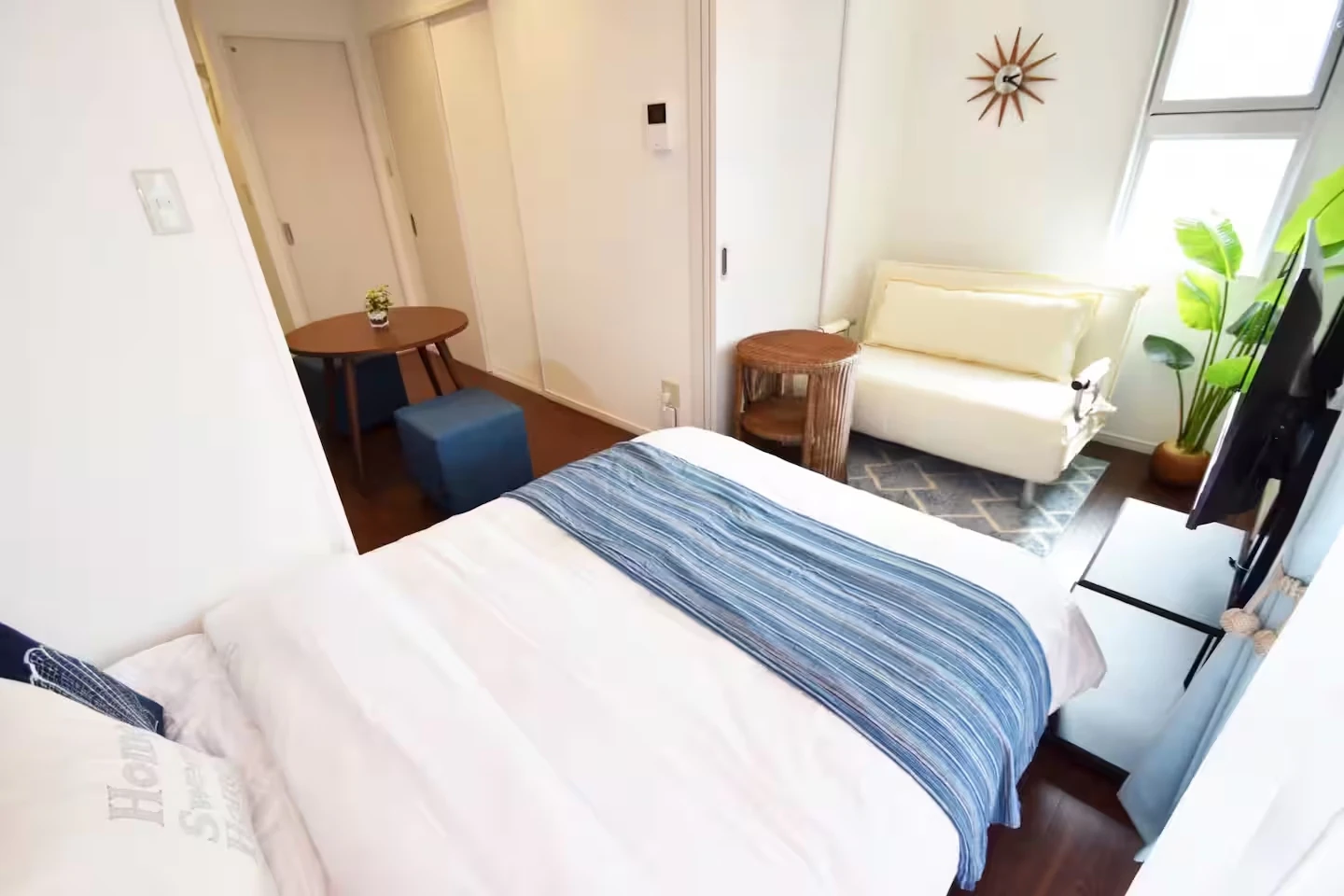
A private unit for groups
Enjoy Maru 402
- Capacity: up to 6 guests
- Layout: studio
- Parking: nearby paid parking lots
This private studio unit accommodates up to 6 guests. It has a kitchen and a washing machine, making it an option for a stay that includes shopping in Naha. Guests arriving by car need to use nearby paid parking lots, so compare it with properties that provide parking before choosing.
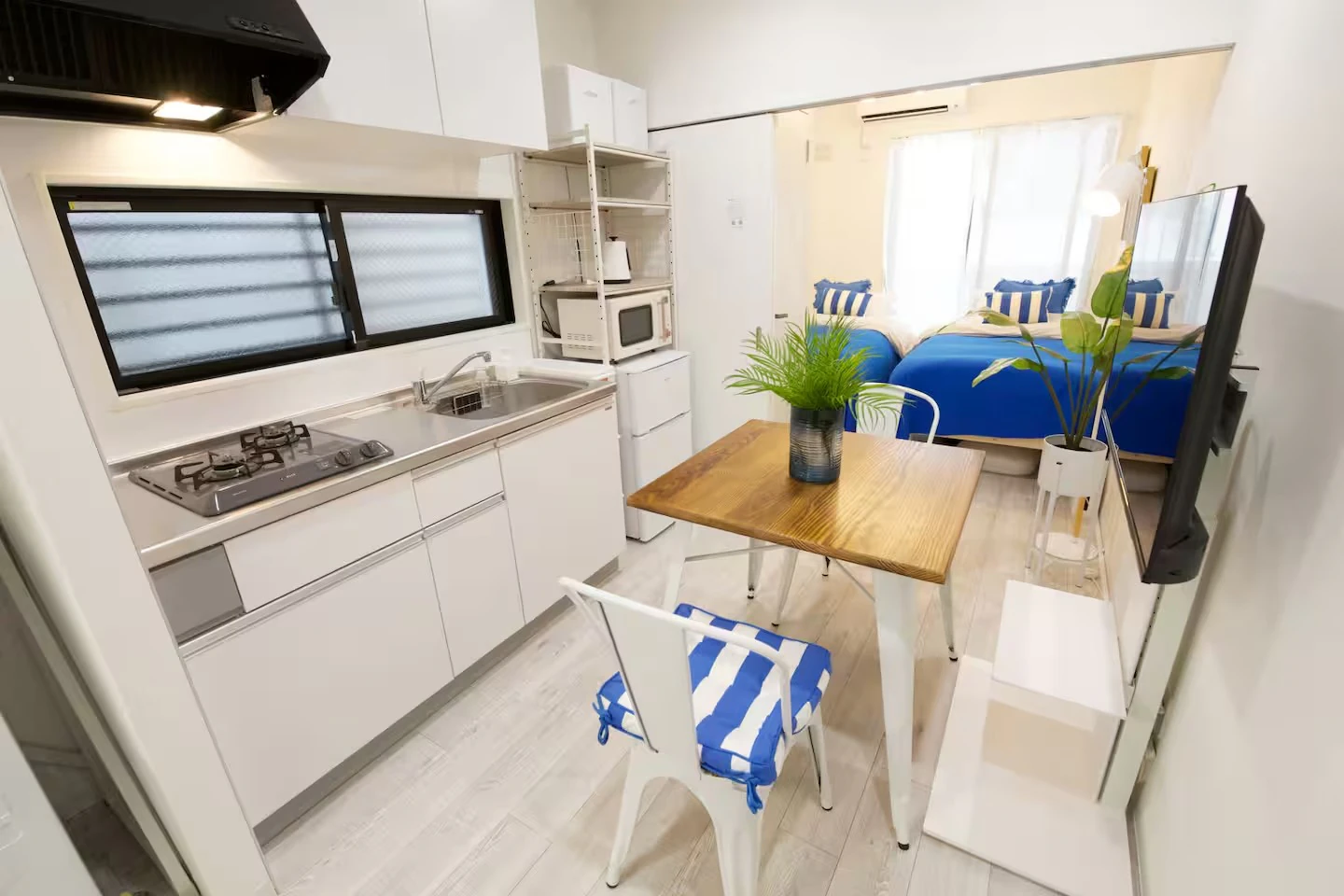
A compact stay for 1–2 guests
GIRASOL 301
- Capacity: up to 2 guests
- Layout: 1DK, approximately 22 m²
- Access: 3rd floor, no elevator
This private apartment in Maejima, Naha, has a 1DK layout of approximately 22 m² and sleeps up to 2 guests. It has a kitchen, washing machine, and dryer. It’s on the 3rd floor with no elevator, so consider how you’ll carry your luggage, including any pottery you buy, before choosing.
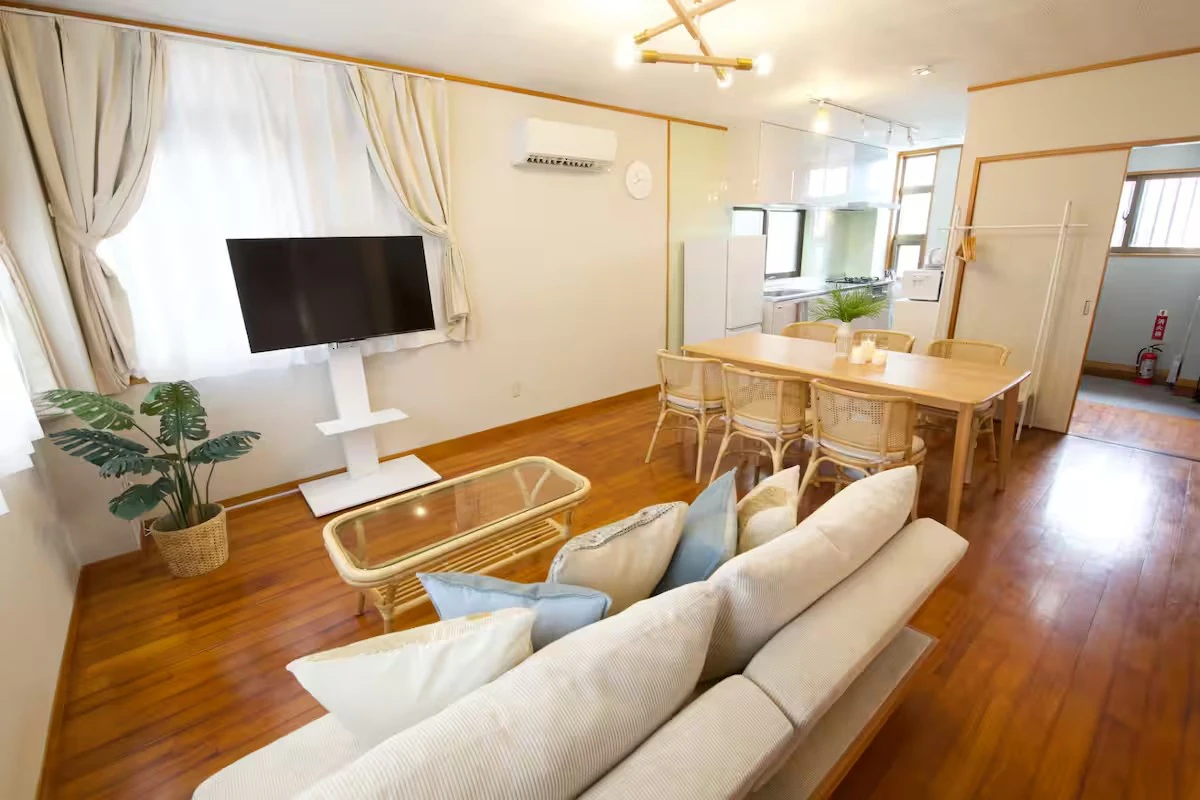
More space for families and groups
AZUKI Heights 2F/3F
- Capacity: up to 9 guests
- Layout: 3LDK, 91 m²
- Parking: 1 free space
With a 91 m², 3LDK layout for up to 9 guests, this property is an option for families and groups. It has a kitchen, a washing machine, and 1 free parking space. If your itinerary includes days when you’ll use a car, check that the parking matches the number of vehicles you plan to bring.